Julian Yu
Julian Yu is a multi-award-winning Australian composer whose musical language is imbued with elegance and expressiveness, both enhanced by impeccable craft and a special attention to detail.
His music creates a sonic world that is constantly changing, yet always framed within a clear sense of shape and direction. Without being overtly referential, it shows a strong connection with the Western musical tradition as well as with his Chinese roots, and so forms a very individual musical discourse.
Born in Beijing in 1957, Julian Yu surprised his non-musical family by starting to compose at the age of twelve. In 1973 he left school early to study composition at the Central Conservatory of Music in Beijing, and later joined the teaching staff there. In 1980 he was sent to Japan to study at the Tokyo College of Music under Jōji Yuasa and Shin-Ichirō Ikebe. After his return in 1982 he resumed teaching and wrote a great deal of music for film, television and radio as a “ghost composer” under other people’s names. In 1985 he migrated to Australia. In 1988 he was selected for a Composition Fellowship at Tanglewood, where he studied with Hans Werner Henze and Oliver Knussen, and was awarded the Koussevitzky Tanglewood Composition Prize for that year.
Since then Yu has won numerous prizes and much recognition, including an Australia Council Composer Fellowship and grants from the Australia Council and bodies such as the Ian Potter Foundation. In 1991 and 1994 an international jury unanimously selected his work for the first and second triennial Paul Lowin Orchestral Prizes (Australia’s richest award for composition). Other prizes include the Zen-On Piano 2000 composition prize, and awards in the 56th Japan Music Concours, the 35th Premio Musicale Città di Trieste, and the 1987, 1989 and 1990 International New Music Composers’ Competition (USA). He composed music for the opening ceremony (Australasian Section) of the Olympic Games in Beijing (with Broadstock and Barton). For his achievements he was awarded a Doctor of Music (D.Mus) by the University of Melbourne, where he taught composition for many years and holds an honorary Fellowship.
His music has been performed at ISCM World Music Days (in Switzerland, Mexico, Luxembourg and Hong Kong), and at many other festivals including Gaudeamus, Huddersfield, the Munich Biennale and the Asian Composers’ League (ACL) festivals.
Major works include Philopentatonia, commissioned by IRCAM for Ensemble InterContemporain and later taken up by Ensemble Modern, the London Sinfonietta, and the Lausanne Chamber Orchestra under Heinz Holliger; Three Symphonic Poems, performed by the Sydney Symphony under Gunther Schuller; Great Ornamented Fuga Canonica, performed by the BBC Symphony Orchestra under Oliver Knussen; Wu–Yu, performed by the Tanglewood, BBC, Luxembourg and Hiroshima orchestras; the puppet music theatre The White Snake, commissioned by Hans Werner Henze for the second Munich Biennale; Sinfonia Passacaglissima, given at the Sydney Opera House by the Tasmanian Symphony Orchestra under Markus Stenz; the Marimba Concerto, performed by Evelyn Glennie; Not a Stream But an Ocean, commissioned and performed by the BBC Proms; The Future of Water, commissioned by the Tokyo Philharmonic Orchestra; and Willow and Wattle, commissioned by the Melbourne Symphony and performed to great acclaim on their tour of China.
Compositions by Julian Yu appear on
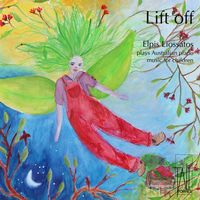
Lift Off: Australian Piano Music for Children
An engaging collection of piano music by Australian composers written to spark young imaginations. Elpis Liossatos, an Australian pianist then living in Greece, brings charm and enthusiasm to these performances.
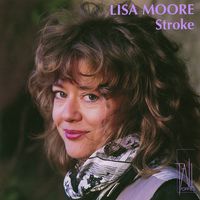
Stroke
A striking programme of contemporary Australian piano music, superbly played by New York–based Australian pianist Lisa Moore. Smetanin's formidable title work, among the most demanding in the repertoire, was captured here in a single take.