Manuel de Falla
Manuel de Falla (1876–1946) was a Spanish composer and pianist, one of Spain’s most important musicians of the first half of the twentieth century. A modest output carries a strong Andalusian stamp and, later, a leaner neoclassical voice.
After early study in Cádiz and Madrid he spent formative years in Paris, returning to Spain in 1914 and settling in Granada. Works that remain central to the recital and chamber repertory include the opera La vida breve, Siete canciones populares españolas (heard also as the cello Suite populaire espagnole), dances such as the Ritual Fire Dance and the Miller’s Dance, and a group of early piano miniatures.
Neutral in the Civil War, he left for Buenos Aires in 1939 and died there in 1946, still at work on the unfinished cantata Atlántida.
Compositions by Manuel de Falla appear on

Barber & Debussy
David Berlin’s debut recital gathers gems of the 20th-century cello repertoire. The Barber and Debussy sonatas stand among the instrument’s masterpieces, while Bloch, Falla and Granados complete a programme long favoured in the recital room.
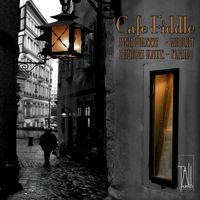
Cafe Fiddle
After the success of his Tall Poppies Brahms sonatas with Milton Kaye, Australian violinist Ben Breen reunited with the veteran pianist for a second disc. Recorded near the end of Kaye’s life, it became the last chapter in the accompanist’s long recording career.
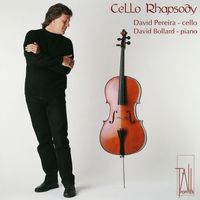
Cello Rhapsody
Pereira's main strength is his passion, heard here in repertoire that ranges from the simplicity of songs to the dramatic nuance of the Hispanic rhapsodies.