Marshall McGuire
Marshall McGuire brings the harp into contemporary Australian music with uncommon colour and nerve. He specialises in both baroque and modern repertoire, drawing out unusual sonorities and serving new works with technical sureness and interpretative sympathy.
His Australian harp recital moves from the cool poise of Peggy Glanville-Hicks’s Sonata through Helen Gifford’s slightly sinister Fable to Barry Conyngham’s seven short movements of stasis, burst and colouristic effect. He arranges Sculthorpe and Koehne so that piano and guitar originals settle into harp texture with natural ease. Composers have long sought his guidance; he has commissioned and premiered more than a hundred new works for the instrument. The playing yields glassy swirls, exotic guitar-like colours and consistently interesting sonorities that keep attention fixed. As a chamber partner he threads the harp through song, oboe d’amore with tape, and intimate duos, always extending what the instrument can say.
Marshall McGuire is featured on the following titles
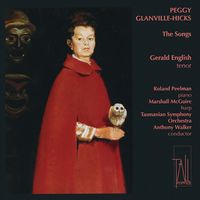
Peggy Glanville-Hicks: The Songs
World premiere recordings of songs by Australian composer Peggy Glanville-Hicks, including the cycle Thirteen Ways of Looking at a Blackbird, sung by tenor Gerald English.
Credit: Liner Notes
Awakening
Marshall McGuire is a formidable asset to Australia’s contemporary music scene, and the only harpist specialising in both baroque harp and all forms of modern music. This Tall Poppies disc remains a catalogue best-seller.
Arranger
Marshall McGuire also appears on
Bright Vessel
Tall Poppies is proud to release Bright Vessel, an important collection of Australian works for solo oboe and oboe d’amore, gathered and performed by Stephen Robinson.
Harbour
This CD features the remarkable voice of the septuagenarian tenor Gerald English in works written especially for him by Andrew Ford. A star-studded gathering of musicians accompanies him and also plays three solo works.
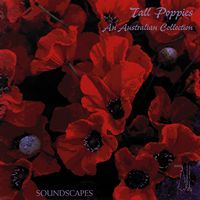
An Australian Collection
Nineteen tracks drawn from the Tall Poppies catalogue, chosen to show the range and depth of Australian composition and performance across the label’s first decade.