Blue Rags
Ian Munro plays contemporary piano rags by Elena Kats-Chernin, Ann Ghandar and himself, with Graeme Koehne’s Blues and Dmitri Yanov-Yanovsky’s composer-portrait Silhouettes.
Elena Kats-Chernin composer
Ann Ghandar composer
Graeme Koehne composer
Dmitri Yanov-Yanovsky composer
Since Scott Joplin set the form going, ragtime piano has become a lasting favourite, and Australian composers have been exploring it for some years. Elena Kats-Chernin has taken to the rag with particular relish; her pieces read almost as a musical diary of her life, intensely musical and a pleasure to hear. Quite independently, Ann Ghandar in Armidale has been working the same ground, writing a charming series first meant for children learning the piano. Munro is himself a formidable composer, and his own rags are more elaborate in design and give the pianist a more virtuosic showcase.
Graeme Koehne’s Blues is not a rag, yet it carries the same light-hearted dance feel.
Munro admires Yanov-Yanovsky and commissioned a set of piano pieces with a rag feel. The result is this striking cycle: the only true rag is a silent tribute to John Cage lasting 33 seconds; each of the other six is dedicated to a seminal twentieth-century composer and forms a miniature sound-world that conjures an aspect of Stravinsky, Ravel or Gershwin, Ives, Shostakovich, Debussy or Schnittke.
Munro brings poetry, musicality and virtuosity to everything he plays, and it is hard to imagine these works better served.
Reviews
Rags, but Rags with a difference. These composers have all been bitten by the rag bug but have subtly absorbed the infection and turned it to their collective advantage. The resultant disc, marshalled by Ian Munro who also contributes his own pieces to the revivified genre, is one of constant invention, unassuming wit and ear titillating sonority.
Let’s take Munro first since he is the executant hero. The first of his own five rags is dedicated to a modern master of the genre, William Bolcom, and it includes a brief but striking funky moment. Blues drenched melancholia haunts the second of the five whilst the third mines Railroad boogie but Zez Confrey’s shade also blows into town aided by Gershwin cadences. The fourth, Tromba Blues, is based on Rossini and is the most allusive, its reveille calls setting the agenda nicely. Chinoiserie tints colour the last but they’re not kitschy and it has its pile driver moments too.
I’ve enjoyed Elena Kats-Chernin’s music many times and there’s no let up on the enjoyment front here. Long resident in Australia she’s dedicated four rags to Munro and has written a number of others. Peggy’s Rag was written during a stay at the house left to composers in her will by that great composer Peggy Glanville-Hicks. Good to see a scholarly study of her music is forthcoming from Ashgate. And it’s typical of this wonderful woman that she willed her house in this way. Like her, Kats-Chernin’s celebratory rag is life-affirming and has a brief but lovely filigree B section. Rug Rag reminds me a little of Dick Hyman’s rag playing – it’s quite symphonic. Russian Rag II is quite puckish whilst After Dinner Rag is couched more in gentle and deft salon style. Whereas Revolving Doors is a brief, limpid and rather sad piece. Zee Rag, admits the composer, is the least melodic – but it still has some fascinating patterns.
Ann Ghandar comes from New England and her Suite has some indelibly exciting and tense moments. Verveful and ebullient – after a slow start – Rainy Day Rag gets riper and riper. And Railroad Rag, the last of the five, marries pliancy with power, evoking left hand railroad rhythms, and is not ashamed to pile up some Lisztian bravura or to end abruptly. Fun! Graham Koehne’s Blues was written for string quartet in 1984 but has been arranged for solo piano. Gershwin cadences haunt this. Finally there is Silhouettes by Uzbek composer Dmitri Yanov-Yanovsky. Each is named after a composer and evokes their style; Stravinsky, Ravel or Gershwin - that’s what the rag is called, Ives, Shostakovich, Debussy and Schnittke. Stravinsky gets his crabbed ragtime style, the joint tribute to Ravel and Gershwin has pawky wit, Ives is wrong-footing and full of hymnal moments, duly shattered. Debussy’s isn’t much of a rag. Apparently there is a sixth movement dedicated to John Cage marked Quasi Ragtime – but you can guess why it’s not ‘played’ here. Anyway Ervin Schulhoff got there long before Cage’s 4’33” with his silent Dadaist hi jinks in the Five Pittoresken of 1919 – but let’s not get side-tracked.
For broadminded auditors and for lovers of the malleable twistings of the classicised rag this is a delightful disc. Take it in short, direct, concentrated bursts, lights low, and allow the porous magic of the genre to work on your imagination.
This atmospheric recital is the latest demonstration that Scott Joplin and his colleagues have an enduring legacy. Who would have thought that ragtime, an archaic form of pre-jazz with relatively square march rhythms, would turn out to be the basis for a vital form of contemporary piano music striding through the 21st Century? Ragtime is the prototype of jazz (which also continues to inspire concert composers) though very different from it – more formal and classical in outline, full of subtly released energy. These rags by American, Australian, and European composers are sometimes joyful and virtuosic, often bluesy and lyrical. We get ‘Blue Rags’, a ‘Cocktail Rag’, a ‘Get Well Rag’, an ‘After Dinner Rag’, and much else.
Definitely rags, with their instantly identifiable tropes, these new essays in the genre nevertheless have unusual modulations and harmonic spices enough to make them sound new and old at the same time. This release thus demonstrates that ragtime has assumed the same significance for certain new composers as Viennese drinking songs did for Schubert, East European folk dances for Bartok, and jazz for Weill. The playing by Ian Munro, who contributes the Blue Rags of the album’s title, is stylish and sharp, the recording warm and up-front.
Ragtime was the predecessor of jazz as an original American musical genre, having its heyday between the last years of the 19th century and the end of WWI. It came out of the red-light districts of New Orleans and St. Louis and was based on Sousa marches with syncopation derived from African music. Scott Joplin was of course its best-known composer. Ragtime has had several revivals, and has been likened in its place in American music to the minuets of Mozart or the mazurkas of Chopin.
Pianist and composer Ian Munro pays homage in his opening selection to William Bolcom, who has written many different contemporary rags. All of the rags on the CD demonstrate that there is plenty of life in the hoary genre. Some of them sound similar to the “novelty” piano sheet music that was popular in the 1920s and 30s - and some of those actually were rags. The sound of these rags is most enjoyable and addictive. There is good humor about the pieces and much creativity within the rag structure.
Munro himself is in demand as both a composer and piano soloist. He has six previous CDs on the Tall Poppies label, of music by Australian composers and others. One of the CDs is of works by Ann Ghandar, whose Ragtime Suite is heard on this disc. She considers her rags to be characterized more by their inherent spirit than by an exactly-defined form. In her 11 quirky rags on the program Elena Kats-Chernin combines influences of klezmer, Russian music, tangos and Chopin with the “Australian vernacular.” The last composer on the program is of Uzbekian origin, who says he doesn’t try to parody the works of others but writes “according to their methods.” Among the composers he seeks to methodisize are Ives, Ravel, Debussy, Gershwin and Stravinsky - especially the latter’s well-known Ragtime. Yanov-Yanovsky is not without a sense of humor either: the CD omits the fourth of his seven Silhouettes because that one is titled “Cage” and consists only of 33 seconds of silence...
At the turn of the 20th century, the popularity of the pre-jazz style known as “ragtime” exemplified by Scott Joplin was reaching its zenith. Although it was overtaken relatively rapidly by other styles, the composition of these works never really died away, which pianist Ian Munro demonstrates in this quirky collection of short pieces. Munro is renowned for his performances of contemporary works and here includes several of his own works alongside those of Elena Kats-Chernin, Ann Ghandar, Graham Koehne and Dmitri Yanov-Yanovsky. Munro’s Blue Rags, completed in 2004, opens the disc, and this performance clearly illustrates his enjoyment of its relaxed exuberance. Kats-Chernin’s rags exude a more delicate, transparent quality. Russian Rag is one exception, with its thicker chords and exotic flavour. The Ragtime Suite by Ghandar explores the improvisatory nature of ragtime and ranges in mood from the languid and wistful to the effervescent and bubbly captured in Munro’s superior performance. The little pieces by Yanov-Yanovsky are perhaps most interesting and unconventional. Each bears a title from a composer’s surname such as Stravinsky, Ives, Shostakovich and Debussy, and the unique character of each is conveyed with exuberance and originality. The complexities of these ragtime works are belied by Munro’s expert finger-work and he imbues them with a freshness and substance that elevates them from being labelled wallpaper music.
Pianist Ian Munro is one of Australia’s best-kept secrets – an outstanding ensemble player and soloist, as is evident in these easygoing rags. Munro himself wrote the first five bitter-sweet examples, while the next set comes from the seemingly inexhaustible imagination of Elena Kats-Chernin. This quirky disc will repay many hearings.
Ragtime piano is synonymous with Scott Joplin, but this music with its catchy syncopated rhythms and jazz-blues riffs has also captivated “serious” composers, from Ravel, Stravinsky and Debussy to the present day.
Blue Rags, released by Tall Poppies, highlights five contemporary composers’ take on the musical form, all beautifully played by Ian Munro. Four of them – Munro himself, Elena Kats-Chernin, Ann Ghandar and Graham Koehne – are Australian, while Dmitri Yanov-Yanovsky (the most experimental of the group) is from Uzbekistan. Munro, a witty and sophisticated composer, opens the program with five miniatures under the title Blue Rags. Kats-Chernin’s approach, on the other hand, is 11 delightful little domestic pieces with titles like Removalist Rag, Get Well Rag and Cocktail Rag. Armidale-based composer Ghandar’s Ragtime Suite is aimed at children learning the piano and Koehne’s Blues, though not strictly a rag, has the bouncy feel of one.
But the most interesting collection, Yanov-Yanovsky’s Silhouettes, is saved for last. His 17-minute work evokes the spirit of such great 20th century luminaries as Debussy, Shostakovich, Stravinsky and Schnittke.
Artist
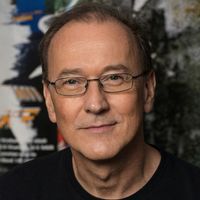
Ian Munro
Ian Munro has emerged as one of Australia’s most distinguished and awarded musicians, a pianist and composer whose career has taken him to thirty countries across Europe, Asia, North America and Australasia.
Tracks
- 1. Bad Girl Rag 2:03
- 2. Dismal Blues 2:27
- 3. Mississippi Zez 2:34
- 4. Tromba Blues 4:06
- 5. China Rag 3:50
- 1. Peggy’s Rag 3:06
- 2. Rug Rag 3:04
- 3. Russian Rag II 2:41
- 4. Removalist Rag 2:23
- After Dinner Rag Elena Kats-Chernin 1:58
- Get Well Rag Elena Kats-Chernin 3:27
- Sunday Rag Elena Kats-Chernin 4:24
- Cocktail Rag Elena Kats-Chernin 2:58
- Revolving Doors Elena Kats-Chernin 1:57
- Alexander Rag Elena Kats-Chernin 2:48
- Zee Rag Elena Kats-Chernin 2:37
- 1. Rainy Day Rag 1:52
- 2. Honky Tonk Rag 2:06
- 3. Sentimental Song 1:43
- 4. Around the Corner Rag 1:42
- 5. Railroad Rag 1:40
- Blues Graeme Koehne 5:02
- 1. Stravinsky 2:37
- 2. Ravel or Gershwin 2:32
- 3. Ives 3:29
- 4. Shostakovich 3:18
- 5. Debussy 2:28
- 6. Schnittke 2:31
Blue Rags Ian Munro
Four Rags for IM Elena Kats-Chernin
Ragtime Suite Ann Ghandar
Silhouettes Dmitri Yanov-Yanovsky
Performers
- Ian Munro · piano
Composers
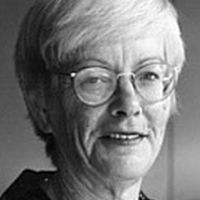
Ann Ghandar
Ann Ghandar has been refining and simplifying her compositional style, assisted by the inspiration of Middle Eastern music. Her greatest wish is to give others the joy that she herself receives from music.

Elena Kats-Chernin
Elena Kats-Chernin AO (born 1957) is an Australian composer whose piano rags, chamber miniatures, ballet and stage scores have become central to contemporary Australian repertoire.

Graeme Koehne
Graeme Koehne (born 1956) is an Australian composer and music educator, known for orchestral and ballet scores of direct, communicative style. His solo, ensemble and orchestral music is widely performed.
Contributors

Piano technician
David Kinney
David Kinney is the piano technician whose preparation underpins a wide stretch of Tall Poppies piano sound, from late Beethoven and Debussy to Janáček, Schubert and contemporary Australian repertoire. The instrument arrives ready for the music’s full colour and weight.
Liner Notes
Ian Munro
Ian Munro has emerged as one of Australia’s most distinguished and awarded musicians, a pianist and composer whose career has taken him to thirty countries across Europe, Asia, North America and Australasia.
Artwork [Cover]
Jorgio El Zein
Where to listen
Blue Rags is available for streaming through Apple Music. It can also be purchased through the iTunes Music Store.
Blue Rags is available as a CD. It can be purchased online through Buywell Music or the Australian Music Centre which both offer online ordering.
Product details
- Catalogue number
- TP186
- Total playing time
- 77 minutes 23 seconds
- Producer
- Belinda Webster
- Recording Engineer
- Belinda Webster
Christo Curtis - Mastering Engineer
- Christo Curtis
- Venue
- City Recital Hall, Sydney
- Credit
- David Kinney
Ian Munro
Jorgio El Zein - Release date
- 23 May 2008
- Label
- Tall Poppies
- Musical work
copyright - © 2008 Tall Poppies Records
- Sound recording
copyright - ℗ 2008 Tall Poppies Records
- Categories
- Australian Classics, Modern Masterpieces
- Genre
- Contemporary Classical
- Barcode
- EAN 9399001001866
Related recordings
I Was Dancing with a Gnat: Music by Ekaterina Komalkova
Duo pianists Aura Go and Ian Munro bring the music of Russian composer Ekaterina Komalkova to Western listeners for the first time in this generous collection of eighty re-imagined national songs.
Le Tango Perpetuel
Ian Munro, superb pianist and imaginative composer, turns piano masterworks into chamber colour for the Australia Ensemble. The disc also preserves a rare late performance by tenor Gerald English in Satie’s Sports et Divertissements.
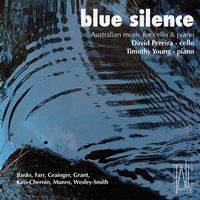
Blue Silence: Australian Music for Cello and Piano
This is the first disc of its kind released in Australia: an overview of important works for cello and piano spanning 108 years. The earliest is Grainger’s Scandinavian Suite, a tour de force that deserves a place in the concert hall.

The Waltz Book
The Waltz Book is an impressive achievement by any standard. Andrew Ford has composed a set of 60 waltzes to a commission from pianist Ian Munro, organised so that they are exciting and make a coherent whole.
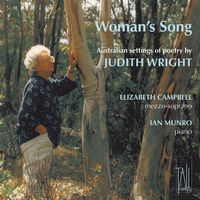
Woman's Song: Australian Settings of Poetry by Judith Wright
Elizabeth Campbell has long been a tireless promoter of Australian art song. With Tony Fogg in the 1980s she presented the recital series From Nathan To Now; two decades later she brought that energy to a recording of settings of poetry by Judith Wright.

Chamber of Horrors
Tall Poppies presents chamber music by Elena Kats-Chernin, one of Australia’s most loved composers, in works written for the musicians who play them here.