Blue Silence: Australian Music for Cello and Piano
This is the first disc of its kind released in Australia: an overview of important works for cello and piano spanning 108 years. The earliest is Grainger’s Scandinavian Suite, a tour de force that deserves a place in the concert hall.
Percy Grainger composer
Don Banks composer
Alicia Grant composer
Martin Wesley-Smith composer
Ian Farr composer
Ian Munro composer
Matthew Hindson composer
Other heritage masterpieces include Ian Farr’s Sonata, long neglected since its first performances and a work that repays close acquaintance, and Don Banks’ seminal Three Studies.
The latest piece is one of Martin Wesley-Smith’s Papuan works, Morning Star Lament, which asks the cellist to sing. Elena Kats-Chernin’s Blue Silence, Alicia Grant’s Night Spell and Ian Munro’s Lucy Sleeps cast a gentle spell, wholly dispelled by Hindson’s racy Jungle Fever.
David Pereira teams with Timothy Young, pianist at the Australian National Academy of Music, to present the programme.
The release formed part of Tall Poppies’ 21st birthday celebrations.
Reviews
A full disc of Australian cello music is not to be sneezed at. Percy Grainger’s lovely, virtuosic suite is the only work generally known. So let’s explore.
Elena Kats-Chernin (b. 1957) wrote the title track as a possible relief from schizophrenia by way of calmness and meditation. It just might cure someone; it’s a very lovely and comforting romantic piece. It is followed by the folklike, virtuosic Grainger suite. Then we plunge into 12 tones with Don Banks (1923-80), who writes with a fine combination of lyricism alternating with violence. Alicia Grant (b. 1978) contrasts with a slithery piece calculated to hypnotize the listener, if not the performers.
We awaken to Martin Wesley-Smith (b. 1945), whose Morning Star Lament includes a vocal line sung by we know not who. This is a political statement concerning the unfortunate fate of West Papua, occupied by Indonesia. It is quite a piece, full of variety and feeling of varied kinds.
There is a one-movement sonata by Ian Farr (1941-2006) that pulls us back into atonality for 10 minutes, a jagged argument between instruments where they alternate between single-note comments and related exclamations of various kinds. It is quite entertaining. Suddenly Lucy falls asleep in the arms of her father, Ian Munro (b. 1963) in a lovely, light atmosphere. At four minutes, this is the shortest piece on the program. Finally, we reawaken to Matthew Hindson (b. 1968) with a case of Jungle Fever—not the jungle, but the disease. But there’s a good deal of life and vigor in this work despite the subject.
Pereira and Young play this varied program with feeling and musicality.
This disc presents eight contrasted works by Australian composers, of which five are premiere recordings.
The most extended offering is La Scandinavie (Scandinavia, 1902) by Grainger, five settings of Swedish, Norwegian and Danish folksongs demonstrating the composer’s infatuation with northern lands. There are important piano parts and the overall effect is typically evocative.
The Three Studies of Don Banks are given a taut reading, the central Lento espressivo well contrasted in tempo and mood with the faster outer movements. They have previously appeared on Tall Poppies (Georg Pedersen and David Bollard, 1994) but can always sustain another version.
A welcome inclusion is the Ian Farr Sonata of 1969, an atonal, spare-textured work cast in one continuous movement with disparate sections. The sonata contains ideas and atmosphere originally meant for a Dance of Death for solo piano and orchestra, and an opera planned at the time. There is an impressive climax before a solo cello cadenza ushers in a tranquil ending, and various registers of both instruments are judiciously exploited, especially the low pitches.
Elena Kats-Chernin’s Blue Silence (2006), which lends the CD its title, is based on a simple ostinato figure in the piano while the cello floats over it with largely long-held notes and a chordal series in the piano’s bass register. Written for an exhibition devoted to artists suffering from schizophrenia, it was intended to induce calm in her son Alexander, who suffers from the condition.
The provocatively-titled Jungle Fever (1998) by Matthew Hindson features an imposing opening which leads to a catchy, syncopated section, only to return and combine with the earlier, quicker material. Like much of this composer’s music, the piece has surface appeal but may not sustain repeated listenings.
Night Spell (2006) by Alicia Grant obtains its mesmeric effect by the use of repeated semiquaver chords over which the cello line hovers in trance-like state. It is the second piece in a bigger work for cello and piano called Three Magic Pieces.
The short lullaby by Ian Munro, Lucy Sleeps (1992), the first piece from the project Lucy’s Book, was composed for his young daughter. Presumably originally for piano, the present version is unpretentious and touchingly effective.
Finally, Martin Wesley-Smith’s Morning Star Lament is a setting of a song, written in the 1930s by a Dutch missionary in Netherlands New Guinea, which eventually became the colony’s official anthem. At the same time, the Morning Star flag became its official flag; both were subsequently banned. The work approaches the original in the spirit of an elegy rather than an anthem, and emerges as one of the disc’s highlights.
Blue Silence fills a gap in Australian recorded music. Pereira demonstrates once again what an extremely imaginative cellist he is, and is well-matched by Young, whose playing is highly accomplished. The sound is ambient, the packaging appealing, and there are informative annotations, including the composers' notes on the various works. Highly recommended.
[Disclaimer: The reviewer is a friend of the cellist on this recording, worked with him for many years (1980-1990) in the Australia Ensemble, resident at the University of New South Wales, and made two CDs with him for the Tall Poppies label. Comments made in the review are as impartial as possible.]
This has proved to be a greatly enjoyable introduction to a wide range of music for cello and piano by contemporary Australian composers. The one exception to that contemporary epithet is the inclusion of Percy Grainger’s 1902 Scandinavian Suite. Much as I enjoy Grainger, and given the work’s relative rarity it is a pleasure to hear but under the overall umbrella of ‘modern’ - albeit accessible - music it sits a fraction out of place.
All of the music here shows the composers to be individual, interesting and able to write music both attractive and of substance. For want of a better collective term - putting the Grainger to one side for the moment - this should be termed post-modernist in that for any contemporary compositional devices used these pieces are essentially tonal and direct in their emotional appeal. Interestingly the earliest work - Don Banks’ Three Studies is also the most self-consciously ‘modern’ indeed serial in its approach. Elena Kats-Chernin’s Blue Silence opens the disc, gives it its title and in many ways defines what is to come both musically, in performance terms and technically. All the works benefit from an English-only liner which includes a composer biography and photograph and a brief description of the work from the composer where possible. So we learn Kats-Chernin wrote her work for her son and other schizophrenia sufferers. She explains that such people yearn for silence and a state of meditative calm and that blue is a colour often associated with healing. This is a touchingly simple but not simplistic work - there are two basic musical building blocks; a rocking melodic figuration and a four chord sequence. In essence the work gently states, combines and recombines these elements over its eight minute course. The emotional landscape remains essentially gentle as suits its meditative mood. The work opens with the piano alone stating all of the musical material. Here and throughout the disc pianist Timothy Young proves to be an exceptionally fine player with a wide range of tone and keyboard colour whether chiming Kats-Chernin’s bell-like chords or Grainger’s furious fistfuls of notes. The entry of David Pereira’s wistful cello does raise an immediate query that persists throughout - Young’s piano sounds like the dominant partner both musically and as technically balanced by the production team. Given the nature of the opening work that is not an issue but elsewhere and certainly in the Grainger suite Pereira’s cello is subsumed in the storm of the piano writing.
David Pereira is a fine player and a champion of Australian string music. It is a pleasure to hear a player willing to produce a genuinely quiet sound but my only concern it that here the dynamic is too often allied to a thinning of the tone as well. This works well in the afore-mentioned Blue Silence and indeed later in the hypnotic Night Spell but seems less appropriate in the hale and hearty Grainger. The uncredited note writer mentions the difficulty of the work as one reason for its neglect. Certainly there are passages of cruelly demanding double-stopping, in the third movement Norwegian Polka especially that taxes Pereira. This is the only work on the CD for which I have comparable versions; from cellists Joel Moerschel on Northeastern records and Stephen Orton as part of Vol.13 of the Chandos Grainger Edition. It has to be said that both of those other cellists make a better fist of the Grainger than Pereira although I do prefer Young’s piano contribution which captures the forthright and muscular open-ness of Grainger’s writing to perfection. Don Banks’ Three Studies were his first completely 12-tone compositions written after an extended period of study with Luigi Dallapiccola, Milton Babbitt and Matyas Seiber. After the open-air directness of the Grainger these make for a striking contrast - it was a good programming choice to juxtapose them directly. For all the rigour and care in construction I find it hard to respond to music so clearly of the head rather than heart but they receive a palpably committed performance. Alicia Grant’s Night Spell and Ian Munro’s Lucy Sleeps in some way come together to form an - unrelated - triptych of miniatures together with the title work which inhabit a similar emotional landscape of hypnotic meditation and repose. Likewise skill in the programming links the Banks to Ian Farr’s Sonata. This is the other earlier/contemporary work dating from 1969 and again follows the aesthetic of contemporary music of the time which seems to equate this style of composition with seriousness of intent. A by-product of listening to this disc has been the crystallising of the idea that recent contemporary composers - regardless of their compositional techniques employed - seem more at ease with embracing overtly emotional external subjects.
Certainly that is the case with all the music presented here where the extra-musical stimuli evoke strongly felt emotions even when expressed in a ‘contained’ manner. Composer Martin Wesley-Smith clearly feels the plight of the oppressed peoples of West Papua and expresses his solidarity in Morning Star Lament. He describes the work as; “.. a lament for those who have died resisting the occupation, for those who are prisoners in their own country, for the destruction of their environment, for the brutality of the occupiers, for the hypocrisy of the West…”. Strong stuff. As is my wont, I listened to this disc the first time with no reference to the liner. With music I do not know it ensures no preconceptions or expectations. In the case of this Lament it also provided considerable confusion. In purely musical terms there is an extraordinarily wide range of styles and moods encompassed in the nine minutes of the work. This includes ‘serious’ contemporary clusters, brilliant be-bop like syncopating passages, a curiously impressive vocalise where one of the players, uncredited, accompanies themselves (the other?) singing a plaintive wordless melody. At first listen, it was the presence of a simple, almost saccharine melody richly harmonised in the best traditions of the tea-shop that frames the work that confused me. It turns out this melody, “O My Country Papua” was written in the 1930s and became the colony’s official anthem and at much the same time the Morning Star flag became its official flag. When Indonesia took over the country in 1963 both were banned. Certainly, knowing that cranks up the emotional temperature of the work several notches and ‘explains’ much of the music’s thrust in an instant. It does leave the listener with the eternal debate; should music need its context to be explained before you can evenly partially understand it. As it happens this was one of my favourite pieces on the disc even before I read the explanation - I enjoyed the diversity of styles it embraces and again it benefits from a very powerful performance. What one cannot divine from the superficial knowledge of a work afforded by this kind of review is whether/how the musical material of the anthem is transformed or developed in the main body of the work.
Perhaps worth mentioning here that five of the eight works presented here are getting their world premiere recordings. The disc closes with another of those five; Matthew Hindson’s Jungle Fever. I must admit that the presence of this work was my main reason for requesting it to review. I find Hindson to be one of the most interesting and convincing composers wrestling with the challenge of making true contemporary music relevant for an audience brought up listening to non-classical music. He does these by embracing elements of popular music; fantastic propulsive rhythms, memorable melodies and riffs but without ‘selling out’ by writing classical-pop or vapid pastiche. It’s a delicate balance but one he manages to achieve. This piece contains all of Hindson’s most typical and best gestures - big theatrical moments, nagging rock-derived ostinati and melodic cells of ear-worm memorability. Its another piece that might benefit from a richer, fuller cello tone but the athleticism and conviction of the playing is never in doubt.
Overall, this disc is an excellent sampler of the rich diversity and range of contemporary cello music being written by Australian composers. All credit to performers Pereira and Young for devoting the considerable amount of time and energy it must have taken to bring this amount of unfamiliar yet impressive music to the studio. A worthwhile project skilfully executed.
Tall Poppies' 222nd release is a contemplative historical journey through the best of Australian music for cello. Couple the sensitive performance by Timothy Young at the piano, with the stalwart-of-everything-cello on the Tall Poppies label David Pereira, (he's also a fantastic cellist!) and you really have something special.
The eight works included on Blue Silence provide the perfect link into Pereira's ever-growing catalogue of cello works released on TP. In fact, if ever there was a CD to provide a tap into Australian cello music as a whole this is the one!
Kats-Chernin's title track opens the CD, unfortunately for this review words cannot describe how gorgeous, yet wrought with anguish it is. The cold harsh reality of Don Banks' early experiment with atonality in his Three Studies for Cello and Piano is exactly where it should be in the recording - definitely not an afterthought. Hindson's Jungle Fever is the last work on the release and I can't help but feel it finishes with a question mark, pointing toward the fact that this isn't all! Who knows what's going to be composed for cello in the future?
Overall the mood is largely one of contemplation, Grainger's La Scandinavie does provide a bit of a break, but it certain have you dancing around the lounge room. Blue Silence is for those pensive moments: a testament to the depth of emotion our composers can inject into their music, and the depth of emotion our musicians can likewise then convey.
Across his 30-year career, David Pereira has commissioned, performed and recorded more cello music than perhaps any other Australian cellist: from the solo suites of Bach to Rautavaara and the Russian romantics, to the ever-expanding Sculthorpe repertoire and dozens of works by other Australians. In this, his 13th CD of solo cello music on Tall Poppies, Pereira and Timothy Young, his extraordinarily versatile accompanist, survey a century of Australian cello composition, including several pieces virtually forgotten. At the top of that list is Ian Farr’s 1969 Sonata, its 10 minutes containing some of the most gritty moments in Australian music. At the start of the 20th century, the five dances of Grainger’s La Scandinavie contain moments that have defied generations of first-class cellists, but here they are tossed off ravishingly. In between are Don Banks’s Three Studies, classics of mid-century modernism. There is repose and lyricism in the softer textures of music by Elena Kats-Chernin and Alicia Grant, a lullaby by Ian Munro and bittersweet barbs in Martin Wesley-Smith’s plea for self-determination in West Papua. In Morning Star Lament, Pereira sings the affecting melody of what is the unofficial anthem of that province. Finally, Matthew Hindson’s jaunty Jungle Fever breaks into an exhausting disco-club workout. Audio quality is crisp and bright, the kaleidoscopic range of texture elegantly captured throughout. With his producer Belinda Webster, Pereira continues to unearth Australian works for his instrument, pointing to an extraordinary wealth of repertoire, barely known even to other cellists.
Artists

David Pereira
David Pereira is an Australian classical cellist, teacher and composer, born in Macksville, New South Wales, in 1953. He has premiered many concertos and solo works written for him by Australian composers, and served as principal cellist of the Australian Chamber Orchestra and the Sydney Symphony Orchestra.

Elena Kats-Chernin
Elena Kats-Chernin AO (born 1957) is an Australian composer whose piano rags, chamber miniatures, ballet and stage scores have become central to contemporary Australian repertoire.
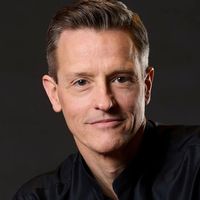
Timothy Young
Timothy Young is one of Australia’s most prominent and versatile pianists. A long-standing member of Ensemble Liaison, he performs widely as a chamber musician, recitalist and concerto soloist.
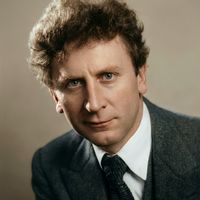
Percy Grainger
Percy Aldridge Grainger (1882–1961) was an Australian-born composer, arranger and pianist. A brilliant folk-song collector and arranger, he was also a restless experimenter whose work ranged from tuneful percussion to Free Music machines that foreshadowed electronic synthesis.
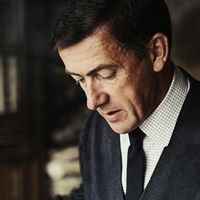
Don Banks
Don Banks (1923–1980) was an Australian composer of concert, jazz and commercial music. Serial craft, electronics and a lifelong pull toward jazz shaped chamber works, concertos and scores central to mid-century Australian modernism.
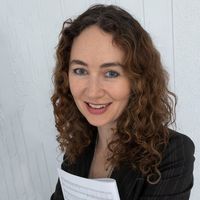
Alicia Grant
Alicia Grant has had works performed by many orchestras and ensembles both in Australia, Europe and North America.
Martin Wesley-Smith
Martin Wesley-Smith wrote music audiences actually like: electronic pieces that stay human, choral parables that turn nursery rhymes into environmental inquests, and chamber scores laced with Lewis Carroll fantasy and hard political irony.
Ian Farr
Ian Farr (1941–2006) was an Australian composer. His spare, atonal writing includes a one-movement cello sonata from 1969 and piano character pieces written for young players.
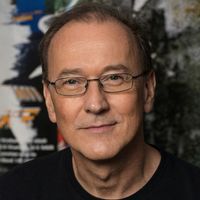
Ian Munro
Ian Munro has emerged as one of Australia’s most distinguished and awarded musicians, a pianist and composer whose career has taken him to thirty countries across Europe, Asia, North America and Australasia.
Tracks
- Blue Silence Elena Kats-Chernin 9:01
- i. Swedish Air and Dance 2:54
- ii. Song of Vermelande 2:10
- iii. Norwegian Polka 2:52
- iv. Danish Melody 3:13
- v. Air and Finale on Norwegian Dances 5:15
- i. Andante 2:13
- ii. Lento espressivo 2:33
- iii. Allegro 2:03
- Night Spell Alicia Grant 6:07
- Morning Star Lament Martin Wesley-Smith 9:47
- Sonata for Cello and Piano Ian Farr 9:57
- Lucy Sleeps Ian Munro 4:03
- Jungle Fever Matthew Hindson 7:55
La Scandinavie Percy Grainger
Three Studies for Violoncello and Piano Don Banks
Performers
- David Pereira · cello
- Timothy Young · piano
Composer
Matthew Hindson
Matthew Hindson's music fuses the drive of popular styles with classical form: repeated rhythms, high dynamics and an immediacy that hits hard. His writing ranges from heavy-metal violin shredding to hyperactive marimba and racy cello.
Contributors
Piano tuner
Fred Coutant
Where to listen
Blue Silence: Australian Music for Cello and Piano is available for streaming through Apple Music. It can also be purchased through the iTunes Music Store.
Blue Silence: Australian Music for Cello and Piano is available as a CD. It can be purchased online through Buywell Music or the Australian Music Centre which both offer online ordering.
Product details
- Catalogue number
- TP222
- Total playing time
- 70 minutes 3 seconds
- Producer
- Belinda Webster
- Recording Engineer
- Belinda Webster
- Venue
- Llewellyn Hall
- Credit
- Fred Coutant
- Release date
- 1 Oct 2012
- Label
- Tall Poppies
- Musical work
copyright - © Tall Poppies Records
- Sound recording
copyright - ℗ Tall Poppies Records
- Category
- Australian Classics
- Genres
- Contemporary Classical, Modernist Classical
- Barcode
- EAN 9399001002221
Related recordings
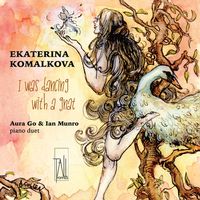
I Was Dancing with a Gnat: Music by Ekaterina Komalkova
Duo pianists Aura Go and Ian Munro bring the music of Russian composer Ekaterina Komalkova to Western listeners for the first time in this generous collection of eighty re-imagined national songs.
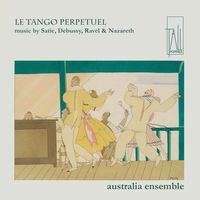
Le Tango Perpetuel
Ian Munro, superb pianist and imaginative composer, turns piano masterworks into chamber colour for the Australia Ensemble. The disc also preserves a rare late performance by tenor Gerald English in Satie’s Sports et Divertissements.
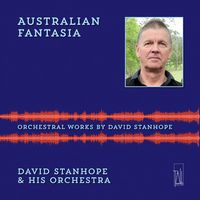
Australian Fantasia: Orchestral Works by David Stanhope
Orchestral works by David Stanhope and four of his transcriptions, realised with a digital orchestra. Apart from Olympic Fireworks, written for the 2000 Sydney Olympic Games opening ceremony, these scores had not been heard in public performance.
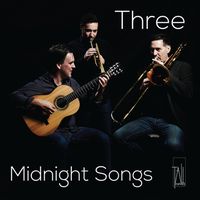
Midnight Songs
Three is a Melbourne-based trio of trumpet, trombone and guitar. With little extant repertoire for this combo, the group commissioned four Melbourne composers and pairs those works with Jane Hammond’s arrangement of Percy Grainger’s Random Round.
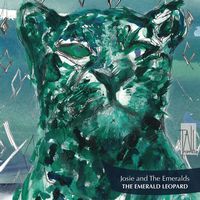
The Emerald Leopard
Josie and the Emeralds pair acclaimed early-music soprano Josie Ryan with some of Australia’s finest viol players, the Emerald City Viols. Founded in 2011, the group is known for sophisticated performances and inventive programmes of Renaissance and contemporary works, including compositions and arrangements by director Brooke Green.
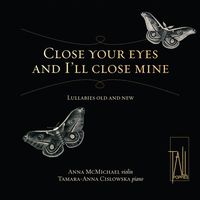
Close Your Eyes and I'll Close Mine: Lullabies Old and New
Lullabies (or berceuses) have been around as long as humans have been singing their children to sleep. This CD presents a unique collection of mostly modern lullabies, many written for this project.