Joseph Haydn: Complete Keyboard Sonatas, Vol. 2
2009 marked the bicentenary of Joseph Haydn’s death. To commemorate the anniversary, Tall Poppies and fortepianist Geoffrey Lancaster began recording Haydn’s complete keyboard sonatas on period instruments.
Lancaster had already performed the complete sonatas in concert series in Melbourne and Canberra. He recorded these works on period instruments from the early keyboard collection at the Australian National University School of Music, where he was Head of Keyboards. His historically informed fortepiano performances bring clarity and insight to the music.
Each sonata on this volume is preceded by a short prelude in the same key, following eighteenth-century keyboard practice. The series covers feature paintings by Fred Williams, with kind permission of Lyn Williams. The initial CDs were generously supported by the Friends of the ANU School of Music.
Complete Keyboard Sonatas, Vol. 1 (TP201) drew strong critical praise, including the judgment that it was an important, watershed recording and a series to collect.
Reviews
Geoffrey Lancaster’s project to record all of Haydn’s piano sonatas started in early 2010 with the release of three sonatas from the middle period, Nos. 31-33. Depending on how one chooses to count them, there are 52-62 works in all, requiring 10-12 discs, so the project is still very much in its infancy with the arrival of this second disc, of Sonatas Nos. 16, 30, 38 and 53. But what already makes Lancaster’s set uniquely interesting is the way he precedes each sonata with a prelude, in accordance with what he argues in his excellent sleeve essay is common eighteenth- and nineteenth-century keyboard practice. It was usual, he contends, for pianists to improvise a little before beginning a performance, to test the tuning and generally ready themselves.
Composed by Lancaster himself, the effect of the preludes is intriguing. On one hand they sound stylistically later than the sonatas themselves. He draws on ideas from works by other pianist-composers of roughly the same period - Diettenhofer (c.1749-c.1799), Horsley (1774-1858) and Rawlings (1775-1849) - and despite their pre-Romantic sweeping arpeggios and fuller chords, his little preludes match extremely well in terms of setting the mood. More tellingly, they create an improvisatory mood that flows onto the sonatas and feeds them a palpable spontaneity; it is in this domain that Lancaster excels, and that his cycle holds special interest.
His performances are genial and conversational in character, in keeping with the domestic setting of this music in its historical period: Lancaster is able to lift this music out of the modern concert hall aesthetic and transfer it back to what one imagines were the more personable, intimate surroundings of Haydn’s time. Playing copies of Stein and Walter fortepianos, he again uses much rubato, far more so than other period performers or even ‘conventional’ performers will. He varies speed through a phrase, often starting deliberately, accelerating through to the apex and then flattening out or easing up at the tail end. Pauses are often given more than their written length. The contrast this lends to Haydn’s flow of ideas equates very much with the Empfindsamer Stil upon which much of his keyboard music is founded; it can sound mannered but it is the way Lancaster achieves this conversational quality.
He takes Sonata No. 30 in D major, Hob. XVI:19, in a relaxed, jovial manner. The exchange of melodic ideas is cleanly articulated and brought out in high relief. Lancaster’s playing brims with extrovert personality compared to the drier, stiffer way this sonata is often played: he places the focus very much on the gestural shape of individual phrase. Sonatas Nos. 16 in D major, Hob. XVI:14, and 38 in F major, Hob. XVI:23, sound similarly bright and amiable. The fullest use of rubato-based expression comes in Sonata No. 53 in E minor, Hob. XVI:34, to the point indeed where it will surprise some listeners. Again though, it is Lancaster’s way of opening up a sense of dialogue in Haydn’s music, and it has a firm historical basis.
Feeling a little grumpy? Here’s a cure. Load up your iPod with some Haydn keyboard sonatas and head for the streets.
You’ll see the world through different eyes - one moment elegant, another playful, perhaps a little tragic, or then again witty and celebratory.
And to guide you through this treasure trove of musical wisdom and delight is internationally-renowned concert pianist Geoffrey Lancaster who is recording the complete 62 sonatas for Australia’s Tall Poppies label.
Lancaster is head of keyboards at Canberra’s Australian National University School of Music, and he uses two fortepianos from the uni’s collection on his new recording, the second volume in what will probably stretch to 14 or 15 discs.
Like its predecessor it is nicely packaged with some scholarly liner notes by Lancaster himself and one of Fred Williams’s Australian landscapes on the cover.
This album comprises four sonatas - 30, 53, 38 and 16 - and each is preceded by a little improvised prelude in the same key which sets the scene and makes a convenient aural link to the next work.
Each sonata is quite different in mood and even scale. The D major 30th is popular in concert halls, usually played on a grand, but it loses none of its impact once your ear attunes to the smaller and more intimate sound world of the fortepiano.
Producer Belinda Webster has managed a much warmer presence than the ABC Classics album Lancaster recorded previously.
Joseph Haydn’s Complete Keyboard Sonatas Volume 2 (TP208) is available in good music stores now.
Artists

Joseph Haydn
Joseph Haydn's keyboard sonatas, concertos and sacred scores still sound freshly made: Classical forms packed with wit, sudden passion and conversational charm that leap off the page when played with period fire.
Geoffrey Lancaster
Geoffrey Lancaster plays Mozart and Haydn on the fortepiano with fearless freedom: improvised preludes, lavish ornament, tempo that breathes and darts. The playing reclaims the music's wit, drama and conversational intimacy.
Tracks
- Prelude in D Major Geoffrey Lancaster :29
- i. Moderato 8:22
- ii. Andante (First Edition: Adagio ma non troppo)
- iii. Finale: Allegro assai 3:41
- Prelude in E Minor Geoffrey Lancaster :53
- i. Presto 4:21
- ii. Adagio 6:25
- iii. Vivace molto 4:41
- Prelude in F Major Geoffrey Lancaster :25
- i. (Moderato) 5:45
- ii. Adagio 8:13
- iii. Finale: Presto 2:51
- Prelude in D Major Geoffrey Lancaster :19
- i. Allegro moderato 6:17
- ii. Menuet – Trio – Menuet 4:18
- iii. Finale: Allegro 2:39
Sonata No. 30 in D Major, Hob. XVI:19 Joseph Haydn
Sonata No. 53 in E Minor, Hob. XVI:34 Joseph Haydn
Sonata No. 38 in F Major, Hob. XVI:23 Joseph Haydn
Sonata No. 16 in D Major, Hob. XVI:14 Joseph Haydn
Performers
- Geoffrey Lancaster · fortepiano
Contributors
Layout
Belinda Webster
Belinda Webster is the founder of Tall Poppies Records and a leading Australian producer and recording engineer whose work has documented classical, contemporary and jazz performance across decades of catalogue releases.
Piano Tuner
Fred Coutant
Artwork [Cover]
Fred Williams
Liner Notes
Geoffrey Lancaster
Geoffrey Lancaster plays Mozart and Haydn on the fortepiano with fearless freedom: improvised preludes, lavish ornament, tempo that breathes and darts. The playing reclaims the music's wit, drama and conversational intimacy.
Where to listen
Joseph Haydn: Complete Keyboard Sonatas, Vol. 2 is available for streaming through Apple Music. It can also be purchased through the iTunes Music Store.
Joseph Haydn: Complete Keyboard Sonatas, Vol. 2 is available as a CD. It can be purchased online through Buywell Music or the Australian Music Centre which both offer online ordering.
Product details
- Catalogue number
- TP208
- Total playing time
- 59 minutes 39 seconds
- Producer
- Belinda Webster
- Recording Engineer
- Belinda Webster
- Editing Engineer
- Belinda Webster
- Mastering Engineer
- Don Bartley
- Venue
- Llewellyn Hall
- Credit
- Belinda Webster
Fred Coutant
Fred Williams
Geoffrey Lancaster - Release date
- 20 May 2010
- Label
- Tall Poppies
- Musical work
copyright - © 2010 Tall Poppies Records
- Sound recording
copyright - ℗ 2010 Tall Poppies Records
- Category
- Great Classics
- Genre
- Classical Era
- Barcode
- EAN 9399001002085
Related recordings
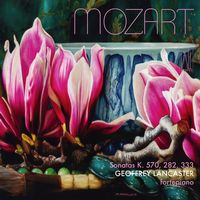
Mozart: Sonatas K. 570, 282, 333
Geoffrey Lancaster returns with three Mozart keyboard sonatas on fortepiano. His earlier Tall Poppies set of the K. 330–332 group had already won strong critical notice.
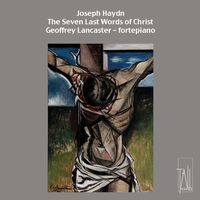
Haydn: Seven Last Words of Christ
One of the most extraordinary of Haydn’s late works. Five versions exist, including the original orchestral score; this keyboard version was prepared by his publisher Artaria and thoroughly approved by the composer. Full of passion and contemplation, it receives a superlative performance.
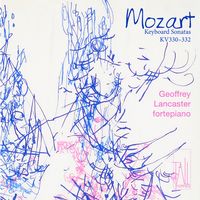
Mozart: Keyboard Sonatas, K. 330-332
By 2017 Geoffrey Lancaster was deep into the fifth decade of his performing career. Tall Poppies first recorded him in Mozart in 1991, accompanying the Song Company on Mozart Unexpurgated. A quarter-century later he returns to the composer with three of the best-loved keyboard sonatas.
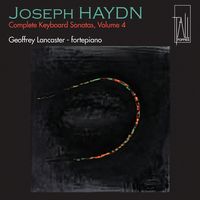
Joseph Haydn: Complete Keyboard Sonatas, Vol. 4
Tall Poppies and fortepianist Geoffrey Lancaster continue their survey of Joseph Haydn’s complete keyboard sonatas. He gave the full cycle of 52 sonatas in concert in Melbourne, Perth and Canberra for the 2009 bicentenary, and records them on period instruments from Australian collections.
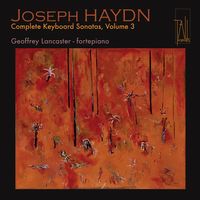
Joseph Haydn: Complete Keyboard Sonatas, Vol. 3
Tall Poppies and fortepianist Geoffrey Lancaster continue their survey of Joseph Haydn’s complete keyboard sonatas on period instruments.
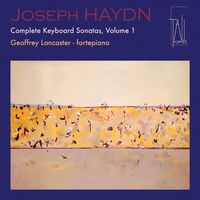
Joseph Haydn: Complete Keyboard Sonatas, Vol. 1
In the bicentenary year of Joseph Haydn’s death, Tall Poppies and Geoffrey Lancaster begin a complete survey of the keyboard sonatas, opening with three middle-period works on fortepiano.