Mozart: Sonatas K. 570, 282, 333
Geoffrey Lancaster returns with three Mozart keyboard sonatas on fortepiano. His earlier Tall Poppies set of the K. 330–332 group had already won strong critical notice.
Each sonata is introduced by a short improvised prelude, a historically informed practice that frames the reading to follow. Lancaster brings virtuosity, humour, clarity and sincerity to K. 570, K. 282 and K. 333, and the playing stands apart in Australian Mozart performance.
The cover painting is a colourful still life by Melbourne artist Dean Home.
Reviews
I last reviewed Geoffrey Lancaster in the January edition of Loudmouth, there playing three other Mozart sonatas — the group the composer published with Artaria in 1784 (KV 330-332), including the well-known Alla turca sonata. This new CD brings together three temporally separated sonatas, the B flat major sonata of 1789, the E flat major sonata of 1774 and the B flat major sonata of 1783.
Much of what I wrote in that January review is applicable here. I remain unconvinced by the inclusion of brief (one of them lasting less than half a minute) preludes to each of the sonatas. Inventive enough on their own terms, they are musically pretty slight and I don’t think their purpose of testing the acoustic, the tuning, or the instrument can really be said to be fulfilled in a recording. To some extent, they do fulfil the purpose of somehow giving an indication of the kind of reading Lancaster is going to give of the succeeding work. I’m quite sure that Lancaster would agree that these improvised works are highly contextual and would and must change depending on the room, instrument, and the mood of the performer towards the ‘main’ work. Recording them seems such an invidious task I wonder why Lancaster bothered at all. I won’t go so far as to say they are superfluous to the manner in which Lancaster argues the sonatas, but given their dependent nature, recording them does seem superfluous.
Lancaster is on firmer ground in the sonatas themselves. In January, I was struck by his playing of the slow movements, and it is those movements again that draw the listener’s attention on the current disc — the middle movements of K 570 and K 333 and the quite extended first movement of K 282. Lancaster achieves the right amount of breadth in all of these movements, giving them a kind of poignant eternity that seems utterly true to Mozart’s intentions. Particularly telling is his control of tone colour in these slow movements, from a glistening treble to a throaty middle register and warm, bell-like bass; his expression of musical ideas is also perfectly served by his masterly control of the various gradations in touch — in these slow movements, particularly by a seamless legato. As I remarked in January, one mark of Lancaster’s genius in the interpretation of Mozart is in his ability to conjure up the sense that he is standing in Mozart’s place, making up the music as he goes along. That remains powerfully true especially in the slow movements of the current disc.
Lancaster’s faster movements are occasionally marked by a brittle, percussive, almost shrill kind of touch that is largely absent in the slow movements. Lancaster uses this touch to good effect particularly in the first movement of B flat sonata K 570, which has sudden, dramatic transitions that profit from it; in other places it seems less apt.
Everything comes together particularly in the masterly B flat major sonata K 333, which calls for the full array of Lancaster’s pianism — the humour and operatic drama of the sudden changes of direction in the last movement; the frequent opportunities for shapely melodic playing in the first movement; the constant sense that the sonata is veering away from its humble confines towards the breadth of a concerto; the soulfulness and wistfulness of the broadly-conceived middle movement. While Lancaster’s playing is every bit as fine in the other B flat major sonata on this disc (K 570), he often comes close to playing too quickly in that sonata’s fast movements for the music to tolerate.
This disc marks another milestone in Lancaster’s exploration of the Mozart sonatas. There are such riches awaiting him yet — the final sonata, for example, and keyboard works like the B minor adagio that I hope might attract his interest. I can’t wait for whatever comes next.
As I listened to fortepianist Geoffrey Lancaster’s recently released compact disc recording devoted to three of Mozart’s keyboard sonatas, I wondered how some of my colleagues would respond to his approach to these works. For those for whom a strict, unwavering beat (apart from a rit at the end of this or that section of the work) is a non-negotiable requirement, Lancaster’s recordings could well trigger apoplectic responses from those unable – or unwilling – to accept that these sonatas are presented in a way that was standard practice during the composer’s lifetime and for a long time afterwards.
As a young grand-pupil of Lili Kraus, I accepted without question that, in Mozart or Haydn, a steady beat, with hands strictly co-ordinated, was de rigueur throughout. This is ever present in the Mozart recordings of, say, Walter Gieseking whose performances were – and still are for millions of listeners – considered the last word in the way to play the works of the Salzburg master. I’d like to think, though, that even this very great artist, after careful consideration, might have conceded – at least in part – the validity of Lancaster’s revivifying approach to Mozart.
I hope these recordings receive a very wide listenership. They deserve it. In his retrieval of near-forgotten historic performing modes, Lancaster’s offerings warrant the highest praise and the widest listenership. This compact disc is a compendium of marvels. Even the least important succession of notes is treated with utmost care and, always, infused with beauty of tone and expression.
These performances are a joy from first note to last. I look forward very much to Lancaster’s recordings of more of Mozart’s sonatas – each one prefaced by what comes across as if it were an on-the-spot extemporisation by the soloist, a procedure that was standard practice at the time Mozart’s sonatas were being written.
As ever, Lancaster’s liner notes are a joy to read. They ought to be required reading by anyone preparing a Mozart piano work for performance.
I am certain that I am not the only listener looking forward with great anticipation to Lancaster’s next recording of the keyboard sonatas of Mozart.
The point is that this CD demands to be heard and will force you to think about Mozart and his music. Lancaster, I imagine, would say that this is the only reason he performs.
Artists

Geoffrey Lancaster
Geoffrey Lancaster plays Mozart and Haydn on the fortepiano with fearless freedom: improvised preludes, lavish ornament, tempo that breathes and darts. The playing reclaims the music's wit, drama and conversational intimacy.
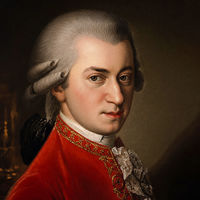
Wolfgang Amadeus Mozart
Wolfgang Amadeus Mozart was a prolific and influential composer of the Classical era. He wrote over 600 works, many of them pinnacles of symphonic, concertante, chamber, piano, operatic and choral music, and remains among the most enduringly popular of classical composers.
Tracks
- Prelude in B-flat major Wolfgang Amadeus Mozart 1:40
- i. Allegro 6:43
- ii. Adagio 9:00
- iii. Allegretto 4:10
- Prelude in E-flat major Wolfgang Amadeus Mozart :29
- i. Adagio 8:37
- ii. Menuetto I – iii. Menuetto II 5:30
- iv. Allegro 3:29
- Prelude in B-flat major Wolfgang Amadeus Mozart 1:13
- i. Allegro 8:20
- ii. Andante cantabile
- iii. Allegretto grazioso 6:58
Sonata No. 17 in B-flat major, K. 570 Wolfgang Amadeus Mozart
Sonata No. 4 in E-flat major, K. 282 Wolfgang Amadeus Mozart
Sonata No. 13 in B-flat major, K. 333 Wolfgang Amadeus Mozart
Performers
- Geoffrey Lancaster · fortepiano
Where to listen
Mozart: Sonatas K. 570, 282, 333 is available for streaming through Apple Music. It can also be purchased through the iTunes Music Store.
Mozart: Sonatas K. 570, 282, 333 is available as a CD. It can be purchased online through Buywell Music or the Australian Music Centre which both offer online ordering.
Product details
- Catalogue number
- TP260
- Total playing time
- 56 minutes 9 seconds
- Release date
- 15 Dec 2018
- Label
- Tall Poppies
- Musical work
copyright - © 2018 Tall Poppies Records
- Sound recording
copyright - ℗ 2018 Tall Poppies Records
- Category
- Great Classics
- Genre
- Classical Era
- Barcode
- EAN 9399001002603
Related recordings

Haydn: Seven Last Words of Christ
One of the most extraordinary of Haydn’s late works. Five versions exist, including the original orchestral score; this keyboard version was prepared by his publisher Artaria and thoroughly approved by the composer. Full of passion and contemplation, it receives a superlative performance.
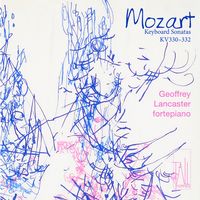
Mozart: Keyboard Sonatas, K. 330-332
By 2017 Geoffrey Lancaster was deep into the fifth decade of his performing career. Tall Poppies first recorded him in Mozart in 1991, accompanying the Song Company on Mozart Unexpurgated. A quarter-century later he returns to the composer with three of the best-loved keyboard sonatas.
Joseph Haydn: Complete Keyboard Sonatas, Vol. 4
Tall Poppies and fortepianist Geoffrey Lancaster continue their survey of Joseph Haydn’s complete keyboard sonatas. He gave the full cycle of 52 sonatas in concert in Melbourne, Perth and Canberra for the 2009 bicentenary, and records them on period instruments from Australian collections.
Joseph Haydn: Complete Keyboard Sonatas, Vol. 3
Tall Poppies and fortepianist Geoffrey Lancaster continue their survey of Joseph Haydn’s complete keyboard sonatas on period instruments.
Joseph Haydn: Complete Keyboard Sonatas, Vol. 2
2009 marked the bicentenary of Joseph Haydn’s death. To commemorate the anniversary, Tall Poppies and fortepianist Geoffrey Lancaster began recording Haydn’s complete keyboard sonatas on period instruments.
Joseph Haydn: Complete Keyboard Sonatas, Vol. 1
In the bicentenary year of Joseph Haydn’s death, Tall Poppies and Geoffrey Lancaster begin a complete survey of the keyboard sonatas, opening with three middle-period works on fortepiano.