Merry-Go-Round
Australia's foremost chamber group meets one of the country's most engaging composers. Martin Wesley-Smith draws on politics (East Timor, Afghanistan), Lewis Carroll, and personal tributes to Don Banks and Peter Platt.
The music is tuneful, quirky and virtuosic for the players, yet always inviting for the listener. Snark-Hunting stands among the great pieces in Wesley-Smith's output, and here it shines; Timothy Constable gives a terrific performance.
The Australia Ensemble has long championed this repertoire. Tall Poppies is delighted to present the first CD devoted entirely to Wesley-Smith's chamber music.
The recording was funded by the Australia Council.
Reviews
What makes Martin Wesley-Smith one of the most truly distinctive voices in Australian composition is the abundance of personality in his music. Never one to hide behind stylistic barriers or retreat into abstract technique, he composes like one imagines he is: an observer of people who is interested all aspects of the human experience, including the perplexing, quixotic and downright humorous. He explores these elements with particular success in his music theatre works, but they are also abundantly manifest in his chamber works. To date these include over a dozen pieces ranging from duos to quartets and quintets for various combinations.
Six are presented in this, the Australia Ensemble's first disc devoted to the composer. The earliest, Snark-Hunting (1984) remains possibly his most brilliant chamber music piece. A precursor of his stage work Boojum!, it treats Lewis Carroll's nonsense poem The Hunting of the Snark with fresh, imaginative originality. Combining flute, percussion, piano, cello and Fairlight computer (in this performance played back on compact disc), he creates a mysterious sound world of lurking menace and wide-eyed wonderment. Eastern sonorities of drones and shimmering percussion transform by turn into shadowy variants of waltz, ragtime and boogie-woogie, before the piece closes out with the nursery song Rock-a-Bye Baby on celesta, like a toy box winding down.
Merry-Go-Round (2002) follows very much in the same vein. The instruments – clarinet, cello and synthesiser – chase each other in a never-ending game of tag, through a series of "stylistic hoops", from modally inflected lullaby to music hall, polka and quickstep. Its vivacious exterior hides a serious undercurrent that gradually makes itself known as the piece becomes more reflective: the title refers to the social dislocation of war-torn Afghanistan, the consequences of which are a bewildering, never-ending series of invasions for its inhabitants. For flute, clarinet and cello, db (1991) is his homage to Don Banks. Again Wesley-Smith is at the same time enigmatic and personal. The instruments wrap around each other melodically over slowly repeated chords, Satie-like, until an unexpected, peppy change of mood leads the work in the direction of jazzy improvisation. The duet for flute and piano, Oom Pah Pah (1996), is a tunefully melodious little creation that also plays around openly with style, in this case oompah and jazz-inspired tango. The topsy-turvy, Carroll-like world returns in fin/début (2000), for flute, clarinet, piano and string quartet. This begins with an exuberant, fun parody of Beethoven's Septet but in its second half slips into a mood of deep, elegiac thoughtfulness with quotations from Schoenberg's Verklärte Nacht. It was composed in memory of the late Peter Platt.
The performances by Australia Ensemble and Sydney percussionist Timothy Constable are all exemplary. They are both richly atmospheric and fastidiously crafted, just as the music demands. Wesley-Smith himself sat in on the recordings, and it feels very much that the musicians are responding to and conveying exactly his intent in these delightfully memorable pieces.
The Australian composer Martin Wesley-Smith has an individual style and a strong feeling for chamber music. In the works on the present disc he creates thick textures, rich in motifs and harmonies. Every measure is filled with events, and the entire program is a huge sparkling kaleidoscope.
db is dedicated to Wesley-Smith's friend and colleague, the late Australian composer Don Banks. It incorporates some of Banks' themes. The first movement goes from exotic expressionistic arabesques to something like a jolly circus polka, which turns into a waltz and back. In fact, everything is transforming into something else, as the music is very metamorphic. There are visitors too – ranging from jazz to sweet evening romance. The second movement opens with a minimalistic dissection of harmony, but soon the "kaleidoscope" mode is back on. The composer is at play with minimalism, just as he is playing with other techniques and styles. Different motifs try to weave themselves into the minimalistic canvas, some of them strong enough to grab centre-stage for a while. From the first note of db to its last, the music is smiling. The effect exactly parallels those moments when you hear somebody sing and can say immediately that the singer smiles or frowns.
There is no smile in Merry-Go-Round, despite the title. It has political roots and was inspired by a picture of a primitive wooden merry-go-round photographed in Afghanistan, with Afghani children riding it. The music starts with cold and misery. Oriental melodies entwine in the air, and then we hear a sad lullaby. The mechanical carousel is turned on, with its false lights and sweet promises. But the winding goes down, and we are left with the cold and the misery. An agitated, pleading episode follows, and then the sad lullaby returns. Children and war, children in a land tormented by endless conflicts; this is a painful subject, and the emotional picture cannot leave one indifferent. Technically, the music is performed by two "live" instruments – a cello and a clarinet – with a lot of percussion and synthesized sounds from an electronic device. Such solution allows the composer to combine the mechanical and the humane, the clockwork and the soul. There is no explicit suffering depicted; the music has a certain documentary feeling. I was deeply moved by it.
The ideas of Lewis Carroll had a big influence on the works of Wesley-Smith. This includes the illustrious nonsense epic "The Hunting of the Snark". I cannot say how closely the music follows the narrative of the poem, but it definitely depicts a journey with many episodes, ending with the quiet vanishing of the hero – for the Snark was a Boojum, you see. The composer plays with some Victorian nursery songs, setting them backwards or upside down, just as Lewis Carroll did with music-box rolls. Each episode is like a scene in a computer game, with different machinery. There is a significant electronic component here too – oh, that scary Jubjub bird! – although now the percussion is "live". The piece is long, and I had some difficulty concentrating over its entire length. Then again, I have the same problem with the poem – go figure!
Oom Pah Pah for piano and flute could be a soundtrack to a cartoon, not necessarily one for kids. The cartoon is drawn – or even sketched – in plain lines. Its hero is a simple, sympathetic little fellow, who starts his day in a carefree, happy mood. The whole world is his friend. Then he gets into some awkward and unpleasant situations, possibly as a result of his candidness. All ends well – or was it a question mark we heard? I am sure the composer had nothing of this in mind when he wrote the music – but that's the impression I invariably get from it. Here again, as in db, I hear the instruments smiling.
Finally we have fin/début, a multi-layered piece dedicated to the end/beginning of the century. It was written in 2000, and its two movements – actually there are three, but the third one is not recorded here – take as their starting points two other pieces written on the edge of centuries. One is Beethoven's Septet (1800), the other is Schönberg's Verklärte Nacht (1900). The first part (spawning from the Beethoven) is all fun and merry-making. It is aptly described by the composer in the liner-note as "an exuberant romp through a garden whose live flowers consist of snippets of Carrollian nursery rhymes, and other quotes ..." We have tiny waltzes and tangos, a minimalistic Clockland, we have silly "party games" with metronomes and musicians walking on and off the stage. The piece packs a lot into its nine minutes, and never becomes boring: a colorful, exciting journey.
The other part of fin/début is entitled pp, a tribute to another composer's colleague, Peter Platt. It is quiet and melancholic. It starts in the gloomy woods of Verklärte Nacht, with the flute spelling out the late friend's name. Enter clarinet, and the narration changes – from indirect to direct speech. Enter piano which brings another sad lullaby, like throwing a bridge to the Merry-Go-Round piece.
The playing of the Australia Ensemble is virtuosic and committed. Even the thickest textures are transparent, the counterpoint is well laid out, and the numerous sonic effects are effortless and natural. I want to praise especially the glorious clarinet playing of Catherine McCorkill, although other members of the ensemble are highly professional too. The recording is not very deep, alas – this music would benefit from a more spacious presentation. However, the balance is excellent, which is especially important in the two pieces that incorporate a CD. Very informative liner notes help a lot in understanding the pieces.
I cannot say that I really became a big fan of Martin Wesley-Smith. And I definitely would not advise to listen to the disc in one run. The non-stop flickering of its merry lights can start to irritate. But if you love this kind of music, you will discover the colorful, inventive, bright world of one of Australia's leading composers. It has a lot of heart; that's for sure!
Whatever motivations a composer may have for creating their music, they are more often than not specified on a superficial level, if at all. Here though, we have a CD in which the composer's motivations are so intrinsic to understanding his work that you almost find yourself listening intently to each note for what it may tell you about the South Australian Wesley-Smith. More fundamentally, about what he cares about. Firstly, humanitarianism: Wesley-Smith is music's defender of the rights of the East Timorese people. But what seems like a political statement can just as easily morph into a jazz pastiche. Secondly, a playful response to childhood classics: he worked for years writing music for children's television and radio. These are works composed by a man who finds, wherever he looks in the world, the inspiration to create a sparkling micro-environment of sound. The performance, largely wind-based, has just the lightness of touch it needs without fudging the depth of feeling embedded in the music. If the track titles themselves sound rather lightweight – Snark-Hunting, Merry-Go-Round, Oom Pah Pah – we can sense this is simply Wesley-Smith's way. He applies a quality of understatement that is lacking in the subjects he tackles. His music is tuneful and harmonic, mordant and inquisitive, suddenly pausing for moments of reflection without resorting to melodic sentimentality. Wesley-Smith does right by his subjects. An imaginative CD of great warmth and depth.
This disc of chamber music by Martin Wesley-Smith, who is both politically engaged (East Timor is an abiding focus) and a huge admirer of Lewis Carroll – the two being not mutually exclusive – attests to his consistently engaging musical ideas. For over a quarter of a century he taught at the Sydney Conservatorium of Music but his Audio-Visual and Children's work, two prominent examples of his variousness and interest in contemporary communicative ideas, illustrate his quixotic and project-driven enthusiasms. Here he teams up with his interpreters, that elite body, the Australia Ensemble.
db is a tribute to Don Banks and references his music. It has a rather French feel in places – Poulenc and Françaix even, in terms of clarity – though the music is also infiltrated by more rhythmically brisk and jazz-like lines, before a genuinely funky jazz club workout emerges. Reich-like patterns also make an impression in the Pat-a-Cake second movement as do some jaunty Carroll inspired Edwardian moments too. There's plenty of dance and colour, plenty of wit and even drollery.
Written for clarinet, cello and CD (laptop and data projector, to be specific) Merry-Go-Round and owes its genesis to the composer's feelings about the Afghan people and the invasion of their country. The powerful and arresting start leads onto more reflective, keening soliloquies for the clarinet and the evocative computerised sounds. There's a strongly melancholic theme at 3:00, and there are terse dance themes as well, with percussive support, and – in the context – a disquieting almost oompah quality. As the work slides to its conclusion the clarinet voices over cello pizzicati, quietly intoning as if to itself, its melancholic, orphan refrain.
Snark-Hunting unveils the full Lewis Carroll. The forces are flute, percussion, piano, cello and computer (a Fairlight CMI the composer tells us). The results are full of fantasy and colour, brio and delightful sonorities. Gradually Rock-a-bye-baby is transformed into a Victorian music box sonority, sent back to front, even inverted. There are even Rock passages that turn on a sixpence – rock being both the music of choice for the passage and also, one suspects, a musico-punning opportunity.
I mentioned the disquieting almost Oktoberfest quality of the oompah rhythms in Merry-Go-Round but Wesley-Smith has also written a piece almost called that. Oom Pah Pah though, is a teaser. It is Poulenc-peppy, not stein heavy. It takes in a slow section too, and is an engaging, joie de vivre filled opus. Finally there is fin/début, written in 2000. Written for flute, clarinet, piano and string quartet, it quotes Beethoven's Septet (and again toward the end) and then heads off sinuously almost to the world of Piazzolla. The second movement is a tribute to Peter Platt, a musical colleague, and is a melancholy elegy cum eulogy, a slow waltz to see him on his way.
The performances match virtuosity with narrative flair and have been very finely recorded – and balanced. Reading a composer's words about his own music is almost always valuable; Wesley-Smith's booklet notes are no exception.
Artists

Martin Wesley-Smith
Martin Wesley-Smith wrote music audiences actually like: electronic pieces that stay human, choral parables that turn nursery rhymes into environmental inquests, and chamber scores laced with Lewis Carroll fantasy and hard political irony.
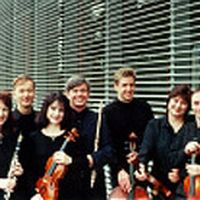
Australia Ensemble
The Australia Ensemble, resident at the University of New South Wales since its founding in 1980, is widely recognised as Australia’s leading chamber music ensemble. Seven principal instrumentalists form its core, joined by guests for standard repertoire and unusual combinations.
Tracks
- Steps 9:33
- Pat-a-Cake 2 6:03
- Merry-Go-Round Martin Wesley-Smith 15:37
- Snark-Hunting Martin Wesley-Smith 17:22
- Oom Pah Pah Martin Wesley-Smith 8:22
- tick tock, in which Phyllis Rides Aristotle 9:04
- pp (Farewell to the Hotel Turismo) 5:14
fin/début Martin Wesley-Smith
Performers
- Timothy Constable · percussion · track 4
- Australia Ensemble · ensemble
Contributors
Cover
Jorgio El Zein
Liner Notes [Annotations]
Martin Wesley-Smith
Martin Wesley-Smith wrote music audiences actually like: electronic pieces that stay human, choral parables that turn nursery rhymes into environmental inquests, and chamber scores laced with Lewis Carroll fantasy and hard political irony.
Liner Notes [Annotations]
Roger Covell
Where to listen
Merry-Go-Round is available for streaming through Apple Music. It can also be purchased through the iTunes Music Store.
Merry-Go-Round is available as a CD. It can be purchased online through Buywell Music or the Australian Music Centre which both offer online ordering.
Product details
- Catalogue number
- TP200
- Total playing time
- 71 minutes 15 seconds
- Producer
- Belinda Webster
Malcolm Batty - Recording Engineer
- Belinda Webster
Yossi Gabbay - Mastering Engineer
- Christo Curtis
- Credit
- Jorgio El Zein
Martin Wesley-Smith
Roger Covell - Release date
- 4 Jun 2009
- Label
- Tall Poppies
- Musical work
copyright - © 2009 Tall Poppies Records
- Sound recording
copyright - ℗ 2009 Tall Poppies Records
- Category
- Australian Classics
- Genres
- Contemporary Classical, Experimental
- Barcode
- EAN 9399001002009
Related recordings
Le Tango Perpetuel
Ian Munro, superb pianist and imaginative composer, turns piano masterworks into chamber colour for the Australia Ensemble. The disc also preserves a rare late performance by tenor Gerald English in Satie’s Sports et Divertissements.
Blue Silence: Australian Music for Cello and Piano
This is the first disc of its kind released in Australia: an overview of important works for cello and piano spanning 108 years. The earliest is Grainger’s Scandinavian Suite, a tour de force that deserves a place in the concert hall.
Six Fish
Guitar Trek began in 1987 and broke new ground for the guitar with a special “family” of instruments: standard guitars by Greg Smallman, treble guitars by Eugene Philp and Greg Smallman, and baritone and bass guitars by Graham Caldersmith.
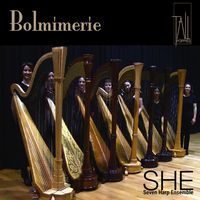
Bolmimerie: SHE
SHE is the only harp septet in the world, and this is its first recording.
Musica Viva: 60th Anniversary, Selected Commissions 1975–2004
This disc marks sixty years of Musica Viva Australia’s work commissioning Australian chamber music. Since 1945 the organisation had helped bring nearly a hundred new works into being, building a distinctive national repertoire. A full list of those commissions is included with the CD.

Electric Cello
David Pereira plays solo Australian cello works, each scored for cello with pre-recorded tape or delay. The Wesley-Smith and Ford pieces are world premiere recordings.