Multi-Piano: 1978–2012
It’s a rare thing to showcase a performer’s work across forty years. This two-CD set does just that for Roger Dean, whose serious career in improvisation spans performances and books on the subject.
This pair of CDs gathers some of his best piano work since 1978. The music shows the depth and breadth of his interests, and the skill he brings to performance. One can also hear how he reinvented himself musically over that span, while reinventing his professional life from running a heart research institute to university vice-chancellor and research.
Dean says the release was inspired by the ground-breaking Tall Poppies CDs of the late Roger Frampton’s improvisations from the early 1990s. In Tall Poppies’ 21st year it feels like a coming of age: a project from the beginning inspiring a new one two decades later.
Pianists and improvising musicians will find food for thought in the set. It formed part of the label’s 21st birthday celebrations.
Reviews
Dean is a strikingly intelligent but also soulful pianist with a fine, crisp touch: for many years a close associate of Graham Collier, he has worked with other probing contemporary figures such as Terje Rypdal and Kenny Wheeler, Derek Bailey and Evan Parker and he has long been director of the excellent Australian ensemble AustraLYSIS. One of only two Australians to be subjects in the Grove dictionaries of music and of jazz, he has written extensively about the emergence of new structures and technical possibilities in improvised music.
Beautifully programmed, this two-CD set offers a wide-ranging overview of Dean's solo work over the past 35 years and includes a helpful track-by-track commentary by the pianist.
If we begin in familiar territory, with lucidly phrased acknowledgement and exploration of the (acoustic) worlds of Bill Evans, Monk, Carla Bley and Herbie Hancock, by the end of disc two we have been made fully aware of the breadth and depth of resource available to the computer-literate improviser today.
Various programmes help Dean fashion a densely packed, yet once again lucid electroacoustic poetics of multi-layered time, vibrant melodic line and strong rhythmic accent. Throughout it all, he retains deep albeit transmuted links with tradition, including the crucial factors of the blue note and the motor rhythms of dance.
Anyone who responds well to the work of Paul Bley, Cecil Taylor or the late Canadian artist and pianist Michael Snow should find much to relish in what is one of the most refreshing avant-garde releases - consistently as enjoyable as it is thought-provoking - that I've heard in quite a while.
This retrospective of Roger Dean’s work as an improvising pianist covers samples of work created from 1978 to 2012 from a variety of sources including recording sessions, live performances, live performances using pre-recorded material and studio-based editing/remixing exercises. Dean employs a range of styles and approaches to the piano, by itself and combined with electronic sounds. He organises the two CDs under headings which generally give a good idea of the artistic approach and the combination of sonic elements. The notes in the CD booklet give further useful information about each item. Unfortunately the look of the booklet is spoilt by incorrect numbering of the CD 2 tracks [Tracks 6 to 12 are all assigned the number 5]
CD 1 is titled Inside and Out: impure piano, a reference to Tall Poppies’ Totally Prepared CD releases of legendary jazz/experimental musician, Roger Frampton. It begins with a series of tributes to jazz performers “in the traditions” including Harry Miller, Bill Evan, Thelonius Monk, Carla Bley and Herbie Hancock. While attempting to capture something of the style of these artists (including some use of quotation and paraphrase) Dean effectively introduces “outside” elements both harmonically and rhythmically. The last seven tracks of CD 1 more generally combine jazz stylings with atonal gestures and extended techniques for the piano. These tracks show Dean’s versatility as a piano improviser, although often the playing is untidy and one wants to hear more coherently structured trajectories in the improvisations.
CD 2, Outside and Beyond opens with Ostinato which explores the idea of improvising over a simple riff (scored for MIDI bass and drum-kit) which is able to be manipulated in real time as the improvisation progresses. The overlaid piano improvisation begins in a modern jazz style but slowly becomes more and more chaotic until the riff is no longer recognisable and the piano playing is a pulsating sonic morass. A variety of other improvisation frameworks and strategies are employed. A 17th Century keyboard piece by Louis Couperin is the starting point for a radical sonic transformation. There are two SoloDuo duets between piano and computer-generated textures; a piece for two pianos intended for an art exhibition audience to dance to; a number of pieces designed for the improvising pianist to bounce off pre-recorded material; several works based on computer interactivity; and a work based on the live algorithmic processing of an evolving dance music groove against which a more abstract piano solo is superimposed.
Despite the broad mixture of styles and formats there is a sameness about Roger Dean’s approach as an improviser across the two CDs. Certainly in many of the offerings there is a tendency towards playing as many notes as possible as fast as possible. This soon becomes tiring for an ear searching for a more expressive range in both the compositional and improvisational aspects of the compilation.
This wide-ranging 2 CD set, (1), presents solo piano and electronic music from the major Australian musician Roger Dean. Since 2007 a professor in music at the University of Western Sydney, Dean has performed in his ensemble AustraLYSIS in 30 countries, and also has extensive performance experience in London and Australia with numerous groups spanning the classical and jazz worlds. This recording provides two and a half hours of music from different stages of Dean’s career. The earliest work from Dean represented here are his three “Breaking in the Song” studio recordings made in 1978, three free improvisations which “foreground elements of my own style that become more developed and predominant in the later work on this album,” as Dean comments in the album notes. Five pieces recorded in 1990 are the most mainstream selections, beginning with “Rollin’ for Harry,” which is dedicated to the late South African bass player Harry Miller and also to the late Jamaican trumpet player Harry Beckett, both of whom lived and performed in London. The other four 1990 pieces pay tribute to Bill Evans, Thelonius Monk, Carla Bley, and Herbie Hancock. References are made to “Blue and Green” in the Evans tribute “Metagroove Blue” and to “Blue Monk” played in a decidedly Monkian fashion in “The Monk’s Habit.” Except for “176 Sound Engines,” a 1990 piece involving successive overdubbing of two of his performances, the remaining fifteen selections were made in 2002 or later, with eleven made in 2010 or 2011. These more adventuresome works are described by Dean as “multistrand performance” involving “live electronics, computer interaction and processing, and in some cases, pre-recorded electroacoustic material.”
The remarkably versatile Roger Dean is a classical double bassist, a computer music trail-blazer a pianist active in jazz, classical, new music, free improvisation and electro-acoustic contexts in Australia and Britain. This double album spotlights his solo piano playing from 1978 to 2012, and from jazz to computer-processed performances.
Those only familiar with Dean via his heady work amid the computer-generated auras of AustraLYSIS will be ambushed by the willing grooves and earthy approach of some material. Rollin’ For Harry (for the late South African bassist Harry Miller) rides on a pitch-and-sway left-hand rhythm, overlaid with melodies that explode with vivacity. There are charming pieces inspired by Bill Evans, Thelonious Monk, Carla Bley and Herbie Hancock, with the Evans one, Metagroove Blues, exquisite.
Gradually the nature of the work metamorphoses into more radical areas, whether in the way Dean attacks the piano or the in pre-recorded, real-time or post-production layering of effects. As these become more sophisticated in recent years so the end results are often ever more surprising and disquieting.
While a keen sense of adventuring informs the methodologies, Dean is still interested in the aesthetics of his outcomes, too. These may be crystalline or tumultuous, but always they are realised with brilliant musicianship, and with cracks where the heart is glimpsed through the intellect.
Versatile Roger Dean is a classical double bassist, a computer music trail-blazer and a pianist active in jazz, classical, new music, free improvisation and electro-acoustic contexts in Australia and Britain. This double album spotlights his solo piano playing from 1978 to 2012, and from jazz to computer-processed performances.
Those familiar with Dean only via his heady work amid the computer-generated auras of AustraLYSIS will be ambushed by the earthy approach of some material. Rollin' for Harry (for late South African bassist Harry Miller) rides on a pitch-and-sway left-hand rhythm. overlaid with melodies that explode with vivacity. There are also charming pieces inspired by Bill Evans, Thelonius Monk, Carla Bley and Herbie Hancock.
Gradually the work metamorphoses into more radical areas. As these become more sophisticated, so the end results are often ever more surprising and disquieting.
While a sense of adventuring informs the methodologies, Dean is interested in the aesthetics of his outcomes, too. These may be crystalline or tumultuous, but always with brilliant musicianship.
Manchester born pianist Roger Dean has divided his life between the UK and Australia, between music and science, between writing compositions that riff off classic jazz like "The Monk's Habit" and "Calling Carla", and scientific papers that keep an eye on the future - his Mononuclear Phagocytes: Physiology And Pathology is a must for those seeking to understand the role of white blood cells in the immune system.
Multi-Piano is a career retrospective that begins with Dean earning his jazz colours and winds up three decades on, in 2011, as jazz has become one strand in a language otherwise gorging on free improvisation, hardcore modern composition (Dean is a Xenakis aficionado) and the uncharted territory of electronics. If anyone were to ask which tracks are most enjoyable - as opposed to aesthetically stretching and therefore supposedly worthwhile - it's a no-brainer. "Rollin' For Harry", "Metagroove Blue" and "The Monk's Habit" are pleasingly unfussy and technically quick-witted.
The first piece, forever perched around eight-to-the-bar, is a hat-tip towards South African bassist Harry Miller, with shellac boogie-woogie spilling towards harmonic free for ails as Dean nudges his gears towards double-time.
According to Dean's resume, he has played with Derek Bailey, Barry Guy and Tony Oxley, but his freer pieces lose that essential quality of play I enjoyed in the earlier work: there's a tendency for this music to think about itself just a little too consciously. Recorded back in 1978, "Breaking In The Song" boosts a long central section where Dean makes resourceful use of the inside of his instrument: sounds folding through and around each other with a logic that can never quite by pinned down. Other pieces involving contrived algorithmic processing and live interaction with computers are all too easily pinned down.
Artist

Roger Dean
Roger Dean's piano and computer improvisations move from lucid jazz homage to dense electroacoustic layering, often with austraLYSIS. Sensitive touch meets algorithmic process, blue notes and dance rhythms surviving inside radical sound design.
Tracks
- Rollin’ for Harry 4:58
- Metagroove Blue 5:15
- The Monk’s Habit 6:04
- Calling Carla 4:03
- Dolphins Fly By 2:43
- Breaking in the Song 1 2:23
- Breaking in the Song 2
- Breaking in the Song 3 5:59
- QV Free 3:22
- 176 Sound Engines 8:56
- Bimbimbie Piano 8:45
- Regaining Bill 5:38
In the Traditions Roger Dean
TimeShifts Roger Dean
Joining Up Roger Dean
Disc 2
- Jazz, Solo Live Piano and Algorithmic Ostinato Ostinato Roger Dean 7:33
- Louis Le Moine
- Talking with Phil 7:12
- SoloDuo 1 8:11
- SoloDuo 2 3:02
- Dance 1, Acoustic Piano Duo SundayPianoDances Roger Dean 9:20
- Vestige (Greg White) 4:54
- Cloudspotting 8:52
- Kinetic Kingston Piano 5:43
- BiTune 2:39
- MeanHarmony 2 3:34
- Dance 2, Piano and Live Algorithmic Processing MetaGroove Dance Roger Dean 5:59
Piano and Processing, Solo Roger Dean
Duos of Piano and Processing or Pre-recorded Material Roger Dean
ElectroPiano, Solely Computer Interactive Performances Roger Dean
Performers
- Roger Dean · piano, electronics
Contributors
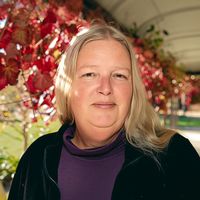
Cover
Belinda Webster
Belinda Webster is the founder of Tall Poppies Records and a leading Australian producer and recording engineer whose work has documented classical, contemporary and jazz performance across decades of catalogue releases.
Where to listen
Multi-Piano: 1978–2012 is available for streaming through Apple Music. It can also be purchased through the iTunes Music Store.
Multi-Piano: 1978–2012 is available as a CD. It can be purchased online through Buywell Music or the Australian Music Centre which both offer online ordering.
Product details
- Catalogue number
- TP225
- Total playing time
- 125 minutes 5 seconds
- Recording Engineer
- Roger Dean
- Credit
- Belinda Webster
- Release date
- 1 Oct 2012
- Label
- Tall Poppies
- Musical work
copyright - © Tall Poppies Records
- Sound recording
copyright - ℗ Tall Poppies Records
- Category
- Improvisation
- Genres
- Jazz & Improvised, Experimental
- Barcode
- EAN 9399001002252
Related recordings
History Goes Everywhere
austraLYSIS Electroband occupies a special place in Australian music. Formed in 1990 by Roger Dean, this trio has carved out a unique territory, pitting acoustic instruments against computer-generated material in live performance.
Sonic Stones
Sonic Stones presents two sides of austraLYSIS’s computer-mediated practice. PianoStones is a fully composed digital work that transforms natural stone sounds and pre-recorded piano by Dean into a continuous sonic field.
Uluru: New Solo Cello Works for David Pereira
Twelve new Australian solo cello works written for David Pereira, celebrating the handing back of Uluru to its traditional Indigenous owners. Responses range from didgeridoo-like sonorities in Hopkins to the modernism of Dean.
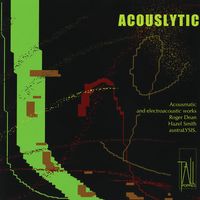
Acouslytic
Acousmatic and electroacoustic works from Roger Dean and Hazel Smith with austraLYSIS. Dean's music and Smith's words form a distinctive soundworld that challenges, inspires and intrigues.
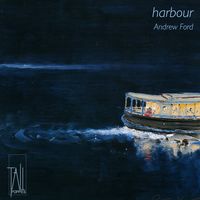
Harbour
This CD features the remarkable voice of the septuagenarian tenor Gerald English in works written especially for him by Andrew Ford. A star-studded gathering of musicians accompanies him and also plays three solo works.
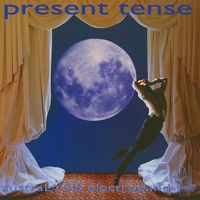
Present Tense
An unusual release of music improvised live with computer-generated improvisations. Sandy Evans is astonishing here. Roger Dean has provided most of the germinal material.