History Goes Everywhere
austraLYSIS Electroband occupies a special place in Australian music. Formed in 1990 by Roger Dean, this trio has carved out a unique territory, pitting acoustic instruments against computer-generated material in live performance.
Sandy Evans saxophone
austraLYSIS ensemble
Roger Dean piano, leader, computer
Hazel Smith voice, text
Adventurous improvisation is a major feature of the music. Roger Dean is a well-known pianist and improviser who also composes most of the music the ensemble performs. Sandy Evans is one of Australia’s great jazz saxophonists, with interests ranging from standard jazz to free improvisation and Indian music. Greg White is known for his breadth of approach with computer-generated sounds and atmospheres. Hazel Smith is a poet who contributes text and speaking where required.
Tall Poppies has released all of austraLYSIS’ CDs to date (see Moving the Landscapes (TP007), Windows in Time (TP039), The Next Room (TP050), Present Tense (TP109), Acouslytic (TP153), Sonic Stones (TP182) and Multi-Piano (TP225)).
Australian novelist and poet David Malouf has written of austraLYSIS’ Tall Poppies CD Moving the Landscapes (TP007): ‘Track after track commands our attention, not just with the drama of what austraLYSIS can do, but with the variety of means, instrumentally and rhythmically, and the degree of emotion they are prepared to risk. What I liked best of all was the inwardness these performers develop, the sense we get of their moving off alone, without compromising the drama of interplay; most of all, without ever releasing tension. This is improvisation that offers increased pleasure at every hearing…
Reviews
Finally if jazz is your music of choice you might enjoy History Goes Everywhere featuring austraLYSIS Electroband. It’s not always an easy listen but there is plenty here to admire and enjoy with its mix of computer, piano, saxophone and spoken word.
Greg White’s Processual features Sandy Evans’ saxophone skipping over synth clouds and taped loops increasing in intensity and reaching a close harmony climax before fading out.
Roger Dean’s The Blue Bus showcases a text by Hazel Smith which references black woman Rosa Parks’ historic bus ride which sparked the Civil Rights Movement bus boycott in Montgomery Alabama.
After the relentless stabbing keyboard of Dean’s Harmonic Moves there’s a little oasis of melodic refreshment in his tribute to 18th century French Baroque composer Louis Couperin. This is the longest track at 12-plus minutes and starts off acoustically with piano and Evans soprano sax before White’s computer takes us to deep space.
Anything involving saxophonist Evans is, in this reviewer’s estimation, well worth a listen but many might find this album less user-friendly than her other work.
This is modernist music and then some, related in places to jazz and in others to Schoenberg et al, and post-serial music. I love it. Not everyone will but that’s okay by me, and the leader is adjusted to a divided reception. austraLYSIS is assembled in slightly different configurations, and led by Roger Dean, who was the founding director of the Heart Foundation (attached to Royal Prince Alfred in Sydney) and Vice-Chancellor and President of the University of Canberra. He is as well an intellectual in the arts and a practising scientist. Also a classical double bass virtuoso, a composer and jazz pianist. And he is from Manchester. There is more, but to the music…
The opening here is electronic – a shimmering, trembling overall pattern of overtones or moire patterns. It is like the eerie sky of a planet, invisible to us, that is perilously close to the sun. Close to ignition in fact. Another overall effect rises within that field, that is like a high, wailing brigade of sirens. Over the slowly changing electronic fields, Sandy Evans skitters, angles and jumps on soprano saxophone, sometimes releasing a high keening note of some emotional force.
Moire, incidentally, usually refers to watered silk but is also applied to parallel streams of odd number intervals, graphic or sonic, that may form clumps of uneven relationships or dissonances.
On the second track Hazel Smith delivers a recitation or perhaps prose poem – called The Blue Bus – through the textures and movements of the group. While this is replete with many clever and amusing sentences, I found myself agonising over whether I really liked it. I decided to leave this in neutral (particularly as a deadline loomed). It is but one track after all, and I am but one listener.
On track three a kind of one and one and one unaccented chordal pounding down near the bottom of the piano – but pianistic treble figures fly overhead – sometimes so fast they slither, barely differentiated, and sometimes tinkle like breaking crystal – until a sudden deceleration and disassembly introduces a more lyrical slower tempo.
This sets up some of the elements in play. Oh, also: ghostly electronics sometimes take over and draw us out into a considerable sonic distance. History Goes Everywhere and space travels freely too on this disc.
As I say, I love it. Specially the interplay of grand piano and electronics. This too is music for sitting and listening, for walking around, for staring out the window at the flight of birds, the fall of a leaf, traffic, the patterns and movements of industry and nature. Hope you join the club, but you may not enlist on first hearing. Bus Stops In History is a particular favourite of mine. Here Sandy Evans’s tenor saxophone enters.
Artist

austraLYSIS
austraLYSIS works across acoustic free improvisation and live computer interaction, pitting saxophones, piano and percussion against electronics in music that holds tension, risks emotion and never settles into one style.
Tracks
- Processual Greg White 4:12
- The Blue Bus Roger Dean 7:49
- Harmonic Moves Roger Dean 5:19
- Remembering Couperin Roger Dean Louis Couperin
- Acoustic Remains Roger Dean 4:03
- Pulsing Roger Dean 6:46
- ElectroTime Roger Dean 8:22
- Fifu Roger Dean 5:13
- Bus Stops in History Roger Dean
- The Unmade Film Roger Dean 7:06
Performers
- Greg White · computer, sounds
- Sandy Evans · saxophone
- austraLYSIS · ensemble
- Roger Dean · piano, leader, computer
- Hazel Smith · voice, text · track 2
Composers
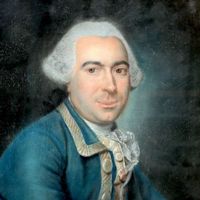
Louis Couperin
Louis Couperin (c. 1626–1661) was a French Baroque composer and keyboard player whose brief career shaped the French organ and harpsichord schools. Some two hundred works survive only in manuscript.
Roger Dean
Roger Dean's piano and computer improvisations move from lucid jazz homage to dense electroacoustic layering, often with austraLYSIS. Sensitive touch meets algorithmic process, blue notes and dance rhythms surviving inside radical sound design.
Greg White
Greg White shapes music through live computer interaction, sound manipulation and programming, often in dialogue with improvising instrumentalists. His work moves between composed electronic pieces and long-form interactive soundscapes.
Where to listen
History Goes Everywhere is available for streaming through Apple Music. It can also be purchased through the iTunes Music Store.
History Goes Everywhere is available as a CD. It can be purchased online through Buywell Music or the Australian Music Centre which both offer online ordering.
Product details
- Catalogue number
- TP234
- Total playing time
- 48 minutes 50 seconds
- Release date
- 1 Sep 2015
- Label
- Tall Poppies
- Musical work
copyright - © 2015 Tall Poppies Records
- Sound recording
copyright - ℗ 2015 Tall Poppies Records
- Categories
- Australian Classics, Voice / Soundscape
- Genres
- Jazz & Improvised, Experimental
- Barcode
- EAN 9399001002344
Related recordings
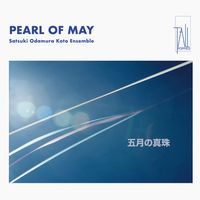
Pearl of May
Satsuki Odamura and her Koto Ensemble return with new Australian works for koto by Sandy Evans and Ian Cleworth, and a solo bass-koto piece by Mark Isaacs. The title marks her thirtieth anniversary in Australia.

RockPoolMirror
Sandy Evans loved Belinda Webster’s dawn photographs of Shoalhaven Gorge from the early 2000s. A Tasmanian supporter funded the project; Evans wrote music to be heard with the images; and an eclectic circle of friends agreed to play and record it.

Multi-Piano: 1978–2012
It’s a rare thing to showcase a performer’s work across forty years. This two-CD set does just that for Roger Dean, whose serious career in improvisation spans performances and books on the subject.
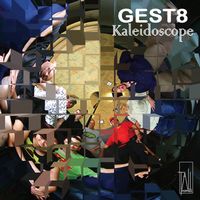
Kaleidoscope
GEST8, the brainchild of Sandy Evans and Tony Gorman, extends their search for new colours in improvisation and jazz. Kaleidoscope is the band’s debut recording.
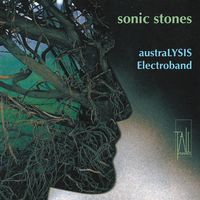
Sonic Stones
Sonic Stones presents two sides of austraLYSIS’s computer-mediated practice. PianoStones is a fully composed digital work that transforms natural stone sounds and pre-recorded piano by Dean into a continuous sonic field.
Uluru: New Solo Cello Works for David Pereira
Twelve new Australian solo cello works written for David Pereira, celebrating the handing back of Uluru to its traditional Indigenous owners. Responses range from didgeridoo-like sonorities in Hopkins to the modernism of Dean.