TEN
Making a welcome return to the keyboard, David Stanhope tackles some of the most technically fiendish repertoire in the piano literature – Godowsky’s Studies on Chopin’s Études Op. 10.
Written to demonstrate hitherto undiscovered technical possibilities in piano playing, these works were astounding for their time and remain exciting to the modern listener. They will always be exciting for the performer.
In particular, Godowsky’s left-hand Studies chart new territory. The whole set was filmed throughout the recording sessions, and those films are available on YouTube. Stanhope proves it is possible to play these works as written, without any technical cheating.
Reviews
David Stanhope bills himself as “an occasional pianist” and came to the instrument after learning to play the French horn and bass trombone. He spends time both conducting and composing, making him a sort of musical Renaissance man. This makes it all the more unfair that in his free time he somehow managed to learn the piano well enough to play Godowsky’s etudes after Chopin, and play them with aplomb. Some people got more than their fair share of talent.
Stanhope is attracted to super-difficult works, like Godowsky’s, and the genre has been his recording focus. Here, he tackles Chopin’s Op. 10 and Godowsky’s variations on those études, presenting each Chopin piece followed by its Godowsky rewrites. The booklet notes explain what’s going on very clearly, but really I suggest you watch Stanhope’s videos on YouTube, where he patiently and wittily explains what’s going on, shows you just how hard the music is to play, and then plays it. That first link is especially rewarding: it may change entirely how you think about a very famous etude.
You might object to the short playing time of the two CDs (45 minutes and 47 minutes), but this turns out to be just right. 45 minutes is the exact amount of time my brain can go listening to such taxing piano showpieces before wanting to hear something else. The shorter first disc, especially, is welcome because by the end, you’ve just heard Godowsky’s seven versions of the “Black Keys” etude.
It’s a lot of fun to read the booklet as you listen along, but it’s still fun to just listen. David Stanhope is a formidable virtuoso. Generally he does not show the strain or herculean effort you’d expect ... and when he does sound stressed, can you blame him? Without use of the booklet, I’m honestly not sure if I could tell which etudes are written for the left hand alone. Godowsky’s bag of tricks is deep, and Stanhope’s ability to cope is seemingly bottomless.
I don’t know Marc-André Hamelin’s recordings well enough to compare the performers in detail, but the recorded sound for this Stanhope set has more colour and pop. Stanhope’s playing style, too, is less clinical than Hamelin’s.
Stanhope’s booklet notes are personable and honest about the music and its challenges. He does an admirable job explaining the technical feats, and he leaves his email address if you have any questions. If you like this repertoire you should get this album. If you’re not certain or worried about overdosing on piano, do try one or two of the excellent YouTube videos.
Ten is a remarkable release from the Australian Tall Poppies label, of the pianist David Stanhope playing not only Chopin’s Op. 10 Etudes but also 22 recomposed versions of them by Leopold Godowsky (1870-1938). Stanhope himself is no ordinary pianist—and indeed most pianists would not attempt to play this challenging repertoire—although he describes himself as simply an ‘occasional pianist’. He is known to Australian audiences more particularly as a conductor, but has also worked as both an orchestral horn player and a bass trombonist. No, I’m not making this up.
Chopin’s Op. 10 Etudes are also far from ordinary music. Despite their familiarity as classic piano repertoire, one cannot cease to be amazed at their prodigal weirdness even after 185 years. Not only are they technically astonishing in terms of pianism, they are startlingly original in terms of musical materials. Despite the romantic myth of Chopin as a rather effete, lifelong convalescent, he was in fact a fierce-minded character who concealed a mercurial intelligence beneath a more-or-less polite public façade. As Robert Schumann wrote, “[t]he works of Chopin are cannons concealed amongst flowers”.
Leopold Godowsky, one of the greatest of all the pianists of the piano’s golden age in the early years of the 20th century, felt that the technical and musical potential of the piano had not yet been exhausted. In particular, he was convinced that the capability of the left hand had not been sufficiently developed. In part to demonstrate this fact, but also to provide ambitious virtuosi with a vehicle for such development, he composed new versions of Chopin’s Etudes that add monumental challenges (doublings, poly-rhythmic layers, added voices, etc.) to the already difficult pieces. Many of these new etudes are for the left hand alone. This recording, on two CDs, includes each of the original Chopin Etudes followed by the various Godowsky versions.
It must be said at the outset that Stanhope really can play this music, which is in itself a feat of rare mastery. His approach is tough-minded and courageous, yet not without humour. He has a fine sense for the lighter moments, and a profound appreciation of not only the technical challenges of each etude (and the solutions) but also of the musical challenges, which are arguably even greater. The project is clearly a great labour of love, and Stanhope’s playing is happily infected with his relish and enjoyment.
The CDs themselves come with quite extensive and valuable notes written by the pianist, and one has the sense that there is for Stanhope a didactic aspect to this project. He is trying to show us something interesting that concerns a number of facets of music in the early 20th century: of the push toward the technical limits of human capability, of the search for new means of musical expression, of the sense that new harmonic and textural ideas for composition might be found by studying music of the past.
This didactic aspect is carried beyond the CD in a series of YouTube videos recorded in the studio at the same time as the audio recording. Here, Stanhope introduces and discusses each etude and then plays it for the camera. This, it strikes me, is extraordinarily valuable documentary footage. It is fascinating to be able to watch Stanhope negotiating his way through these labyrinths of notes, and his commentaries are full of wry insight and humble practicality. Emphasising the mental difficulties of many of Godowsky’s versions, he says ‘sometimes, it’s a matter of hoping you’ll get to the end before the fingers or the brain—or both—give up the struggle!’.
Stanhope’s performances of the Chopin etudes themselves are full of great character and a deep understanding. He plays—and I intend this as a compliment—sometimes more like a conductor or a composer than a pianist. His playing perhaps does not have the supernatural feline grace of Roger Woodward’s 1970 EMI recording of the Etudes, yet it has other admirable qualities. In some respects, I think the clarity and rigour, at times the brutality, of Stanhope’s playing might have pleased Chopin himself.
Ultimately, however, this recording is primarily about Godowsky’s versions. At first listening, some are almost indecent—especially for pianists accustomed to the original Chopin pieces. And yet, they really do repay repeated listening. One finds that the more one understands of what Godowsky is demonstrating or testing in each work, the more wonderful they seem. In this, Stanhope’s written and filmed commentaries are invaluable.
A few of the Godowsky versions do just seem a bit silly—like tipsy after-dinner in-jokes for virtuoso pianists: “now just watch me play op. 10 no. 9 at the same time as op. 25 no. 2 while lighting a cigar. . .”. Many, however, rise above the showmanship and are indeed genuinely interesting, or even compelling new compositions. Some of the best of them, I suspect, Chopin might not even recognise as being inspired by his music.
Godowsky’s Etude No. 4, for example, takes chromatic passages of Chopin’s Op. 10 no. 2 and moves them from the right hand to the left hand, together with the accompanying chords. Over this, a new right hand part is added in triplets, against the semiquavers of the left hand. On top of this, as the piece develops, further new melodic material is added as a bass line. The result is a fascinating compositional experiment in pushing the boundaries of keyboard texture.
The many pieces for left hand alone provide terrific challenges for the pianist, as Chopin’s original works are difficult enough for most of us even using both hands. Here again, however, Godowsky often creates pieces that are beautiful in their own right. His writing for the left hand depends greatly on very precise and complex pedal instructions, allowing many voices to arise from even the one hand alone—frequently more voices even than in the original. Godowsky Etude No. 2, for example, reworks the simple arpeggios of Chopin’s Op. 10 no. 1 to create lingering suspensions, with sliding chromatic voices and melodic lines that seem to grow naturally from Chopin’s root-stock.
Among my personal favourites, are the Godowsky Etudes nos. 17 and 18a, both inspired by Chopin’s Op. 10 no. 9. The first of these (no. 17), beginning as a lumbering ballet-piece for sugar-plum dinosaurs, spins inexorably to a thunderous and exciting climax. No. 18a, for the left hand alone, is much the opposite—a slow, dignified dance, like the dark ghost of a habanera with complex textures and counterpoints. Almost four times longer than Chopin’s original, it is truly a new work with a fascinating life of its own.
Other recordings of this music are fairly rare, and Godowsky himself did not record a great deal of his own music (like many pianists of his generation, he hated recording). Konstantin Scherbakov’s comprehensive survey of Godowsky’s music on Marco Polo is now up to 12 volumes, but has not included thus far the Chopin Etudes. Carlo Grante has recorded all of them, with playing that is flamboyant and somewhat eccentric. For my taste, the benchmark is Boris Berezovsky’s live-recital recording of selections from Godowsky’s rewritten versions of Op 10, together with some from the Op. 25 set (Warner Classics, 2005). This is Berezovsky at his magnificent best, playing with a heroic lyricism and formidable dynamic subtlety. For sheer colour and rhythmic agility, not to mention a superlative recorded sound, this remains unmatched.
Stanhope’s recordings here remain unique, however, as very fine performances of the complete Op. 10 Chopin-Godowsky material. This is a must-have recording for lovers of great piano playing, for those interested in both Chopin and Godowsky’s mad experiments, and also for those interested in the development of new musical possibilities in the early years of the 20th century. Godowsky’s friend, pianistic colleague and fellow visionary, Ferruccio Busoni observed that only the two of them had taken the development of piano playing beyond the achievements of Liszt. In carefully listening to these recordings, one begins to understand what he meant.
Artists

David Stanhope
David Stanhope is an Australian conductor, composer and pianist whose career also takes in horn and bass trombone. He has led opera, ballet, film scores and orchestras across Australia, and is widely known for his wind-band and brass writing.
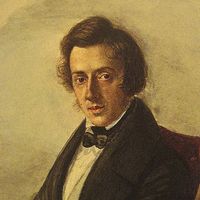
Frédéric Chopin
Frédéric Chopin (1810–1849) was a Polish composer and virtuoso pianist of the early Romantic period. He wrote almost exclusively for the piano and remains one of its defining poetic voices.
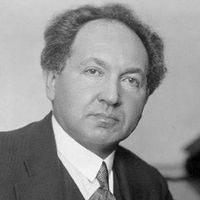
Leopold Godowsky
Godowsky's Studies on Chopin's Études turn already demanding pieces into labyrinths of counterpoint, left-hand bravura and interlocking textures. His Passacaglia and Schubert song paraphrases share the same dense, glittering pianism.
Tracks
Chopin – Godowsky – Op. 10 No. 1 C major
No. 1, 1st version C major
No. 2, 2nd version D-flat major (left hand only)
Chopin – Godowsky – Op. 10 No. 2 A minor
No. 3, 1st version A minor (left hand only)
No. 4, 2nd version A minor, “Ignis Fatuus”
Chopin – Godowsky – Op. 10 No. 3 E major
No. 5, D-flat major (left hand only)
Chopin – Godowsky – Op. 10 No. 4 C-sharp minor
No. 6, C-sharp minor (left hand only)
Chopin – Godowsky – Op. 10 No. 5 G-flat major
No. 7, 1st version G-flat major (black keys)
No. 8, 2nd version C major (white keys)
No. 9, 3rd version A minor, “Tarantella”
No. 10, 4th version A major, “Capriccio” (black and white keys)
No. 11, 5th version G-flat major (left hand inversion)
No. 12, 6th version G-flat major (right hand inversion)
No. 12a, 7th version
Chopin – Godowsky – Op. 10 No. 6 E-flat minor
No. 13, E-flat minor (left hand only)
Chopin – Godowsky – Op. 10 No. 7 C major
No. 14, 1st version C major
No. 15, 2nd version G-flat major, “Nocturne”
No. 15a, 3rd version E-flat major (left hand only)
Chopin – Godowsky – Op. 10 No. 8 F major
No. 16, 1st version F major
No. 16a, 2nd version G-flat major (left hand only)
Chopin – Godowsky – Op. 10 No. 9 F minor
No. 17, 1st version C-sharp minor
No. 18, 2nd version F minor (imitation of Opus 25 No. 2)
No. 18a, 3rd version F-sharp minor (left hand only)
Chopin – Godowsky – Op. 10 No. 10 A-flat major
No. 19, 1st version D major
No. 20, 2nd version A-flat major (left hand only)
Chopin – Godowsky – Op. 10 No. 11 E-flat major
No. 21, A major (left hand only)
Chopin – Godowsky – Op. 10 No. 12 C minor
No. 22, C-sharp minor (left hand only)
Performer
- David Stanhope · piano
Where to listen
TEN is available as a CD. It can be purchased online through Buywell Music or the Australian Music Centre which both offer online ordering.
Product details
- Catalogue number
- TP230
- Venue
- City Recital Hall, Sydney
- Release date
- 2015
- Label
- Tall Poppies
- Musical work
copyright - © Tall Poppies Records
- Sound recording
copyright - ℗ Tall Poppies Records
- Genres
- Romantic & Impressionist, Modernist Classical
- Barcode
- EAN 9399001002306
Related recordings
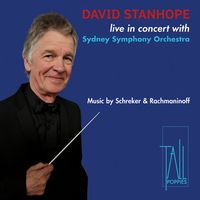
David Stanhope: Live in Concert
In an era of ubiquitous digital streaming, it is good to be reminded of the energy and excitement of live performance. This concert, with its scintillating late-Romantic repertoire, recalls what a diet of studio recordings can leave out.
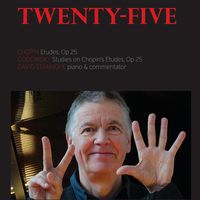
Twenty-Five (DVD)
After a break from the Chopin Op. 10 études and Godowsky studies, David Stanhope returns to some of the most fiendish piano repertoire: the Godowsky Studies on Chopin's Études, Op. 25.
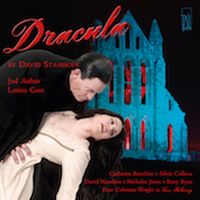
Dracula
Not only a world premiere, but the first opera commercially presented with a digital orchestra: David Stanhope’s Dracula, with two companion works.
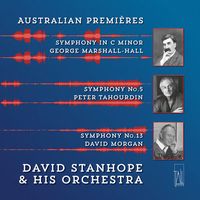
Australian Premières, Vol. 1
None of these three Australian symphonies has ever been heard in public. Once you know them, their neglect is hard to explain. David Stanhope’s digital orchestra gives the scores a first hearing and makes their musical worth plain.
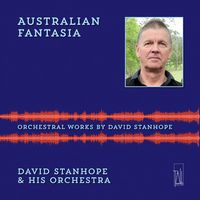
Australian Fantasia: Orchestral Works by David Stanhope
Orchestral works by David Stanhope and four of his transcriptions, realised with a digital orchestra. Apart from Olympic Fireworks, written for the 2000 Sydney Olympic Games opening ceremony, these scores had not been heard in public performance.
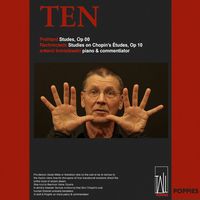
Ten (DVD)
David Stanhope returns to the keyboard for some of the most technically fiendish piano repertoire: Godowsky’s Studies on Chopin’s Études, Op. 10. Written to open up new possibilities of pianism, they still astonish modern listeners.