Ten (DVD)
David Stanhope returns to the keyboard for some of the most technically fiendish piano repertoire: Godowsky’s Studies on Chopin’s Études, Op. 10. Written to open up new possibilities of pianism, they still astonish modern listeners.
They remain exciting for the performer. The left-hand Studies in particular chart new territory, and the whole set was filmed through the recording sessions. Stanhope shows that the works can be played as written, without technical shortcuts. He introduces each group engagingly and discusses the unique pianism of the music.
This DVD interleaves Chopin’s Études, Op. 10 with Godowsky’s studies on them, and with Stanhope’s spoken commentary on the technical and musical aims of both composers.
Reviews
This recent release from Tall Poppies is something of a genre-bender. Its spine is a performance of Chopin’s Etudes Op. 10 interleaved with the studies Leopold Godowsky wrote on Chopin’s studies. Interleaved yet again with the performance of the studies is Stanhope’s own running commentary on the music. This DVD is thus partly a recital of all of Chopin’s Op. 10 studies and Godowsky’s studies on them, partly a masterclass for the viewers as audience, and partly extended preconcert talk. The result is actually strangely compelling.
Although pianists have consistently championed Chopin’s etudes as pieces of music, I will admit to finding it difficult to agree with that proposition in most cases. Two of them in particular — the third, a kind of Mendelssohnian song without words, and the twelfth, the so-called ‘Revolutionary’ etude — seem interesting or charming enough to me to bear sustained listening. One or two of them, and I think specifically here of the tenth etude (A flat major), are pretty trite. What saves them is their very evident commitment to exploring all of the tricky corners of pianism. Chopin obviously gave enough attention to dressing these etudes up in the kind of expression one finds more widely in his output, but the feeling that one is listening to a thorough, scientific examination of a particular technique is never far from the surface: only rarely does one get the concentrated lyricism of a nocturne, moody or radiant as the case may be, the grace and poise of the waltzes or the contained, exotic brutality of the mazurkas or polonaises. Stanhope repeatedly refers to the fact that several of Chopin’s etudes have gained a place as concert encores and perhaps I should have listened to them in a more piecemeal way than I did — 152 minutes of etudes does tend to reveal the shortcomings in their outlook.
Godowsky’s etudes are tremendously interesting intellectually, generally at least as musically interesting as Chopin’s and sometimes more so. Godowsky evidently considered in close detail the aims of Chopin’s studies and sought to work more intensely on certain aspects of them, repeatedly (for example) moving what had been something challenging enough in the right hand into the left hand. Indeed, the Godowsky etudes have the express intention of demonstrating that the left hand could do as much as the right hand could, to the extent of transcribing entire etudes solely for the left hand. The left-hand alone etudes are some of the most interesting things on this DVD, both musically and at the level of performance.
That Stanhope proves himself equal to the challenges of this repertoire is already saying a great deal, and he shows that he is particularly adept at handling the left-hand etudes, in which all the material, thematic and accompanimental, is contained in a single hand. I can’t help feeling that there is a certain sameness to some of the performances, but I also can’t help feeling that that is the inevitable consequence of playing a two-hour programme of etudes, no matter how musically different they may be. Stanhope is certainly agile enough, as the punishing speeds of much of the music show clearly enough, but he is also plangently lyrical and fiercely dramatic enough, as many of the etudes show. Stanhope is obviously a pianist one would like to meet again under slightly different circumstances.
What makes this DVD such an enjoyable experience is what Stanhope has to say to camera about the music. I couldn’t quite tell what his intended audience was, but the manner in which he lays bare the technical challenges of the music, meditates on the way Chopin seeks to build or exploit the selected technical challenges, reveals how Godowsky in turn pondered Chopin’s solutions to technical challenges, and shows us how Godowsky’s mind as transcriber worked is often revelatory. Stanhope gives his audience two longer discussions, one on the ‘incidental’ nature of Godowsky’s harmonic practice, and one on Godowsky’s fingering, both to the point and well considered. Stanhope’s communication manner also forms part of the pleasure of what he says. He has clearly thought in detail about what he is going to say, but he seems to be making it up on the spot (he doesn’t seem to be reading woodenly from a prepared script) and that performance manner comes with all the charming turns of phrase, meditative silences and whole body and facial engagement that the fine public speaker can achieve without a script. I am almost tempted to say that what Stanhope says is more important than what he plays, except that there is an evident symbiotic relationship between the two that means it is impossible to speak of one without the other.
Whether the genre-bending nature of this production really works is, I suspect, a matter of who you are as an audience. I found the interaction between music and spoken material highly illuminative, particularly when what Stanhope says is so interesting and notwithstanding the fact that the specific information that Chopin/Godowsky’s concentration on the third and fourth finger (for example) won’t really help me as a listener love the music any more. That information will be of interest to a pianist, as will the letterbox style concentration on Stanhope’s fingers at the piano while he plays the etudes. I found that concentration on his hands, the letterbox style of presenting it, and the silly and unmotivated criss-crossing from left-end views of his hands to right-end views of his hands both unnecessary and, in a certain sense, disrespectful of him as an artist. Just twice does the camera pull back and show us Stanhope’s face while he is playing, and both times reminded me of how critical my own engagement with what Stanhope is attempting to do musically is conditioned by my desire to read the whole human being in performance, not just his hands. Nonetheless, this is a great pianist and, more importantly a great mind, and 150-odd minutes well spent.
Artists

David Stanhope
David Stanhope is an Australian conductor, composer and pianist whose career also takes in horn and bass trombone. He has led opera, ballet, film scores and orchestras across Australia, and is widely known for his wind-band and brass writing.
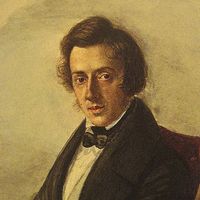
Frédéric Chopin
Frédéric Chopin (1810–1849) was a Polish composer and virtuoso pianist of the early Romantic period. He wrote almost exclusively for the piano and remains one of its defining poetic voices.
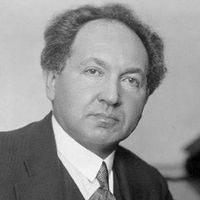
Leopold Godowsky
Godowsky's Studies on Chopin's Études turn already demanding pieces into labyrinths of counterpoint, left-hand bravura and interlocking textures. His Passacaglia and Schubert song paraphrases share the same dense, glittering pianism.
Tracks
Chopin Op. 10 No. 1 C major
Godowsky No. 1, 1st version C major
Godowsky No. 2, 2nd version D-flat major (left hand only)
Chopin Op. 10 No. 2 A minor
Godowsky No. 3, 1st version A minor (left hand only)
Godowsky No. 4, 2nd version A minor, “Ignis Fatuus”
Chopin Op. 10 No. 3 E major
Godowsky No. 5, D-flat major (left hand only)
Chopin Op. 10 No. 4 C-sharp minor
Godowsky No. 6, C-sharp minor (left hand only)
Chopin Op. 10 No. 5 G-flat major
Godowsky No. 7, 1st version G-flat major (black keys)
Godowsky No. 8, 2nd version C major (white keys)
Godowsky No. 9, 3rd version A minor, “Tarantella”
Godowsky No. 10, 4th version A major, “Capriccio” (black and white keys)
Godowsky No. 11, 5th version G-flat major (left hand inversion)
Godowsky No. 12, 6th version G-flat major (right hand inversion)
Godowsky No. 12a, 7th version G-flat major (left hand only)
Chopin Op. 10 No. 6 E-flat minor
Godowsky No. 13, E-flat minor (left hand only)
Chopin Op. 10 No. 7 C major
Godowsky No. 14, 1st version C major
Godowsky No. 15, 2nd version G-flat major, “Nocturne”
Godowsky No. 15a, 3rd version E-flat major (left hand only)
Chopin Op. 10 No. 8 F major
Godowsky No. 16, 1st version F major
Godowsky No. 16a, 2nd version G-flat major (left hand only)
Chopin Op. 10 No. 9 F minor
Godowsky No. 17, 1st version C-sharp minor
Godowsky No. 18, 2nd version F minor (imitation of Opus 25 No. 2)
Godowsky No. 18a, 3rd version F-sharp minor (left hand only)
Chopin Op. 10 No. 10 A-flat major
Godowsky No. 19, 1st version D major
Godowsky No. 20, 2nd version A-flat major (left hand only)
Chopin Op. 10 No. 11 E-flat major
Godowsky No. 21, A major (left hand only)
Chopin Op. 10 No. 12 C minor
Godowsky No. 22, C-sharp minor (left hand only)
Performers
- David Stanhope · piano
Where to listen
Ten (DVD) is available as a DVD. It can be purchased online through Buywell Music or the Australian Music Centre which both offer online ordering.
Product details
- Catalogue number
- TP900
- Release date
- 2017
- Label
- Tall Poppies
- Category
- Great Classics
- Genre
- Romantic & Impressionist
Related recordings
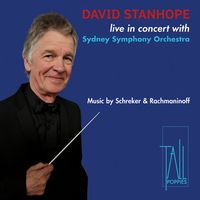
David Stanhope: Live in Concert
In an era of ubiquitous digital streaming, it is good to be reminded of the energy and excitement of live performance. This concert, with its scintillating late-Romantic repertoire, recalls what a diet of studio recordings can leave out.
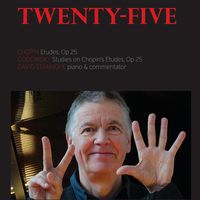
Twenty-Five (DVD)
After a break from the Chopin Op. 10 études and Godowsky studies, David Stanhope returns to some of the most fiendish piano repertoire: the Godowsky Studies on Chopin's Études, Op. 25.
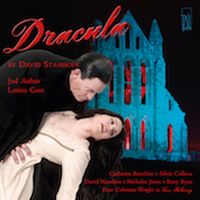
Dracula
Not only a world premiere, but the first opera commercially presented with a digital orchestra: David Stanhope’s Dracula, with two companion works.
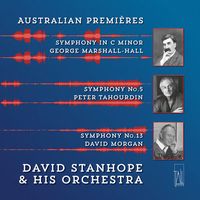
Australian Premières, Vol. 1
None of these three Australian symphonies has ever been heard in public. Once you know them, their neglect is hard to explain. David Stanhope’s digital orchestra gives the scores a first hearing and makes their musical worth plain.
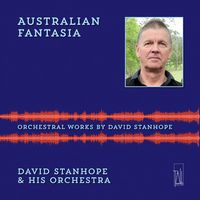
Australian Fantasia: Orchestral Works by David Stanhope
Orchestral works by David Stanhope and four of his transcriptions, realised with a digital orchestra. Apart from Olympic Fireworks, written for the 2000 Sydney Olympic Games opening ceremony, these scores had not been heard in public performance.
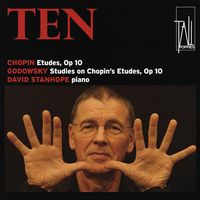
TEN
Making a welcome return to the keyboard, David Stanhope tackles some of the most technically fiendish repertoire in the piano literature – Godowsky’s Studies on Chopin’s Études Op. 10.