The Prospect and Bower of Bliss
The Prospect and Bower of Bliss presents two song cycles by Australian composer Johanna Selleck, setting poetry by Aphra Behn (1640–1689) and Melbourne poet Graeme Ellis (1944–).
Judith Dodsworth soprano
Merlyn Quaife soprano
Arwen Johnston percussion
Anne Norman shakuhachi
Although separated by time and geography, Behn’s and Ellis’s poetry are linked by the vividness with which they portray matters closest to the heart, and by a sense of immediacy, emotional depth and connection with nature. Those themes are integral to Selleck’s compositional style and shape her settings.
Aphra Behn is recognised as one of the most influential dramatists of the seventeenth century, and as the first professional female writer able to make her living entirely from writing. She was considered scandalous in her own time, with no topic off-limits, whether religious, political or sexual. The Prospect and Bower of Bliss explores love and sexuality in an idyllic pastoral setting, for soprano and piano.
Graeme Ellis’s Seven Tanka borrows from the ancient Japanese art of haiku. Tanka is a related form of five lines rather than three, built on lines of five and seven syllables. Ellis was inspired to write the poems after hearing Merlyn Quaife sing Selleck’s Songs of the Earth and Sky for soprano and percussion, so a circular pattern of influence between poet and composer emerges. The cycle is scored for two sopranos, percussion and shakuhachi.
Selleck (1959–) is a composer, flautist and musicologist. Her music has been performed by leading artists in Australia and abroad. On this recording Merlyn Quaife and Judith Dodsworth (sopranos), Caroline Almonte (piano), Arwen Johnston (percussion) and Anne Norman (shakuhachi) bring technique and artistry to the poetry and the music.
Reviews
This disc holds two song cycles by Melbourne composer Johanna Selleck, both different in atmosphere and performance modes. The shorter composition, in four parts, uses texts extracted from Aphra Behn’s A Voyage to the Isle of Love, set for soprano and piano. Here interpreted by Merlyn Quaife (for whom the cycle was composed) and Caroline Almonte. Graeme Ellis’s Seven Tanka also uses Quaife as well as soprano Judith Dodsworth, with Arwen Johnston’s percussion and Anne Norman’s shakuhachi as instrumental support.
The Behn poems are part of The Prospect and Bower of Bliss segment of the large poem, Selleck setting the first four of its six stanzas. The opening ‘Tis all eternal Spring around takes a measured approach to the happy verses, Almonte’s piano setting up a slow-paced pattern over which Quaife’s line roams across a wide compass, coming back to the opening line’s statement from time to time, a sort of thread linking the poet’s placid descriptions of burgeoning nature. Fountains, wandering Banks, soft rills begins pictorially enough with a fragile figure high in the piano, the voice also used deftly to suggest sparkling textures, before the performers move to a lower compass when Behn turns her attention to forests and earth. This setting is fragmentary interrupted by a series of long pauses, Selleck bringing her setting to an ecstatic climax before returning to that opening delicacy before arriving at a firm salutation to the poet’s Bower of Bliss.
For the third song, The verdant banks no other prints retain, begins in a plain-speaking B flat Major tonality, the forward movement from the keyboard suggestive of a rhythmically unsteady country dance. The text introduces human beings onto a scene that has been focused so far on a lush natural world and both composer and poet bring the atmosphere down to earth with a set of pages that come close to suggesting a British folk-song setting, especially the reprise in C Major at the work’s centre. Above everything else, you appreciate the easy lustiness of the lines and their straightforward musical setting: a mostly successful juxtaposition of sophistication and simplicity.
The final piece, A thousand gloomy Walks the Bower contains, returns to the same world as the second song, Almonte’s piano proposing a shadowy aura of soft dissonance while the vocal line meanders and, after reaching a climax, subsides into silence. The movement is slow and close to meditative, suggesting the depletion that comes after the Bower’s purpose has been achieved. This is the longest of the cycle’s parts, almost equal to its combined predecessors. But it is a finely graduated sequence where the temptation to word-paint is almost entirely resisted and the evanescent conclusion is emotionally soothing and intellectually apposite.
Behn’s lyrics centre on love; to this over-reactive mind, erotic passion rather than courtly interchanges. The bucolic scenes set a calmly sensual scene and, if the poet is not the most mellifluous of her generation’s creators, her intentions are pretty clear, particularly in her insistence on concluding each stanza with the word ‘ravishing’. Quaife emphasizes this imagery of sexual passion in the suggestive portamenti on the sequence Gazing, sighing, pressing, dying in connection with a ravisht swain – the only solid human figure in the setting’s scenario.
The work offers a stimulating exercise in giving a modern voice to a 334-year-old poem, Selleck handling her text with unexpected ease, finding her own metre in the verses and not afraid to halt the process and reflect for a moment – on ‘gloomy Walks’, for example. She keeps her interpreters harnessed to the work but the impression is of a gently spreading ambience, not an adherence to rhythmic and harmonic discipline. Further, this set of pages speaks an individual language, one that suggests certain influences but these hints rarely solidify into certainty; like the music itself, they remain possibilities.
Judith Dodsworth emerges fairly soon after Quaife in the first of Ellis’s Seven Tanka where Selleck follows a pretty substantial tradition of Australian composers engaging with Asia – if you allow that the tradition is less than 70 years old. The two sopranos alternate and intertwine with Norman’s shakuhachi, these three lines armed with a set of ‘effects’ like short notes that fall downwards, sustained tones that eventually take on vibrato (as those sadly under-prepared and untrained children do on television talent shows), remote pianissimi. Other colours emerge from Johnston’s percussion, which seems to consist mainly of vibraphone and a touch of marimba.
That distant thunder offers a more dramatic scena, complete with a straight duet passage for the singers. Johnston employs cymbals, bells and what sounds like a water gong and a light tam-tam as Selleck depicts the poet’s active imagery. Next, Grey before the first dawn is a slow threnody in which the singers begin by keeping pace with each other, note for note, while the shakuhachi operates on several levels – as an orthodox Western flute, using noteless breaths, sliding off the note – and, like its predecessor, has an elongated postlude. The force of Red wine of maple takes you by surprise. It’s another of Selleck’s direct-speaking pieces, the sopranos striding through the lyric with loads of colour from Johnston’s keyed percussion and metal sheet; then, just when you think the lyric is ending jubilantly (although with an unhappy low note from Dodsworth at the end of the final line, The cracking of winter calls), the voices return softly, suggesting that the wine has had a less-than-happy effect.
Soft marimba wood-block sounds and quavering shakuhachi vocalisms set a sonorously suggestive scene before the voices enter on Long crane free feathered, in which the instrumental work is of striking interest for its complexity, in particular the hard-pressed Johnston who produces some remarkable juxtapositions and superimpositions. The moon is gliding finds singers and Norman making great play with the first line’s last word; in fact, ‘gliding’ is the first word you hear, and the last. While the outer parts of this setting have lots of slow eliding and imitation, the central line, Scattered with starlight, brings into play some brisk, consonantial vocal vaulting. Selleck is also not afraid to have Quaife and Dodsworth articulate a straight descending sequence based on a harmonised C Major arpeggio; but the composer’s vocabulary is a catholic quantity and the tonal sits comfortably alongside advanced flourishes and an unclogged impressionist palette.
The final tanka, Five white stones unite, finds the vocalists working in canon on a striding march suggestive melody; but the canon is not strictly observed. As you can hear in other tracks on this CD, the composer bends patterns and expectations; not disturbingly so that you lose track of her sequences, but offering intriguing variants from the predictable. The singers work through the lines twice and then the instrumentalists play a lengthy postlude, loaded with some brisk percussion commentary and Norman’s plangent sounds eventually ending on a muffled gasp.
In these Seven Tanka, Selleck has written a clear-voiced and idiomatic setting of poems that were written in traditional Japanese format. The use of Norman’s instrument takes the listener into that country’s musical atmosphere, as do Johnston’s various percussion underpinnings – bass drum/timpani standing in for the dayko, not to mention the suggestive small chimes that get an occasional airing. But you experience little sense of self-consciousness; the resources employed are not used simply for Oriental mimicry. As with her Behn cycle, Selleck has a firm artistic personality, a writer hard to typecast as belonging to any particular compositional methodology.
This CD is not lavish with its contents – the total running time is 46′ 43″. But it’s well worth attention for the excellence of the participants and the chance of hearing a pair of song cycles by a highly expressive voice in the cluttered ranks of Australian composers. As well, its executants are all female and that’s something of a rarity in contemporary chamber music-making.
Artists

Johanna Selleck
Johanna Selleck is a composer, musicologist, and flautist. She holds a PhD from the University of Melbourne, where she is an honorary fellow. Her compositions have been performed by internationally renowned artists across Australia, Europe, the USA, Asia, and the Middle East.

Graeme Ellis
Graeme Ellis (b. 1944) is a Melbourne-born poet whose verse has been set in contemporary Australian art song.

Merlyn Quaife
Merlyn Quaife is a distinguished soprano and performer of great versatility, acclaimed in opera, oratorio, lieder, chamber music and contemporary repertoire throughout Australia, Europe and the USA.
Arwen Johnston
Arwen Johnston is a percussionist active in contemporary chamber music, bringing colour and atmosphere to song cycles and ensemble recordings.

Anne Norman
Anne Norman is a performer, improviser, composer and teacher of shakuhachi based in Melbourne. She works as a freelance artist across music-theatre productions, solo and collaborative recitals, broadcasts and recording.
Tracks
- 'Tis All Eternal Spring Around 3:25
- Fountains, Wandering Brooks 3:22
- The Verdant Banks 2:22
- A Thousand Gloomy Walks 7:19
- Curve of Ivory 5:52
- That Distant Thunder 4:08
- Grey Before the First Dawn 5:02
- Red Wine of Maple 1:51
- Long Crane Free Feathered 5:53
- The Moon Is Gliding 3:15
- Five White Stones Unite 4:04
The Prospect and Bower of Bliss Johanna Selleck
Seven Tanka Johanna Selleck
Performers
- Caroline Almonte · piano · tracks 1–4
- Judith Dodsworth · soprano · tracks 5–11
- Merlyn Quaife · soprano
- Arwen Johnston · percussion · tracks 5–11
- Anne Norman · shakuhachi · tracks 5–11
Where to listen
The Prospect and Bower of Bliss is available for streaming through Apple Music. It can also be purchased through the iTunes Music Store.
The Prospect and Bower of Bliss is available as a CD. It can be purchased online through Buywell Music or the Australian Music Centre which both offer online ordering.
Product details
- Catalogue number
- TP240
- Total playing time
- 46 minutes 33 seconds
- Contributor
- Aphra Behn (tracks 1–4)
Graeme Ellis (tracks 5–11) - Release date
- 8 Jan 2017
- Label
- Tall Poppies
- Musical work
copyright - © 2016 Tall Poppies Records
- Sound recording
copyright - ℗ 2016 Tall Poppies Records
- Category
- Australian Classics
- Genres
- Contemporary Classical, Vocal & Opera
- Barcode
- EAN 9399001002405
Related recordings
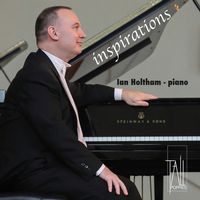
Inspirations
They say there is nothing new under the sun. New works of art challenge this notion. In this piano recording by Ian Holtham, all the works, commissioned from his Melbourne composer colleagues, are responses to major works in the piano literature. Something new has arisen, phoenix-like, out of something old.
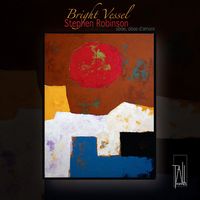
Bright Vessel
Tall Poppies is proud to release Bright Vessel, an important collection of Australian works for solo oboe and oboe d’amore, gathered and performed by Stephen Robinson.
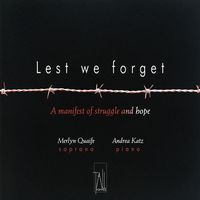
Lest We Forget: A Manifest of Struggle and Hope
Welcome to the world’s first “classical” protest CD. The music ranges widely across Germany, France, England, Austria, Poland, Chile, the USA and Australia, touching world wars, the Holocaust, dictatorships and the stolen generation. It is a no-holds-barred plea for humanity to recover humanitarian values before it is too late.
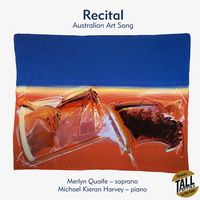
Recital: Australian Art Song
Merlyn Quaife (soprano) and Michael Kieran Harvey (piano) present a recital of Australian art song spanning the twentieth century, from Percy Grainger and Fritz Hart to Keith Humble and David Horowicz.