Lest We Forget: A Manifest of Struggle and Hope
Welcome to the world’s first “classical” protest CD. The music ranges widely across Germany, France, England, Austria, Poland, Chile, the USA and Australia, touching world wars, the Holocaust, dictatorships and the stolen generation. It is a no-holds-barred plea for humanity to recover humanitarian values before it is too late.
Victor Jara composer
Randy Newman composer
Dennis Vaughan composer
Henri Duparc composer
Alec Wolkowiski composer
Abel Meeropol composer
Arnold Bax composer
Oscar Straus composer
Francis Poulenc composer
Kurt Weill composer
John Lennon composer
Franz Liszt composer
This CD has been undertaken as a labour of love by the artists and by Tall Poppies. Profits will be shared with the Fitzroy Learning Centre in Melbourne, which gives educational and other assistance to refugees in Australia.
This collection of songs began as a protest against recent events in our country, to remind ourselves that the relaxed and comfortable culture our government was intent on bringing us was in fact based on lies, fear, threats, apathy, hatred and the glorification of small-minded selfishness. Above them all, and most perniciously, came the vaunting fallacy that this selfish indifference was quite acceptable, the idea that not caring is somehow simply human and a harmless and innocent thing to do.
Listen to our songs. Not caring is never harmless.
All the songs were written by and about people whose plight was caused because others did not care enough to see; or even worse, they saw and did not care enough to stop what was happening. The songs, born of suffering or the knowledge of suffering, demonstrate compassion and even love. That is what gives them their strength: the real voice of humanity.
Reviews
Politics and art have often been powerful partners, and many artists have been articulate and influential politically. Who wrote the music to Italy’s Risorgimento but Verdi?
In her foreword to this recording, Merlyn Quaife makes explicit its purpose, stating that its genesis was as a protest against the ‘recent events in our country’ which were ignored in the context of our ‘relaxed and comfortable culture’. Her message is that ‘not caring is never harmless’. Katz and Quaife – and Tall Poppies – are standing up to be counted.
This is a highly diverse grouping of songs. They concern the heartbreaking loss of homeland (Würzburger’s Vereinsamt or Isolation), disillusionment with the homeland (Randy Newman’s Political Science), the loss of political innocence (Poulenc’s C) and the personal losses of war (Kurt Weill’s Und was bekam des Soldaten Weib) and political action (Duparc’s Elegie). But in case you think these are too easy to listen to, there are bitter cabaret songs from the Nazi’s Terezin camp, a song of Irish dispossession (Arnold Bax) and the tragedy of a ghetto child (Oscar Straus). Had the grainy photos of Strange Fruit not been in the newspapers of our own generation, we would not imagine such a poetic image possible, let alone its basis in reality. It gets worse: Dennis Vaughan’s Words are History is a painful evocation of the losses of Australian indigenous peoples (“I’m sorry. OK?”).
The songs are as stylistically diverse as the sentiments they express. French, German and Spanish texts are translated or sung in English, and excellent annotations to each song (by young Australian director Anthony Ernst and pianist Andrea Katz) make the reasons for the choice of songs very clear. Among the poets represented are Nietzsche, Brecht (of course), Thomas Moore, Daisy Utemorrah, with self-composed lyrics by Victor Jara, Randy Newman and John Lennon. The performances are in every way true to this diversity. Warmth, strength, irony, loss and at last, peace.
The final songs, then, speak of the possibility of peace. Lennon’s, of course, and the exquisite Über allen Gipfeln ist Ruh (Over all the hilltops is peace), a setting of Goethe, by Liszt. Quaife writes that ‘selfishness has nothing real to offer. Only love and compassion do’.
She speaks well. But don’t forget that the point has been made: Victor Jara’s Manifesto, (sung in English) says: ‘I don’t sing for singing’s sake, nor for having a good voice. I sing because my guitar has a reason and a purpose’.
This disc is a protest – against uncaring, drawing its songs from some of humanity’s darkest moments. The tone moves between the plangent wailing of Shtiler, shtiler by 11-year-old Alec Volkoviski inside a Vilna ghetto in 1943, to Abel Meeropol’s unforgettable invocation of the lynching of blacks in the US South, Strange Fruit, through the highly evolved language of the European art song in works by Duparc, Liszt and others, and on to the almost unbearably brittle cabaret parody written by inmates of Hitler’s concentration camp at Terezin. There is contemporary satire by Randy Newman and Poulenc’s setting of a Spanish Civil War poem by Louis Aragon.
The sequence of some tracks is so hard-hitting as to almost defy listening in a single session. Quaife mixes the forceful colours of outraged humanity with moments of peace.
Artists

Andrea Katz
Pianist Andrea Katz partners soprano Merlyn Quaife in song that refuses to look away: protest anthems, camp cabaret, art-song elegies and new Australian cycles, shaped with warmth, irony and unflinching clarity at the keyboard.

Merlyn Quaife
Merlyn Quaife is a distinguished soprano and performer of great versatility, acclaimed in opera, oratorio, lieder, chamber music and contemporary repertoire throughout Australia, Europe and the USA.
Tracks
- Vereinsamt Walter Wurzburger 3:27
- Manifiesto Victor Jara 7:03
- Political Science Randy Newman 1:53
- Mary’s Plea Dennis Vaughan 3:49
- Elégie Henri Duparc 3:30
- Schtiler, Schtiler Alec Wolkowiski 3:43
- Strange Fruit Abel Meeropol 2:18
- Maria Theresia the Empress 1:25
- Theresienstadt Questions 1:45
- The Little Café in Terezin 3:23
- Letter to my Child 2:53
- A Suitcase Speaks 2:36
- Rann of Exile Arnold Bax 3:31
- Altes Ghettoliedchen, Op. 108 Oscar Straus 3:02
- C Francis Poulenc 2:58
- Words are History Dennis Vaughan 5:14
- Und was bekam des Soldaten Weib Kurt Weill 3:12
- Imagine John Lennon 5:54
- In Germany before the war Randy Newman 3:35
- Über allen Gipfeln ist Ruh Franz Liszt 4:22
Cabaret Songs from Kamp!
Performers
- Andrea Katz · piano
- Merlyn Quaife · soprano
Composers
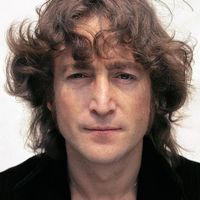
John Lennon
John Lennon's songs cut through styles and decades with plainspoken hooks and melodies that refuse to age. From Beatles classics to the solo anthem Imagine, his writing keeps finding new voices in jazz rooms, a cappella circles and the concert hall.
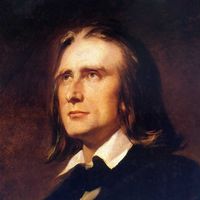
Franz Liszt
Franz Liszt (1811–1886) was a Hungarian composer, virtuoso pianist, conductor and teacher of the Romantic era. His vast output reshaped piano technique, invented the symphonic poem and pushed harmony toward the twentieth century.
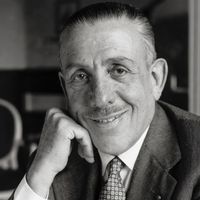
Francis Poulenc
Francis Poulenc's music swings from boulevard wit to peasant devotion. Perpetual-motion piano, chamber sonatas, horn élégies, Christmas and penitential motets, a Gloria, and songs that can flirt, mourn or protest sit side by side in the catalogue.
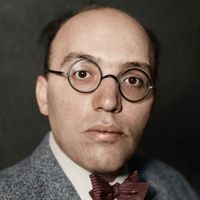
Kurt Weill
Kurt Weill (1900–1950) was a German-born American composer for the stage, known for blending popular idioms with serious craft so that theatre music could speak to a wide public.
Henri Duparc
Henri Duparc left a handful of late-Romantic mélodies that still define the French art song: long-breathed lines, restless piano writing and an almost unbearable concentration of longing set to Baudelaire, Gautier and Goethe.
Abel Meeropol
Abel Meeropol (1903–1986) was an American songwriter and poet who published under the pseudonym Lewis Allan. He is best known for the anti-lynching song Strange Fruit.
Randy Newman
Randy Newman is an American singer-songwriter, pianist and film composer. He is known for satirical character songs, often sung in a Southern accent, and for a later career given over to film scoring.
Oscar Straus
Oscar Straus wrote Viennese operettas and songs that balance theatre sparkle with a lighter lyric voice. His best-known stage works include A Waltz Dream and The Chocolate Soldier, whose waltz and aria writing still surface in recital.
Dennis Vaughan
Dennis Vaughan is an eminent Melbourne-based composer, arranger and performer. He is a leading exponent of the double bass in many styles, working across classical, jazz and contemporary idioms.
Contributors
Liner Notes
Andrea Katz
Pianist Andrea Katz partners soprano Merlyn Quaife in song that refuses to look away: protest anthems, camp cabaret, art-song elegies and new Australian cycles, shaped with warmth, irony and unflinching clarity at the keyboard.
Liner Notes
Antony Ernst
Piano Tuner
Brent Ottley
Liner Notes
Merlyn Quaife
Merlyn Quaife is a distinguished soprano and performer of great versatility, acclaimed in opera, oratorio, lieder, chamber music and contemporary repertoire throughout Australia, Europe and the USA.
Graphic Design
Steve Burnett
Where to listen
Lest We Forget: A Manifest of Struggle and Hope is available for streaming through Apple Music. It can also be purchased through the iTunes Music Store.
Lest We Forget: A Manifest of Struggle and Hope is available as a CD. It can be purchased online through Buywell Music or the Australian Music Centre which both offer online ordering.
Product details
- Catalogue number
- TP185
- Total playing time
- 69 minutes 33 seconds
- Producer
- Belinda Webster
- Recording Engineer
- Belinda Webster
- Venue
- Iwaki Auditorium, Melbourne
- Credit
- Andrea Katz
Antony Ernst
Brent Ottley
Merlyn Quaife
Steve Burnett - Release date
- 11 Nov 2006
- Label
- Tall Poppies
- Musical work
copyright - © 2006 Tall Poppies Records
- Sound recording
copyright - ℗ 2006 Tall Poppies Records
- Genres
- Vocal & Opera, Romantic & Impressionist
- Barcode
- EAN 9399001001859
Related recordings
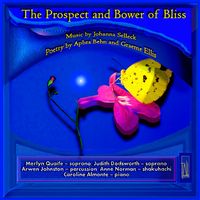
The Prospect and Bower of Bliss
The Prospect and Bower of Bliss presents two song cycles by Australian composer Johanna Selleck, setting poetry by Aphra Behn (1640–1689) and Melbourne poet Graeme Ellis (1944–).
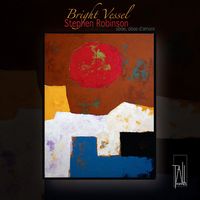
Bright Vessel
Tall Poppies is proud to release Bright Vessel, an important collection of Australian works for solo oboe and oboe d’amore, gathered and performed by Stephen Robinson.
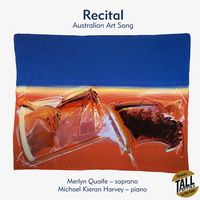
Recital: Australian Art Song
Merlyn Quaife (soprano) and Michael Kieran Harvey (piano) present a recital of Australian art song spanning the twentieth century, from Percy Grainger and Fritz Hart to Keith Humble and David Horowicz.
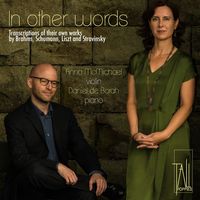
In Other Words
Violinist Anna McMichael and pianist Daniel de Borah devised this programme of transcriptions, two of Australia’s most accomplished chamber musicians. They play the music with virtuosity and style.

A Virtuoso Recital: David Stanhope Piano
This is the third solo CD that David has recorded for Tall Poppies (see also Virtuoso Transcriptions, TP088, and David Stanhope Plays, TP135). The centrepiece is Rachmaninoff's Preludes, Op. 32, which he plays magnificently.
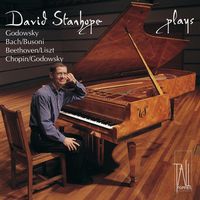
David Stanhope Plays
David Stanhope is known throughout Australia as one of the few resident conductors of note. His talents are much broader: a prolific composer, especially of wind band music (see TP107), and a pianist of formidable technique.