Henry Purcell
Henry Purcell (c. 1659–1695) was an English organist and composer of the middle Baroque. His sacred music, theatre songs, instrumental works and the opera Dido and Aeneas shaped a distinctly English Baroque style.
He wrote semi-operas including King Arthur and The Fairy-Queen, coronation anthems, royal birthday odes, funeral music for Queen Mary, trio sonatas, keyboard grounds and a large body of songs still central to the English vocal repertoire. His works are catalogued with Z numbers after Franklin Zimmerman.
Theatre songs and chamber settings remain staples for period performers, from the lament of Dido to the trumpet sonata and the rounds and airs of the Restoration stage. A Purcell Society has issued modern editions since the nineteenth century. The wedding processional long called Purcell’s Trumpet Voluntary is in fact Clarke’s The Prince of Denmark’s March.
Henry Purcell is featured on the following titles
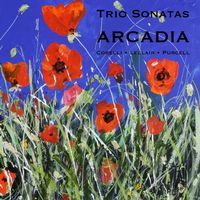
Trio Sonatas
Four of Australia’s foremost early musicians join forces for Baroque trio sonatas by Corelli, Purcell and Leclair, in a programme that spans Italian, English and French styles.
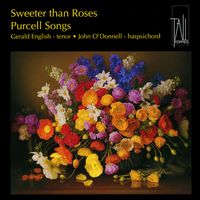
Sweeter than Roses
Some of Purcell's most famous songs are included in this collection, among them If Music be the Food of Love and Incassum Lesbia. John O'Donnell accompanies the renowned tenor Gerald English.
Compositions by Henry Purcell also appear on
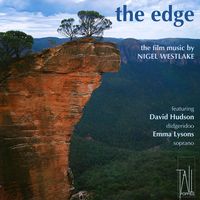
The Edge
This music was written for an IMAX film about the Blue Mountains west of Sydney. The film concerns itself with the environment, the ancient Aboriginal presence and the recently discovered prehistoric Wollemi Pines.