Trio Sonatas
Four of Australia’s foremost early musicians join forces for Baroque trio sonatas by Corelli, Purcell and Leclair, in a programme that spans Italian, English and French styles.
Julia Fredersdorff violin
Rosanne Hunt cello
Rachel Beesley violin
Jacqueline Ogeil harpsichord, organ
Rachel Beesley and Julia Fredersdorff had been playing in Europe’s best early music ensembles, among them Les Arts Florissants, La Petite Bande and Le Parlement de Musique, and with Australia’s most celebrated period groups such as The Australian Brandenburg Orchestra and the Orchestra of the Antipodes. With baroque cellist Rosanne Hunt and keyboardist Jacqueline Ogeil they give scintillating performances of this all-too-rarely-heard repertoire.
The programme moves from Corelli’s Italian sonatas through Purcell’s English works to Leclair’s French Première Recréation de Musique, a suite of dance movements.
Reviews
An unusually strong trio sonata program from a relatively new ensemble, Accademia Arcadia. The trio sonata was generally composed for two violins plus basso continuo, which was usually rendered with two instruments like a gamba and harpsichord. Corelli's sonatas are a bit unusual in that he specifies the use of an organ – for example. In his opuses 1 and 3. He also requests, for the Opus 2 set, that the bass line be played either with a string bass instrument or with a keyboard, but not both.
The musicians open their program with a sonata from Corelli's Opus 1, followed by two from Opus 2, the second a chaconne. The rest of the program consists of two sonatas from Henry Purcell, one of those also a chaconne, and a work that appears in a collection of Jean-Marie Leclair's sonatas but is not strictly a sonata but rather a collection of dance movements, very French in style.
Thus, the program is a fascinating look at the trio sonata from three different countries Italy, England, and France, though Leclair's work was published a good 40 to 50 years after Corelli's and Purcell's.
Sometimes trio sonatas can be boring and ho-hum, but not so here. The playing is vigorous and commanding, the sound full and strong. I note with interest that one member of the ensemble, Julia Fredersdorff, was for awhile in Enrico Gatti's class at the Royal Conservatory in The Hague. Mr Gatti is the violinist who recently recorded some Vivaldi trio sonatas that I much enjoyed (M/J 2007). This is an excellent release, and Accademia Arcadia, an Australian ensemble, is a group to watch.
Corelli perfected many of the characteristic sounds of baroque violin writing: the slow sweet chains of suspended notes over a walking bass and spirited energised cascades in faster movements. Arcadia realise both here, with beautiful sensitivity to style and impeccable intonation.
They alternate between both in Trio Sonatas from Corelli's Opus 1 and 2, with a fresh, well coloured sound without affectation. The last of these, Opus 2, No. 12, is an extended Ciacona, a baroque form built on the varied spinning of upper voice decorations over a repeated bass and Arcadia pair this with a splendid extended example of the same form by Purcell.
The disc is filled out with a slighter Purcell sonata, followed by an exemplar of what in its day was seen as a great rival of the Italian style, a stylishly played French suite by Leclair (Opus 6). This is baroque playing of the highest order.
This is a beautifully played, splendidly recorded recital of treasures from the Baroque era, based on the trio sonata, the popular form of music making in the period.
The disc provides a fascinating insight into the divergent styles of musical creation indulged in by composers of three nationalities. Each of the first two Corelli sonatas contains four short movements, some lyrically simple, others of considerable rhythmic vitality (including a vivacious presto fugue in the Op. 1 Sonata). The Op.2/12 piece is a single movement chaconne with its variations built on a four-note descending phrase.
Despite his assertion that he was determined to emulate the Italian masters of the period, Purcell's contrapuntal complexity is robustly English in character. This first of the G minor sonata is a five-movement fugue-dominated piece, the second a chaconne in which the harmonic writing is more much complex than the corresponding Corelli work.
As we might expect, Leclair's contribution, effectively a twelve movement suite, is built on the dance rhythms prevalent at the time and is replete with Gallic charm and elegance.
It goes without saying that the musicians of Arcadia manifest the differing national characteristics ideally.
Artists

Accademia Arcadia
Accademia Arcadia plays baroque cantatas and chamber sonatas with one-to-a-part heat: Buxtehude's sacred motets, Handel's Italian dramas full of fire, Corelli through Purcell and Leclair, and improvisatory violin writing that still feels spontaneous.
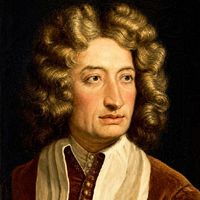
Arcangelo Corelli
Arcangelo Corelli (1653–1713) was an Italian Baroque violinist and composer. His sonatas and concerti grossi helped establish the violin’s pre-eminence and fixed models of the sonata and concerto that spread across Europe.
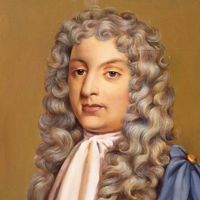
Henry Purcell
Henry Purcell (c. 1659–1695) was an English organist and composer of the middle Baroque. His sacred music, theatre songs, instrumental works and the opera Dido and Aeneas shaped a distinctly English Baroque style.
Jean-Marie Leclair
Jean-Marie Leclair wrote violin sonatas, suites and concertos that helped found the French violin school, drawing Italian brilliance into French dance forms. His Première Recréation de musique is a suite of graceful, elegant movements.
Tracks
- i. Vivace 1:22
- ii. Adagio 1:00
- iii. Allegro 2:15
- iv. Presto 1:39
- i. Preludio 1:02
- ii. Allemanda 1:57
- iii. Sarabanda 1:13
- iv. Corrente 1:33
- Sonata (Ciacona) in G major, Op. 2 No. 12 Arcangelo Corelli 3:40
- i. [Fuga] 1:09
- ii. Allegro 1:07
- iii. Adagio :38
- iv. Presto 1:26
- v. Largo 1:23
- Sonata (Ciaccona) in G minor (Ten Sonata’s in Four Parts, No. 6) Henry Purcell 8:21
- i. Ouverture 1:09
- ii. Vivement 4:48
- iii. Gracieusement, sans lenteur 4:50
- iv. Forlanne 1:33
- v. 1er Menuet :54
- vi. 2e Menuet :58
- vii. 1er Menuet :59
- viii. Gavotte 1:07
- ix. 1er Passepied 1:07
- x. 2e Passepied 1:48
- xi. Sarabande 2:45
- xii. Chaconne 6:37
Sonata in A minor, Op. 1 No. 4 Arcangelo Corelli
Sonata in E major, Op. 2 No. 10 Arcangelo Corelli
Sonata in G minor (Sonnata’s of III Parts, No. 1) Henry Purcell
Première Recréation de Musique, Op. 6 Jean-Marie Leclair
Performers
- Accademia Arcadia · ensemble
- Julia Fredersdorff · violin
- Rosanne Hunt · cello
- Rachel Beesley · violin
- Jacqueline Ogeil · harpsichord, organ
Contributors
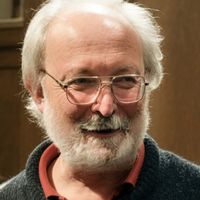
Liner Notes
John O'Donnell
John O’Donnell, Director of Ensemble Gombert, studied at the New South Wales State Conservatorium of Music in Sydney and at the University of Durham. After performing Bach’s complete organ works in 1974, he built an international reputation as an organist and harpsichordist.
Artwork [Cover]
Stan Perkins
Where to listen
Trio Sonatas is available for streaming through Apple Music. It can also be purchased through the iTunes Music Store.
Trio Sonatas is available as a CD. It can be purchased online through Buywell Music or the Australian Music Centre which both offer online ordering.
Product details
- Catalogue number
- TP194
- Total playing time
- 58 minutes 20 seconds
- Recording Engineer
- Thomas Grubb
- Editing Engineer
- Thomas Grubb
- Credit
- John O'Donnell
Stan Perkins - Release date
- 25 May 2007
- Label
- Tall Poppies
- Musical work
copyright - © 2007 Tall Poppies Records
- Sound recording
copyright - ℗ 2007 Tall Poppies Records
- Category
- Great Classics
- Genre
- Baroque
- Barcode
- EAN 9399001001941
Related recordings
Christine McCombe: Three Kinds of Silence
Christine McCombe is a Melbourne-based composer, teacher and writer. This disc gathers four of her chamber works in world premiere recordings, and is the first CD devoted to her chamber music.
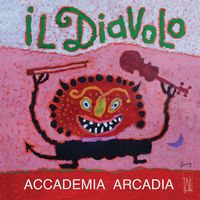
Il Diavolo
Accademia Arcadia, founded by harpsichordist Dr Jacqueline Ogeil, presents Italian baroque violin sonatas with improvising violinist Davide Monti, a regular guest with leading early-music ensembles.
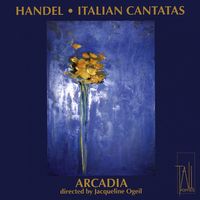
Handel: Italian Cantatas
Melbourne ensemble Arcadia specialises in baroque cantata repertoire. Here they bring fire and passion to five of Handel's Italian cantatas: virtuosic music, beautifully performed.
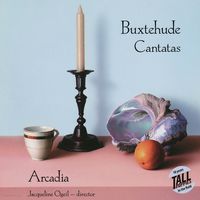
Buxtehude: Cantatas
This CD is a must for Buxtehude fans, with five works not then available on disc. Arcadia is a new Melbourne ensemble formed to explore early vocal works.
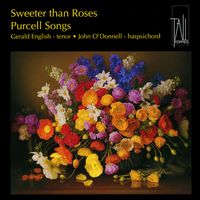
Sweeter than Roses
Some of Purcell's most famous songs are included in this collection, among them If Music be the Food of Love and Incassum Lesbia. John O'Donnell accompanies the renowned tenor Gerald English.
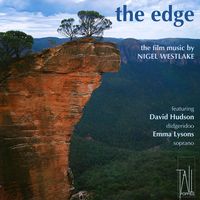
The Edge
This music was written for an IMAX film about the Blue Mountains west of Sydney. The film concerns itself with the environment, the ancient Aboriginal presence and the recently discovered prehistoric Wollemi Pines.