John Adams
John Adams writes post-minimalist music that forges large shapes from repeating cells: solo piano gates that shift mode like electronic switches, and two-piano scores that turn a border-stop title into an ecstatic, clangorous continuum.
His language grew out of minimalism yet reaches for the weight and climax of late Romantic orchestra writing. Phrygian Gates and its shorter companion China Gates treat modal change as a physical gate, a long span of patterned energy rather than static loop. Hallelujah Junction, for two pianos, exploits slight delay between identical material so the instruments sound processed, driving toward a full-tilt close. Elsewhere the same ear shapes operas on recent history, memorial chorus with city tape, and concertos that hold rhapsody beside chaconne. The music is built to move in time and memory, not to sit still.
John Adams is featured on the following titles
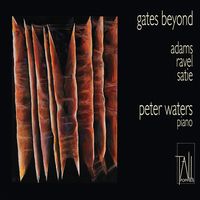
Gates Beyond
Waters lived in Switzerland but returned regularly to Australia for concerts. These works had long been in his solo recital repertoire, and the performances show the wisdom he had attained.
Compositions by John Adams also appear on
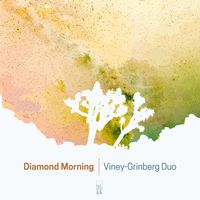
Diamond Morning
Two pianos and (maximal) minimalism. This recording celebrates musical minimalism – and its ability to move in time, space and memory – in a maximal way.