Diamond Morning
Two pianos and (maximal) minimalism. This recording celebrates musical minimalism – and its ability to move in time, space and memory – in a maximal way.
Arvo Pärt composer
Colin McPhee composer
Michael Hannan composer
Martin Bresnick composer
Shaun Naidoo composer
Through vivid evocations of diverse geographies, a groove-inflected narrative wends through locales such as Bali, Persia, New York City, the Northern California/Nevada border, and Australia’s Wollombin/Mount Warning, in northern New South Wales.
It is a truly international picture that is being painted here. Music by Australian Michael Hannan sits comfortably with music by composers from Estonia, Canada, New York and South Africa.
Around the time of this 2017 release the Viney-Grinberg Duo was Australia’s only piano duo actively commissioning and recording new works. Their performance of John Adams’ Hallelujah Junction was described as “barnstorming” by The Australian. Liam Viney and Anna Grinberg bring energy and virtuosity to their work.
Reviews
After spending a decade in the United States building an impressive international profile, pianists Liam Viney and Anna Grinberg are now based in Australia. As an Ensemble in Residence at the University of Queensland, the Viney-Grinberg Duo teaches, conducts research and commissions new piano works for four hands. They have released two recent CDs of piano duets for ABC Classics: Invisible Dances (2018) and Four Hands: Australian Music for Piano (2017).
Diamond Morning focuses on minimalist music, particularly “its ability to move in time, space and memory – in a maximal way,” as Viney and Grinberg put it in their eloquent liner notes. Each of these pieces evokes place in some manner: John Adams’ Hallelujah Junction, named for a truck stop on the California-Nevada border, plays on the rhythmic and syllabic qualities of the title to create ‘an ecstatic, clangourous continuum’ unique to the sonic capabilities of two pianos.
Canadian composer Colin McPhee (1900-1964) was an ethnomusicologist whose early and comprehensive engagement with the music of Indonesia brought him international renown. His three transcriptions that comprise Balinese Ceremonial Music (1934) are fascinating minimalist precursors. Diamond Morning is named for the four-movement work by South African composer Shaun Naidoo (1962-2012) commissioned by Viney and Grinberg in 2007. Splashes of colour give way to complex cyclic layerings that eventually resolve in a glistening carpet of silence.
Other highlights include Cloudcatcher I by Michael Hannan (b. 1949), a sonic response to the sacred Wollumbin mountain in Northern NSW whose distinctive peak seems often to be catching clouds. As Australia’s only piano duo actively commissioning and recording new works, Viney and Grinberg are making a valuable and prolific contribution to the development of new repertoire for two pianos. This superb recording captures the nuance of these unique sonorities and virtuosic performances, making for captivating listening.
Minimalism, along with some of its offshoots – post minimalism, sensorial minimalism etc continues to exert a strong influence upon a range of composers, among the most prominent of whom feature on this recording – John Adams and Arvo Pärt. In the liner notes to this recording, the performers (as well as commissioners of several of the works included), the Viney-Grinberg Duo make reference to a book, Repetition, an Essay in Experimental Psychology (1843) by Søren Kirkegaard, in which they discovered ‘the relationship between repetition and recollection, describing how each creates a sense of movement, but in opposite directions.’ This tension pervades and unites the music performed on this album.
The opening work is John Adams’ Hallelujah Junction (1996), which is described by the composer as ‘a case of a good title needing a piece’, Hallelujah Junction being a small truck stop on the California-Nevada border where Adams lived. Over years of passing through the Junction he wondered ‘what piece of music might have a title like Hallelujah Junction’. Adams’ response was to write this piece, and to score it for two pianos. Adams’ own comments about the possibilities of the two piano genre articulate the reasons that multiple pianos are a popular choice for minimalist works, as they allow ‘the possibility of having similar or even identical material played at a very slight delay, thereby creating a kind of planned resonance, as if the sonorities were being processed by a delay circuit’. Hallelujah Junction is a virtuosic and demanding work, performed with great aplomb and ecstatic energy by the Viney-Grinberg Duo, whose ascent towards the climactic ending fulfils the composer’s prediction of interpreters of this work becoming ‘by-now crazed pianists, both of them very likely in extremis of full-tilt boogie’.
Arvo Pärt’s Hymn to a Great City (1984) exudes a monumental calm and expansiveness that could not be further from the manic drive of Adams’ work, revealing a measured, almost hypnotic response to an urban landscape. Its relationship to the two piano genre seems less than inevitable – the work seems ultimately to require an orchestral resonance that the piano writing is not quite able to suggest. It is understood that the city of the title is New York, and this is a very approachable and pleasant work, and well placed as a panacea to the opening work of the disc, although heard in isolation, I remain unconvinced that this work exemplifies the best of Pärt, nor that it makes particularly idiomatic contribution to the two piano literature.
The remainder of the CD takes the listener into neglected and new areas of the two piano genre, notably with a work by Colin McPhee (1900-1964), a Canadian composer who was one of the first to incorporate elements of world music into his compositions, in this case the music of Bali and Java, of which he published a comprehensive ethnographical study, the result of the period he lived and researched on Bali during the 1930’s. McPhee engaged with the two piano genre as both composer and arranger, having made a version for two pianos of Britten’s Variations on a Theme of Frank Bridge for ballet performances in 1942. His Balinese Ceremonial Music (1934) draws upon ethnographical materials, with the pianos emulating a gamelan sound world – in other works McPhee referred to this process of the transposition from traditional to western instruments as creating a ‘nuclear gamelan’. On hearing McPhee’s work one is struck by the contemporary feel of his sound world –not only the pieces included on this disc, but also his Tambuh-Tabuhan (1936) for orchestra. Such works suggest that not only was McPhee a pioneer in his work as an ethnomusicologist but also that he pre-empted the minimalist movement by several decades. The three movements of this work are an engaging and rewarding delight, performed with great energy and attention to sonority by the Viney-Grinberg Duo, who fulfil the promise of an evocative ‘nuclear gamelan’.
The remaining works on this disc are relatively recent, either commissions by the Duo, or composed with them in mind. Michael Hannan’s Cloudcatcher I (2016) refers in its title to a mountain near the composer’s home on the North Coast of New South Wales, known as ‘Mount Warning’, although the indigenous name is ‘Wollumbin’, which may be translated as ‘Cloudcatcher’. The clouds that often cover the mountain’s peak are evoked in the first movement, ‘Flight’, conveying the constant shifting movement and occasional drama of the landscape. The title of the second movement, ‘Meditation’, essentially describes the approach of the entire work, using the mountain as a meditative tool which is explored from different aspects, in this case, the sense of stillness and monumentality that it exudes. The third movement, ‘Vibration’ is an energetic work that seems to erupt from beneath the landscape, and the final movement, ‘Birdsong’, provides a brooding conclusion that references abstracted, hovering fragments of birdcalls. A work involving pianos by Michael Hannan opens up a number of wide-reaching possibilities – his music often betrays a sense of humour that borders on the larrikin, and he has been involved in events involving burning pianos. Cloudcatcher I, however is a work that celebrates pianos, rather than charting their destruction. The composer conveys the mystery, scale and grandeur of the landscape via an evocative and original use of the genre.
Handiwork (2014) by New-York based composer Martin Bresnick is perhaps the work on this disc with the most obtuse connections to minimalism. According to his website ‘Bresnick delights in reconciling the seemingly irreconcilable, bringing together repetitive gestures derived from minimalism with a harmonic palette that encompasses both highly chromatic sounds and more open, consonant harmonies and a raw power reminiscent of rock’. The composer describes Handiwork as ‘a dreamy fantasia, a nocturne, a folk-song, a Latin-American dance with prominent counterpoint and poly-metric intrigue’. Among the ‘irreconcilable’ elements to be heard are ‘Prokofiev-like dissonances’, octatonic passages reminiscent of Bartok and ‘a Persian free-rhythm Santur variation’ closely followed by a ‘dream-like fragment of a Beethoven minuet’. The composer’s epithet ‘enigmatic ambiguity’ is an apt description of the work, which I am able to accept and enjoy as long as I don’t try to apply any conscious analytic criteria to what I am hearing – it is a work that speak to listeners who are not reliant upon any kind of narrative thread. The use of the two pianos is also unlike other works on this disc, it seems to build up in layers, adding resonance, thickness and depth of field, creating a stratified piano sound which suggests a sense of monumentality. An apt description that applies to this work comes from Matthew Lorenzon – ‘Like [William] Blake, Bresnick draws on the most fundamental materials of life and art to produce a complex new mythology’.
The final work generated the title of the disc – Diamond Morning – a four movement work by South African composer, Shaun Naidoo (1962-2012), who taught in America at both the University of Southern California and Chapman University, where he was Associate Professor of Composition. The four movements of this work contrast rhythmic drive and force (1 and 3) with quiet, at times sombre reflection (2 and 4). The infectious energy of the first movement is reminiscent of the sweep of the Adams piece that opened the album. The third movement is titled ‘F-Sharp Wallah’ – a Wallah being described as a ‘person in charge or employed at a particular thing’ – in this case providing an obsessive rendering of the note F-sharp, which results in a ‘motoric thrill’ in which the performers detect synergies with György Ligeti and Conlon Nancarrow. The final movement bears the title Diamond Morning and is clearly a piece of great significance, in that it not only provides the title of the album but is also referenced in the album cover, which is based on a photo showing a place in Joshua Tree National Park in California which is the final resting place of the composer, to whose memory this disc is dedicated. Liam Viney describes this final movement as ‘transfigured and haunting … a spectral emanation of lost music’.
The piano duo of Anna Grinberg and Liam Viney is committed to furthering the cause of the duet and two piano repertoire. Following an important phase of their careers in the United States, they have relocated to Australia where they are currently based at the University of Queensland as the ensemble-in-residence. This enterprising duo create performances that are of the highest quality and this disc confirms them as searching, enterprising and fully dedicated to expanding the cause of the duo piano genre and its repertoire. This disc is an important survey into and around the minimalist aesthetic.
Artist
Tracks
- Hallelujah Junction John Adams 15:40
- Hymn to a Great City Arvo Pärt 3:00
- i. Pemoengkah 2:42
- ii. Gambangan 1:59
- iii. Taboeh Teloe 4:52
- i. Flight 4:14
- ii. Meditation 4:36
- iii. Ancient Vibration 2:26
- iv. Birdsong 2:34
- Handwork Martin Bresnick 9:37
- i. Rite of Passage 3:00
- ii. Fear of the Moon 3:19
- iii. F-Sharp Wallah 3:26
- iv. Diamond Morning 2:10
Balinese Ceremonial Music Colin McPhee
Cloudcatcher Michael Hannan
Diamond Morning Shaun Naidoo
Performers
- Anna Grinberg · piano
- Viney-Grinberg Piano Duo · ensemble
- Liam Viney · piano
Composers
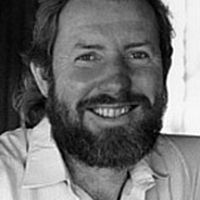
Michael Hannan
Michael Hannan (born 1949) is an Australian composer, pianist and musicologist. His work ranges from concert music and layered piano-interior soundscapes to shorter character pieces, alongside a substantial body of writing on Australian composition.

John Adams
John Adams writes post-minimalist music that forges large shapes from repeating cells: solo piano gates that shift mode like electronic switches, and two-piano scores that turn a border-stop title into an ecstatic, clangorous continuum.
Arvo Pärt
Arvo Pärt writes spare, slowly unfolding music built on tintinnabuli: simple triads and unadorned lines that ring like bells. Sacred texts and contemplative chamber pieces sit at the centre of the style that made him one of the most heard living composers.
Where to listen
Diamond Morning is available for streaming through Apple Music. It can also be purchased through the iTunes Music Store.
Diamond Morning is available as a CD. It can be purchased online through Buywell Music or the Australian Music Centre which both offer online ordering.
Product details
- Catalogue number
- TP252
- Total playing time
- 63 minutes 35 seconds
- Release date
- 31 Dec 2017
- Label
- Tall Poppies
- Musical work
copyright - © 2017 Tall Poppies Records
- Sound recording
copyright - ℗ 2017 Tall Poppies Records
- Categories
- Australian Classics, Modern Masterpieces
- Genres
- Contemporary Classical, Modernist Classical
- Barcode
- EAN 9399001002528
Related recordings
Lift Off: Australian Piano Music for Children
An engaging collection of piano music by Australian composers written to spark young imaginations. Elpis Liossatos, an Australian pianist then living in Greece, brings charm and enthusiasm to these performances.
Terrains: Piano Interiors
Michael Hannan performs Peter Sculthorpe’s piano-interior classics Landscape and Koto Music I & II alongside eight of his own works, built from layered, atmospheric textures drawn from inside the piano, often with tape and tape loops.
Gates Beyond
Waters lived in Switzerland but returned regularly to Australia for concerts. These works had long been in his solo recital repertoire, and the performances show the wisdom he had attained.
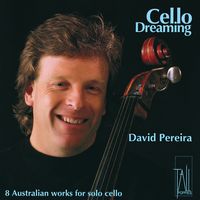
Cello Dreaming
Pereira has inspired more new works for his instrument than any other Australian musician. This is his first solo CD of works mostly written for him, and the first of three such discs then planned. His performances are powerful and persuasive.

Voices
Composer–pianist Roger Smalley presents a personal recital of lean, often quiet Australian piano works from the 1960s and 1970s, many appearing on CD here for the first time.