Midnight Songs
Three is a Melbourne-based trio of trumpet, trombone and guitar. With little extant repertoire for this combo, the group commissioned four Melbourne composers and pairs those works with Jane Hammond’s arrangement of Percy Grainger’s Random Round.
Christian O'Brien composer
Katy Abbott composer
Percy Grainger composer
Ken Murray composer
Jane Hammond transcription
Hailed as “an ensemble that plays with great musicality” (Alan Holley, classikON.com), Three seeks new chamber music that resonates with current-day audiences. Founded by three musicians bent on expanding the repertoire for their instruments, each brings a distinctive background—world music, jazz, popular music, traditional classical music, and avant-garde contemporary music.
The ensemble’s debut album, Midnight Songs, pays homage to Melbourne roots. Four new works by local composers sit beside the trailblazing aleatoric Random Round, written over a century ago by the city’s most renowned historical composer, Percy Grainger. The combinations of sounds and textures surprise and delight.
Reviews
The CD Midnight Songs by the Melbourne group Three is a wonderful introduction to repertoire that is evolving especially for this ensemble and it should have wide appeal amongst the concertgoers of Australia and overseas. Having heard the group in Sydney several years back I knew of their brilliant technical skills and high musicianship. Being able to listen to this recording in the quietness of one’s home brings additional layers of satisfaction.
First up is Andrew Batterham’s Organica. I find the opening with its driving rhythms and colourful overlays most attractive. Next is PIT_T by Christian O’Brien, a jazz driven work that never strays too far from a desire to please. Both these works fit the traditional role of the overture in the old-fashioned concert program.
At over 26 minutes the longest work on the CD is Katy Abbott’s Midnight Songs. Don Immel, trombone, displays the sweetest tone to draw the listener into a place where cares seem to disappear. Throughout this work Ken Murray’s guitar playing creates a foundation on which extended melodies are able to float along seemingly forever. Here and on other tracks trumpeter Joel Brennan has a beautiful and focussed tone that suits the diverse styles of the compositions on this CD.
Showing surprising freshness is the 100 year old Random Round by Percy Grainger with its Ravel like moments. Brennan’s use of mutes takes the listener straight to the musical world of George Gershwin. This is a delightful interpretation/working of this innovative composition by Grainger. Due to the openness of the scoring and instrument selection the performers bring to each performance a new approach and Murray, Immel and Brennan are so convincing that one expects this would have made Grainger smile. It makes me smile each time I listen. Loads of fun.
The encore style Torque by the group’s own guitarist, Ken Murray, is a perfect vehicle for fun riffs from the performers.
With a clear and upfront sound this CD is another feather in the cap of Tall Poppies, Australia’s most important new music label. Although THREE present differing styles of music on this recording the unifying factor is the excellence of the performances. Lucky composers.
This CD presents new works commissioned for Three, a Melbourne-based ensemble comprising Joel Brennan (trumpet) Don Immel (trombone), and Ken Murray (guitar), all of whom are staff of the Melbourne Conservatorium of Music, Melbourne University. The ensemble has a self-described goal of “seeking to establish new, cutting-edge chamber music with a special focus on presenting performances that resonate with current-day audiences” (booklet, p.5). They have done this through a series of commissions of new works, many of which are presented for the first time together on this CD.
The music performed by Three can claim originality on two fronts. On the one hand, their commissions present a common ethos of accessibility, with new and contemporary works that are tonally accessible, and sufficiently uncluttered to enable broad appreciation. On the other hand, the particular combination of trumpet, trombone and guitar is an unusual grouping that nevertheless has incredibly rich tonal and timbral possibilities. Throughout the recording, the artists demonstrate a clear willingness to listen and respond to each other’s sound worlds, and switch seamlessly between soloistic and accompaniment passages in the works they’ve commissioned. The trombone and guitar share a wide tenor range that is enriched by their different sonorities. Meanwhile, the trumpet extends the trombone’s sonority into a higher range, adding necessary brightness. A really pleasing aspect of the recording, evident immediately and still present after numerous listenings, is the effectiveness with which the musicians blend with each other. The musicianship and artistic vision of the ensemble make a compelling case for more repertoire utilising the combination of trumpet, trombone and guitar.
The CD itself comprises commissions, as previously stated, alongside an original work by Ken Murray and a new rendition of Percy Grainger’s Random Round (1912-14). The first two tracks, Andrew Batterham’s Organica and Christian O’Brien’s PIT_T (pronounced ‘Pity’), both 2013, share filmic sensibilities and a contemporary chordal language well suited to the tessitura and tonal combination of the instruments. While intricately written, these two pieces are versatile, and would pass muster in various commercial contexts. Organica, in particular, offers a slowly-developing (or ‘organic’) unfolding of the initial tonal material, with individual lines that seem well suited to the personal tastes of the performers. One gets the impression that they particularly enjoyed their contributions to the recording of this piece, and it works well as an opener for the CD.
The third piece, Katy Abbott’s Midnight Songs (2013), provides the album title as well as the most substantial compositional material for the project, with four movements at over 26 minutes in length. This work makes effective use of the guitar’s capacity to provide both melodic and harmonic textures, while sensibly lending rich melodic responsibilities to the two brass instruments, whose lines emerge and occasionally intertwine throughout. The performance is sensitive and sparse, with the performers doing a really good job of staying out of each other’s way while passing the melodic focus around the ensemble.
The version of Grainger’s Random Round presented here follows a transcription provided by Jane Hammond, drawing on the resources of the Grainger Museum at the University of Melbourne. Murray gets a nice, heavy buzz going on the opening guitar chords, before slipping neatly beneath lightly lilting trombone and trumpet lines. The guitar never completely disappears, however, rising and falling in intensity to articulate moments of heightened harmonic tension that appear and disappear as the round progresses. Notwithstanding some very delicate melody lines, there is scope here for the brass to match the guitar with some edgier playing, and take a few more risks. Finally, Murray’s Torque (2013) rounds out the album with a Brazilian popular music-inspired offering that is rhythmically contrasted with the other works on the album, providing syncopated, angular lines across the ensemble. While not ‘bossa’ as a jazz guitarist would play it, the work has clear leanings in this direction, while also offering opportunities for the brass to break away from the contours of the lullabies and other quiet song melodies that appear in previous tracks.
Overall, the album is exceptionally well recorded with excellent balance and honest, uncontrived instrument sounds. Occasionally, the guitar’s long resonances (especially where a delay pedal is in use) are difficult for the brass players to match, but this is a common challenge for brass and strings playing together, and Immel and Brennan do a splendid job of leaning into the sound of the guitar. A great deal of hard work has gone into this album, and yet the players clearly have the capacity to continue developing both the breadth of their repertoire and the creative possibilities of their ensemble, which bodes well for future releases.
‘How is this going to work?’
That was my first thought.
Three is a trio that pulls together the most unique and fascinating instrumentation I’ve come across: trumpet, trombone, and classical guitar. The guitar, for instance, is a soft, delicate, intimate thing. In an ensemble it has to fight – to be heard, that is. Its sound dies. But its attack is momentarily alive. Vivid. Brass, on the other hand, is steady, valorous, bold and boisterous. Or so its reputation goes.
But ignore my initial inklings – it works.
Midnight Songs is an intriguingly beautiful record. And it’s not only something fresh to our ears; it’s something fresh to our classical music culture. Music intended for us and now.
There’s a valuable ethos that drives and binds ensemble Three members Joel Brennan, Don Immel, and Ken Murray. The trio, also Melbourne Conservatorium colleagues, established the project to commission and perform works that resonate with contemporary audiences, while contributing to their instrument’s chamber repertoire base.
Midnight Songs continues Three’s longstanding project with an album that speaks to those who aren’t concerned with the confines of genre. The Australian compositions employ a variety of contemporary harmonic language, electronic soundscapes and minimalist delay, and subject matters that are of our time.
So, how does it sound?
It’s never as often as I’d like that I sit down and listen to an album in its entirety. But what a great opportunity to make use of my handmade, hammertone green, floorstanding Moratori speakers. No one ever understands us audiophiles. Regardless, they’re a real sight; and their horn bass design puts the brass in your living room – the neighbours love it. I’m enveloped in a soundstage of unique textures and timbres; and on my first listen, lost. It’s eerie. The sparse textures, rhythmic repetition, digital delay and imitation resemble and evoke the environment of night, and the mood of static introspection that night can induce.
Before long, I have no expectation of where these works will lead. Australian composers Andrew Batterham, Christian O’Brien, Katy Abbott, and Ken Murray allow their eclectic listening and performance experiences to penetrate their works. An open mind comes in handy.
Opening Midnight Songs, O’Brien’s track PIT_T addresses suicide as the highest killer of men under 44. PIT_T contains three distinct sections that explore physical activity as a means of suicide prevention. The opening minimalist section ends into silence before repetitive contrapuntal lines are introduced over a rhythmic pattern of guitar harmonics. The brief final coda suddenly increases in tempo, driven by a pre-recorded stomp track, before ending abruptly. There’s no sense of assurance. You experience each section as the music commands.
Batterham’s Organica functions rhythmically and harmonically as its title suggests: developing from its initial material. It combines classical guitar with delay, an effect imitated in the writing for brass. In Organica, the trio frequently shifts and contrasts stylistic voices: the brass spontaneously enters with be-bop lines that end in sustained growls, while the guitar is at home in idiomatic tremolo, rasgueado, and improvisatory melodic lines.
In contrast to the rhythmic intensity and physicality of the opening works, Abbott’s four-movement Midnight Songs explores the unique timbres and textures that emerge through the interaction between these unlikely instruments. The meditative, expansive, and delicately beautiful sounds allow you to appreciate the sensitivity and musicality in the performances of both flugelhorn player Joel Brennan and trombonist Don Immel. The crescendo entries and legato lines of the brass and the naturally instantaneous attack of Ken Murray’s classical guitar are performed with impressive accuracy, creating the effect of an enveloping texture rather than individual roles.
Finally, Murray rounds off the album by tipping his hat to Brazilian guitarist Yamandu Costa in his own composition Torque, quoting and appropriating Brazilian rhythmic patterns in an exhilarating and dynamic piece.
Ensemble Three is a valuable contributor to – and an inspiring example of – forward-thinking classical music culture in Australia. The ensemble brings together contemporary composers and audiences, and original instrumentation for a sonic experience that is introspective, intriguing, and refreshingly relevant. You should know about it. And you owe it a listen.
Midnight Songs by Ensemble Three features an unusual combination of instruments playing four new works by Melbourne composers and the trio’s take on Jane Hammond’s arrangement of Percy Grainger’s Random Round.
Trumpeter Joel Brennan, trombonist Don Immel and guitarist Ken Murray are all performance staff members of the Melbourne Conservatorium of Music and they perform new repertoire aimed at current day audiences.
The first two tracks, Andrew Batterham’s Organica and Christian O’Brien’s PIT_T, sit comfortably between jazz and classical contemporary, exploiting the bright sound of brass against Murray’s nylon strings with some subtle tonguing effects from Brennan.
Katy Abbott’s Midnight Songs fall into four parts. The gentle Lullaby has a mesmeric quality with the guitar weaving over the top of the brass chorus. Midnight Song is slow and spacious, and the pace increases for Variations with some flamenco percussion effects on guitar and some humorous moments before a fade out, while order is restored in the fourth part with a reprise of the lullaby theme featuring Immel’s trombone and Brennan’s trumpet.
Murray’s own composition Torque is upbeat and features some lively interplay between the three instruments. All in all this is a delightful album full of little musical surprises.
Artist
Tracks
- Organica Andrew Batterham 8:48
- PIT_T Christian O'Brien 5:27
- i. Lullaby 7:53
- ii. Midnight Song 6:11
- iii. Variations 10:07
- iv. Lullaby Reprise 2:09
- Random Round (transcribed by Jane Hammond) Percy Grainger Arr: Jane Hammond 7:21
- Torque Ken Murray 3:05
Midnight Songs Katy Abbott
Performers
- Ensemble Three · ensemble
- Don Immel · trombone
- Joel Brennan · trumpet
- Ken Murray · guitar
Composers

Katy Abbott
Katy Abbott’s music is refreshingly genuine. She is part of a new wave of composers who emerged after the style wars that dominated Australian music in the nineties, and her work has no hint of either forced intellectualism or fluffy popularism.
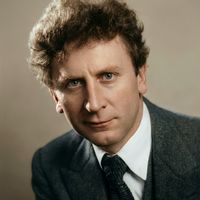
Percy Grainger
Percy Aldridge Grainger (1882–1961) was an Australian-born composer, arranger and pianist. A brilliant folk-song collector and arranger, he was also a restless experimenter whose work ranged from tuneful percussion to Free Music machines that foreshadowed electronic synthesis.
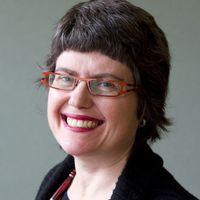
Jane Hammond
Jane Hammond has composed original music for mainstream and community theatre and the concert stage, for ensembles and companies including Ensemble Liaison, Victoria State Opera, Opera Australia, and the Melbourne International Festival. Her works, heard throughout Australia and abroad, have been described as of “ravishing beauty and rare artistic distinction”.
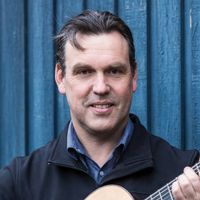
Ken Murray
Ken Murray (b. 1968) is a Melbourne guitarist and composer working across classical and electric guitar in contemporary chamber music.

Andrew Batterham
Andrew Batterham is an Australian composer whose music ranges from sacred choral settings to brass and chamber works for contemporary ensembles.
Where to listen
Midnight Songs is available for streaming through Apple Music. It can also be purchased through the iTunes Music Store.
Midnight Songs is available as a CD. It can be purchased online through Buywell Music or the Australian Music Centre which both offer online ordering.
Product details
- Catalogue number
- TP237
- Total playing time
- 51 minutes 1 seconds
- Release date
- 3 Jan 2016
- Label
- Tall Poppies
- Sound recording
copyright - ℗ 2016
- Category
- Australian Classics
- Genre
- Contemporary Classical
- Barcode
- EAN 9399001002375
Related recordings
Australian Fantasia: Orchestral Works by David Stanhope
Orchestral works by David Stanhope and four of his transcriptions, realised with a digital orchestra. Apart from Olympic Fireworks, written for the 2000 Sydney Olympic Games opening ceremony, these scores had not been heard in public performance.
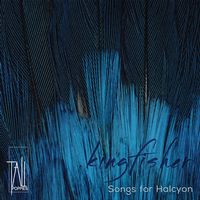
Kingfisher
This CD is the result of a daring project to commission 21 composers to write new works for Halcyon's two singers, Jenny Duck-Chong and Alison Morgan. Presented over two concerts in their 15th anniversary year, and then recorded at Trackdown.
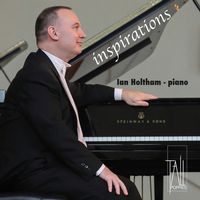
Inspirations
They say there is nothing new under the sun. New works of art challenge this notion. In this piano recording by Ian Holtham, all the works, commissioned from his Melbourne composer colleagues, are responses to major works in the piano literature. Something new has arisen, phoenix-like, out of something old.
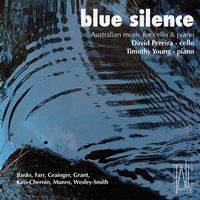
Blue Silence: Australian Music for Cello and Piano
This is the first disc of its kind released in Australia: an overview of important works for cello and piano spanning 108 years. The earliest is Grainger’s Scandinavian Suite, a tour de force that deserves a place in the concert hall.
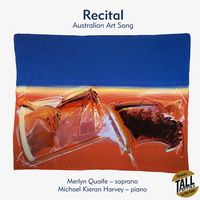
Recital: Australian Art Song
Merlyn Quaife (soprano) and Michael Kieran Harvey (piano) present a recital of Australian art song spanning the twentieth century, from Percy Grainger and Fritz Hart to Keith Humble and David Horowicz.
Viola Power
It's hard to imagine a CD of Australian music for the viola, but here it is. From Grainger's chirpy love song through Ross Edwards' intricate dance to Peter Sculthorpe's masterful work with percussion.