The Emerald Leopard
Josie and the Emeralds pair acclaimed early-music soprano Josie Ryan with some of Australia’s finest viol players, the Emerald City Viols. Founded in 2011, the group is known for sophisticated performances and inventive programmes of Renaissance and contemporary works, including compositions and arrangements by director Brooke Green.
Brooke Green directed by
Josie Ryan soprano vocals
Fiona Ziegler viol
Catherine Upex viol
Laura Moore viol
Jacques Emery double bass, percussion
Belinda Montgomery soprano vocals [guest]
Elizabeth Rumsey viol [guest]
Anthea Cottee viol [guest]
Margo Adelson viol [guest]
Laura Vaughan viol [guest]
Orlando Gibbons composer
Thomas Morley composer
Andrea Pandolfo composer
John Dowland composer
Ross Edwards composer
Brooke Green composer
Dorothy Porter lyrics by
Brooke Green arranger
The Emerald Leopard is one of four songs Brooke Green set to poems by Dorothy Porter. Mysterious, imperious and shimmering on the horizon: those are some of the images Porter evokes. Transformation, and the desire to move the listener, sit at the heart of much Renaissance poetry and music. With that understanding, Josie and the Emeralds perform exquisite songs from Renaissance England: Orlando Gibbons, including The Silver Swan; John Dowland, including Flow My Tears; and Thomas Morley’s Sing We and Chant It.
Other works by Green include The Shades (Audience Prize, The Tenth International Leo M. Traynor Composition Competition for New Music for Viols, 2013) and Travelling to the Question, inspired by Nick Cave, Hildegard of Bingen and Martin Heidegger. The disc also carries her arrangements of Elena Kats-Chernin’s brilliant Eliza Aria from Wild Swans; Andrea Pandolfo’s Albanese – a moving lament from the perspective of a refugee mother, widely viewed on YouTube; and delightful piano pieces by Ross Edwards re-imagined for viol quartet as Miniatures.
Josie and the Emeralds thank their many Pozible donors who gave generously to support this recording.
Reviews
Seventeen of the 26 tracks of this interesting CD are composed and/or arranged by the Australian viol-player, Brooke Green (b. 1964). The other nine are songs by Orlando Gibbons, Thomas Morley and John Dowland.
Green’s inspiration for “Bone Burning Tunes” (the opening set of four songs) is Crete, a collection of poems by the Australian poetess, Dorothy Featherstone Porter (1954-2008). In the first, called “Music”, a clear, slow-moving melody in 3/4 is played on a treble viol, accompanied by the other viols, now pizzicato, now arco. The treble viol complements Josie Ryan’s clear soprano voice singing: “My decaying lyre glows green under the rubbish mounds/ dumped it lies in wait for someone’s fossicking fingers/ what bone-burning tunes it will play through that stray hand!”. The long melodic lines and discordant harmonies create an unsettling atmosphere, challenging the listener to ponder on the meaning of the words. In “The Emerald Leopard”, the viols create a bustling backdrop with repeated jerky rhythms, while “The Flashing Mountain” is recitative-like, with dramatic pauses. The set ends with a jolly jig-like song, “Hot Date”, with a bass line similar to the opening of The Beatles’ Penny Lane.
Green’s piece for viol consort, “The Shades”, is underpinned by a three-quaver, crotchet, three quaver rhythm in 4/4, similar to Scott Joplin’s Solace, although Green explores less conventional harmonies than Joplin. Her arrangements include “Albanese” by Andrea Pandolfo, a lament on the gruesome death of Albanian boatpeople trying to reach Italy in the dark – “flashing lights, shrieking women ... and the odour of diesel”. It is helpful that the words of all the songs are included in the liner notes. Albanese is sung in Italian, but the words provided are in English.
The five songs by Gibbons are taken from The First Set of Madrigals & Motets (1612) and work well as consort songs. They include a perky “Trust not too much, fair youth” and the evergreen “The Silver Swan”, to which Ryan adds a few of her own divisions and portamento. It is a question of taste, of course, but I like the simplicity of the song, and prefer it unadorned. On the other hand, her divisions in Morley’s “Sing we and Chant it” are a nice touch.
The Emeralds have enlisted the help of other musicians, including Jacques Emery, effective on double bass and percussion in Elena Kats-Chernin’s “Eliza Aria”, so it is a pity they make do without a lutenist for the three Dowland songs. “Flow my tears” and “In darkness let me dwell” were composed for voice, lute and bass voice/viol; for the former they adapt the five-part setting in Lachrimae, and for the latter they have presumably made their own arrangement for viols from the lute tablature. Introducing “In darkness let me dwell” in the liner notes, Green refers to Timothie Bright’s Treatise of Melancholy (1586): “gastly fumes of melancholy ... all dark, blacke and full of feare ...”, which could as well refer to “Albanese”. “Sing we and Chant it” and “Flow my tears” must be live performances, because they are followed by inane clapping, which sounds out of place for just these two pieces.
Attractive are four Miniatures by Ross Edwards arranged for viols by Green. There are no unpleasant surprises, and the harmonic palette is reassuringly conventional. Soprano Belinda Montgomery joins Ryan to good effect for Green’s “Travelling to the Question”. I’m not sure I understand the words, but I do appreciate the bleak scenario Green creates through her music.
It was a pleasure to listen to Green’s “Shades of Presence Past”, having reviewed the music (PRB Productions, Contemporary Consort Series No. 79) for The Viol, Winter 2013-4, No. 33, p. 22. The first movement, “Spirits and Dreams” is an unhurried piece of polyphony, and apart from exploring some strange harmonies, and having a large number of dotted crotchet/quaver rhythms, it is typical viol music, albeit a step or two beyond Lawes and Cranford. The (seven-string) bass player will enjoy the low C#s and the range of nearly three octaves to b’ just above the frets. The piece ends with four minim-rest sighs, and a final scurry to a high note on the treble and tenor 1 viols. “Shades of Shades” sways along nicely, supported by rising arpeggios above a chromatically descending bass line. Sections of 3/4 alternate with sections of 6/8, and the piece slows to a close with an occasional bar of 7/8. In the edition, the jazzy third movement appears as an instrumental piece called “Johnny D’s Jaunt”, but on the CD the top line is sung by Ryan to the words, “My mind to me a kingdom is”. The final movement, “Ghost of Gadget”, is a lively jig, though creepy in mood. It ends with a somewhat shocking chord of A minor – a tierce de Picardie in reverse. I think this suite is fine music, but it needs to be played well, and with conviction, to do it justice.
There is one small thing I find irritating: on the back cover of the liner notes is a photo of the four viol-players pretending to play tennis with their viols as rackets. It is not funny, and degrades the instruments and the good things the players are trying to achieve.
All in all I find Green’s music evocative, thought-provoking, and entertaining. The group’s viol-playing is excellent – subtly expressive, and playing as one. They fossick well.
Josie and The Emeralds have received critical acclaim for their concerts in Sydney and Canberra since their formation in 2011. They play an innovative mix of Renaissance works, original compositions by Brooke Green (their director), and her arrangements of both Renaissance and contemporary pieces. They have selected favourites from their current repertoire to produce this, their debut CD. It is excellent, and will ensure their place amongst the top ranks of Australian early music ensembles.
“Josie” is Josie Ryan, a soprano who trained initially at Sydney Conservatorium, then studied at The Hague Royal Conservatory (on a Dutch Government grant) where she obtained a Masters degree in Early Vocal Music and Historical Performance Practice. She spent a decade in Europe performing with leading groups like The Tallis Scholars, The Amsterdam Baroque Choir and Collegium Vocale Gents. Her beautiful fresh soprano voice is certainly a delight to hear! It is rare to find such a free production throughout the range in this style of singing where minimal vibrato is preferred. Now back in Sydney, she performs regularly with numerous organisations including Pinchgut Opera, The Australian Brandenburg Choir, Cantillation and as soloist with many leading church choirs.
“The Emeralds” are the Emerald City Viols, a group directed by Brooke Green (a leading baroque violinist, viol and vielle player, and composer) who has extensive experience leading baroque ensembles and as a treble viol soloist. Her composition, The Shades, won the Audience Prize at the 2013 Leo M. Traynor Tenth International Competition for New Music for Viols. It is included on this disc. Laura Moore, Catherine Upex and Fiona Ziegler make up the rest of the consort and all come with impressive credentials in early music. It is exciting to have such an accomplished group based in Sydney so we too can enjoy the burgeoning interest in early music in live performances, and now on this fine disc. To have such interesting and beautiful works written specifically for viols is also an exciting local development.
Dorothy Porter’s poems, audaciously titled Bone Burning Tunes, inspired Green’s four songs for soprano and viols. “The Emerald Leopard” is the second song, the inspiration for the disc title and the programming of works, and the striking CD cover by Paloma Drehs. Brooke Green explains in the CD notes: the leopard is “a grand object of desire” remaining always untouchable, but “we have been transformed by the desire to reach upwards, to approach the beautiful” and “the potential of the Emerald Leopard to transform modes of perception has been a guiding force in putting this cd together”. Bone Burning Tunes are varied in style, though all basically tonal, with lyrical melodies for the voice, and effective and evocative word painting. “Hot Date” provides a sharp contrast to the other three, being a jazzy number with a walking bass and a dark humorous touch (the date being with Death!).
Other compositions by Green one can enjoy on the disc are The Shades (the prize-winning piece), Travelling to the Question, Shades of Presence Past and This Body is Not Me. The distinctive mellow tonal qualities of viols and their beautiful blend with their limited dynamic range give these pieces a gentle quality that is most seductive. Often a meditative element was present. Variety to hold the listener’s interest comes with subtle tempo and rhythmic differences and of course the beauty of the soprano’s voice, and the interest of the texts themselves. The beautiful Travelling to the Question has two soprano voices (Ryan and Belinda Montgomery) interweaving gracefully with the strings and uses elements of chant and a melody by Nick Cave (The Carny Song). Also very effective is This Body is Not Me, a song with text about birth and death by Thich Nhat Hanh (b.1926), a renowned Vietnamese Zen Buddhist Monk, teacher, author and poet.
Albanese, composed by Andrea Pandolfo (b.1963) and arranged by Green, is a moving lament of a refugee mother and how moving Ryan can be in her performances. Ross Edwards’ Miniatures is a charming set of 4 gem-like pieces arranged by Green and her arrangement of “Eliza’s Aria” from Wild Swans by Elena Kats-Chernin is very effective and I enjoyed the flexibility and warmth in Ryan’s voice.
I also admired her elegant performances of well-known English Renaissance works such Thomas Morley’s Sing we and Chant It, the three songs of John Dowland (Flow my Tears, In Darkness, Can She Excuse my Wrongs) and the selection of five madrigals of Orlando Gibbons from his 1612 First Set for five voices, which included his renowned The Silver Swan. Flow my Tears is a highlight of the disc – a great song ideally suited to Ryan’s artistry and this recording of a live performance is exquisite in its phrasing. The texts for all works are in the CD booklet along with background information written by Brooke Green that makes for interesting reading.
A most enjoyable disc – a wonderful debut CD by this highly skilled group.
There must be a thesis explaining how ensembles of ancient Instruments move effortlessly between the pre-baroque and our own times. The Sydney-based ensemble of viols, Josie and the Emeralds, performs works from the Renaissance as well as contemporary Australian works. This delightful debut album assembles a collection of compositions and arrangements by Brooke Green, the group's director and much respected ABC music producer. It's not easy to place her original music, as she moves in conversation with composers as diverse as William Walton, Astor Piazzolla and Stephen Sondheim.
In the most extended and memorable piece, Travelling to the Question, set for two female voices and viols, Green waltzes with that medieval mistress-nun of music, Hildegard von Bingen. Even more appealing is Green's arrangement of Italian composer Andrea Pandolfo's Albanese, a kind of modern-day barcarolle dedicated to "boatpeople everywhere". While losing the sparkle and verve of the originals, Green's arrangements of four miniature duets by Ross Edwards become new creations: not so the eternally fresh Eliza's Song by Elena Kats-Chernin, in which soprano Josie Ryan chirrups stratospherically.
The voice seems on more comfortable ground in the music of those Elizabethan masters, Gibbons, Morley and Dowland.
The darker hues of the low-voiced viols beckon exploration by contemporary composers, perhaps exploring plucked techniques to relieve a tendency towards aural monotony. The close-voicing and vibrato-free playing is a delight. This is an intriguing and beguiling companion for late-night listening.
Artists

Josie and the Emeralds
Josie and the Emeralds is a Sydney early-music ensemble founded in 2011, uniting soprano with viol consort in Renaissance song and new Australian writing for the viol.
Josie Ryan
Josie Ryan is an Australian soprano specialising in early vocal music. After training in Sydney and at The Hague, and a decade performing in Europe, she returned to Sydney as a concert and ensemble soloist.
Tracks
- Music 3:15
- The Emerald Leopard 3:52
- The Flashing Mountain 1:59
- Hot Date 2:32
- The Shades Brooke Green 3:32
- Eliza Aria from Wild Swans Elena Kats-Chernin Arr: Brooke Green 3:38
- What Is Our Life? 3:58
- Ah Dear Heart 2:04
- Fair Is the Rose, Yet Fades with Heat or Cold 3:03
- Trust Not Too Much Fair Youth unto Thy Feature 2:18
- The Silver Swan 2:01
- Sing We and Chant It Thomas Morley 1:46
- Albanese Andrea Pandolfo Arr: Brooke Green 4:30
- Flow My Tears 4:10
- In Darkness 3:57
- Can She Excuse My Wrongs 2:40
- Rain 1:01
- Lullaby 2:02
- Choreola 1:12
- Dorian Pipes 1:19
- Travelling to the Question Brooke Green 7:28
- Spirits and Dreams 2:27
- Shades of Shades 3:36
- My Mind to Me a Kingdom Is 2:07
- Ghost of Gadget 1:51
- This Body Is Not Me Brooke Green 5:24
Bone Burning Tunes Brooke Green Dorothy Porter
Five Songs from The First Sett of Madrigals and Motets for 5 Voices, 1612 Orlando Gibbons
Three Songs John Dowland
Miniatures Ross Edwards Arr: Brooke Green
Shades of Presence Past Brooke Green
Performers
- Josie and the Emeralds · ensemble
- Brooke Green · directed by
- Josie Ryan · soprano vocals · tracks 1–4, 6–16, 21, 24 and 26
- Fiona Ziegler · viol
- Catherine Upex · viol
- Laura Moore · viol
- Jacques Emery · double bass, percussion · track 6
- Belinda Montgomery · soprano vocals [guest] · track 21
- Elizabeth Rumsey · viol [guest]
- Anthea Cottee · viol [guest]
- Margo Adelson · viol [guest]
- Laura Vaughan · viol [guest]
Composers

John Dowland
John Dowland's lute songs and ayres carry a rare, deliberate melancholy: tears that fall in measured pavans, love that stings in galliards, darkness that still sings. His music remains the living heart of the English Renaissance songbook.
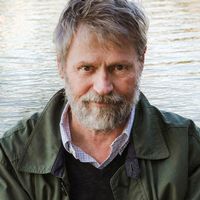
Ross Edwards
One of Australia's best known and most performed composers, Ross Edwards lives and works in Sydney. His commitment to music as a positive and regenerative force has led him to explore beyond the confines of Western art music.
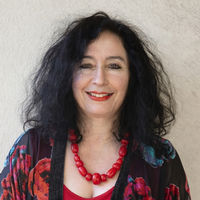
Elena Kats-Chernin
Elena Kats-Chernin AO (born 1957) is an Australian composer whose piano rags, chamber miniatures, ballet and stage scores have become central to contemporary Australian repertoire.
Orlando Gibbons
Orlando Gibbons wrote English madrigals, verse anthems, full anthems and keyboard music at the hinge of Renaissance and Baroque practice: lucid polyphony, rhetorical force without bombast, and lines that lodge in the ear like The Silver Swan.
Brooke Green
Brooke Green writes and arranges for soprano and viols, folding Renaissance song into new consort music that carries Dorothy Porter, boatpeople laments and forgotten Australian histories into dark, close-voiced shimmer.
Thomas Morley
Thomas Morley's madrigals and balletts are among the most singable music of Elizabethan England: light, quick-moving part-songs that took Italian models and made them English. Choirs still reach for pieces such as Now is the Month of Maying and Sing we and chant it.
Contributors
Artwork [Cover]
Paloma Drehs
Where to listen
The Emerald Leopard is available for streaming through Apple Music. It can also be purchased through the iTunes Music Store.
The Emerald Leopard is available as a CD. It can be purchased online through Buywell Music or the Australian Music Centre which both offer online ordering.
Product details
- Catalogue number
- TP233
- Total playing time
- 77 minutes 42 seconds
- Credit
- Paloma Drehs
- Release date
- 11 Nov 2014
- Label
- Tall Poppies
- Musical work
copyright - © Tall Poppies Records
- Sound recording
copyright - ℗ Tall Poppies Records
- Categories
- Australian Classics, Great Classics
- Genres
- Early Music, Contemporary Classical, Vocal & Opera
- Barcode
- EAN 9399001002337
Related recordings
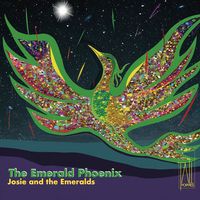
The Emerald Phoenix
In 2014 Tall Poppies released The Emerald Leopard (TP233), with Brooke Green’s music for soprano and viols. The Emerald Phoenix presents her recent works for soprano, viols and theorbo, featuring Josie Ryan and bass violist Laura Vaughan.
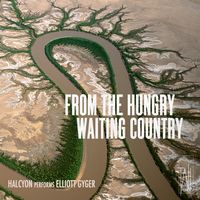
From the Hungry Waiting Country
Three astounding works by Elliott Gyger are presented by Halcyon, featuring the thrilling voices of Jenny Duck-Chong and Alison Morgan with some of Australia’s best performers. Challenging music that rewards every listen, full of mystery and glistening textures, its narrative holds you to the end.
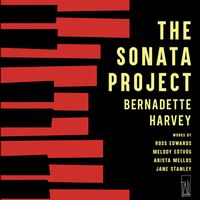
The Sonata Project
Bernadette Harvey performs four large-scale solo piano works: Aristea Mellos’s three-movement Sonata, Melody Eötvös’s two-movement Piano Sonata No. 1, Jane Stanley’s Piano Sonata framed by Prelude and Postlude, and Ross Edwards’s Sea Star Fantasy.
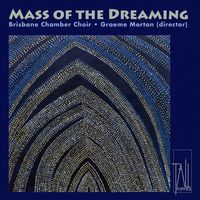
Mass of the Dreaming
It is remarkable that 2016 brought the first recording by an Australian choir devoted entirely to Australian sacred choral music. This disc fills that long gap with newly commissioned and recent works.
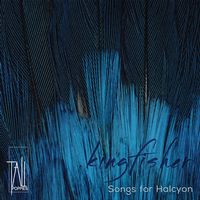
Kingfisher
This CD is the result of a daring project to commission 21 composers to write new works for Halcyon's two singers, Jenny Duck-Chong and Alison Morgan. Presented over two concerts in their 15th anniversary year, and then recorded at Trackdown.
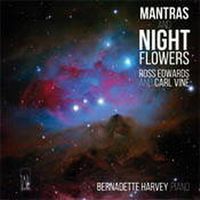
Mantras and Night Flowers
One can be sure that Australian music might be finally coming of age when one record label can contemplate a third recording of a recent piano work – Carl Vine's magnificent Piano Sonata No. 1 is now released for the third time by Tall Poppies.