Bruce Cale Quartet Live
Tall Poppies releases a fine live document of the Bruce Cale Quartet: Dale Barlow (flute and saxophones), Roger Frampton (piano), Bruce Cale (bass) and Phil Treloar (drums). Captured at the 1980 Adelaide Festival of Arts, the set traces a distinctive creative path.
Bruce Cale double bass
Roger Frampton piano
Dale Barlow flute, soprano and tenor saxophone
Phil Treloar drums
This recording testifies to the interpretive range Roger Frampton and Phil Treloar, in particular, could open up. They were among the few musicians in Australia then working at this level of free expression inside tightly structured forms, and they set a precedent younger players were already taking up.
Very little of this quartet’s music-making survives on record. That is one reason Tall Poppies is issuing the tape: an archival document still able to turn heads a quarter of a century on.
Whether you heard the band live or meet it here for the first time, the communication these four share in Bruce Cale’s compositions remains startling and rewarding.
Reviews
How unusual and fun for me to listen to and review two rather different albums by the same artist. The artist is Bruce Cale and on one CD he is playing bass in a jazz quartet, while on the other he is a composer in the classical vein (see TP188). The tracks of both CDs were recorded between 1980 and 1990, but only released within the last few years by the Australian Tall Poppies label.
Bruce Cale's journey is an interesting one. His bass playing took him on a 12-year trek from his native Australia to the United Kingdom, the east and west coasts of the United States, and finally back to the land down under, where he is currently semi-retired from bass playing and devoting his musical energy to composing, writing in both the classical and jazz idioms. In 1980 Cale's quartet played a week-long engagement at the Adelaide Festival of Arts, and Bruce Cale Quartet Live is the recorded documentation of the last night of the run. This CD shows four splendid musicians forming a special band, a sum greater than the parts phenomenon. Five of the six tracks are Cale compositions (one of which is free) and one was penned by pianist Roger Frampton.
The album opens with the BOOM of Rolling Thunder, a smokin’ fast swinger with a tricky melody, masterfully played by Cale and saxophonist Dale Barlow. The ensuing solos are excellent, belying the tempo, as the underlying feel changes from straight-ahead swing to broken time and pedalling, while never losing time or energy. The straight-eighth Cyber Herod is next, a terrific tune which proves to be a good improvisatory vehicle for Barlow and Frampton, whose interplay on the head is great. Barlow demonstrates a nice linear concept in his solos and (forgive me) rare pleasing soprano sax sound. After Barlow revs everybody up, Frampton insists on a calmer starting point for his solo, demonstrating his mature musicianship. Both solos are exciting and appreciably supported by loose, open time underneath from Cale and drummer Phil Treloar. Cale gets a growly sound and his basslines are often like counterpoint, though never to the point of competing with, or getting in the way of the soloist.
Other tracks include Listen to the Song of Life, a walking ballad with an almost classical-and-jazz feel, a bit like Jean-Pierre Rampal's music – comparison no doubt enhanced by Barlow's choice of flute on this one. This track again features beautiful solo offerings from Frampton and Barlow. Bells is the aforementioned free tune, with fantastic sustained energy from the band (especially Frampton) and group interplay. Offering, a pretty ballad, is Frampton’s composition, and the album closes with Bindo, another quick swinger, a highlight of which is Cale “staying home” and allowing Frampton and Treloar to play more freely.
This CD presents six items recorded by the ABC at the 1980 Adelaide Festival for later replay. Being "live" recordings, all extend beyond 5 minutes and three beyond 10, despite some editing to reduce length. Cale and Treloar may not be familiar names to today's collectors but both were once heavily involved in the Sydney jazz scene. Cale accompanied Bryce Rohde on the haunting Windows of Arquez, with which Jim McLeod introduced his Jazz Track program for so long. (Cale may have contributed to this composition, commonly credited to Rohde). After an impressive international career during the 60s–80s, he retired from jazz performing to concentrate on composition. Similarly, Treloar has lived and worked in Japan as a performer and composer for some years, returning here only occasionally.
Frampton was unquestionably at the centre of Australian jazz as performer, composer and teacher until his tragic death five years ago and this CD is dedicated to his memory. He had the rare distinction among performing Australian jazz musicians of completing a PhD in jazz, a tribute to his intellectual and musical abilities but also his enormous courage when facing death from cancer. Here, aged 32, he was at the height of his considerable abilities; fast, clean technique, two-handed, strongly percussive, very exciting. His influences were diverse – Tyner, Taylor, Silver, Jarrett; but he was an original – experimenting, searching, confronting and capable of huge contrasts. Roger was amazing.
Barlow is now one of the few truly pre-eminent voices at the international level that Australia has produced; but his stellar, virtuosic talents playing soprano, flute and tenor (one of the best sounds in the world) are already obvious here. He was 19.
Five compositions are Cale's, all strong and mostly firmly rooted in the idiom of post-bebop. The blisteringly fast and lengthy Bells is the most obviously experimental, with Frampton in particular playing with astonishing power. Throughout, the quartet is very cohesive, highly energetic, rhythmically adventurous and clearly seeking new directions. It makes for fascinating listening and clearly establishes what heights these musicians had already achieved all those years ago. Frampton's composition Offering is a beautiful standout track. An extra bonus is provided by the informative cover notes by Cale, Barlow, Treloar and by Adrian Jackson, the Melbourne-based jazz promoter and journalist.
This is a major release. Despite the larger number of master musicians now playing improvised music in Australia, little compares with the primal force and energised imagination of the Bruce Cale Quartet, recorded live in Adelaide in 1980.
This was a crucial period for local jazz. The bands of Cale, Mark Simmonds, Roger Frampton, Phil Treloar and Bernie McGann were among those playing with the belly fire of pioneers in an Australian cultural landscape that probably wished they would go away.
Some did: Cale retired from playing bass to concentrate on composition in 1987; Treloar moved to Japan a dozen years ago; Simmonds gave up regular playing a decade ago; Frampton died in 2000. Yet to hear this lovingly remastered CD, which was recorded by the ABC for Jim McLeod’s Jazztrack and never commercially released, is to be warped back into a present as real as the "now" in which you read this.
Cale had Frampton and Treloar in the band, and a bright young saxophonist called Dale Barlow who, though little known, was already magisterial. Cale’s compositions managed to be equally user-friendly to all members of the quartet. The importance of this cannot be over-emphasised, given the diversity of experience and musical inclination, and given that Frampton and Treloar were a fiercely creative subset within the band.
The piano solo in the opening Rolling Thunder provides an immediate reminder of what we lost with Frampton’s death. His imagination bristled, while the clarity of both the ideas and the articulation of them was nothing short of miraculous. In this mood, Frampton was as fine a jazz pianist as any.
For the full scope of this band, however, listen to Bells, when Treloar seems to ratchet up the drama with every strike on cymbal or drum, and Frampton is there with him at every turn, while Barlow rises to the challenge, and Cale scoots around them in his distinctive sing-song way.
Music that reaches the state of being timeless returns to the CD player over and over again. The Cale Quartet's Live at the Adelaide Festival is one of those very special releases. The music is 25 years old and sounds as fresh today as it must have sounded then. It also sounds much fresher and more vital than a lot of what is being put out today.
The recording happened on the last night of the Adelaide Festival, where the quartet had been playing for a week. Everything seems to just come together; the musicians lock in and play as a true group, and they are technicians of the highest order, the ones that use their gifts to serve the music. "Rolling Thunder" introduces pianist Roger Frampton, furiously supported by Cale on bass and Phil Treloar on drums. In a way this album is a homage to Frampton, who died in 2000 from a brain tumor. The music just roars out of the gate, and it stays there, pausing for breath for sure, but you know immediately that you are privy to one of those special alignments of the stars.
Live has the distinct feel of immediacy: it is live, but there is more to it than that. The musicians had been playing for a week, and while you can hear ordered arrangements, it is just as easy to hear flights of fancy, something offered by one player and picked up by another. It sounds unpredictable and it has that spark of the best jazz, the kind that has you leaving the club floating. What is also remarkable is that even after a number of listens that breathlessness still remains.
Cale is one of those melodic bass players who nevertheless has a propulsive quality that drives the band (think Mingus). He also is quite a composer, writing five of these six tunes. "Bells," the highlight of the set, is also the longest track at just over 18 minutes. From its first notes, a long time frame is set, predicting gradual development, with Frampton almost jumping out of his skin while we wait for Dale Barlow to try to answer the opening tremendous solo (including a quote from "Rhapsody in Blue"). Barlow, by the way, although not listed as playing soprano, sure sounds like he's using that instrument at times. Just twenty at the time, Barlow has been challenged, and indeed he rises to the occasion, going farther and farther out but never totally leaving this earth.
The liner notes are as enjoyable as the music, with much personal information given on each player. So, regardless whether you want to call this music post bop (that catch-all) or something else, it lit up the stage in 1980 and will surely floor you today. Enjoy!
This CD releases for the first time a concert recording from 1980. Bassist-composer Bruce Cale, not long back in Sydney after a decade or so in the UK and USA, was leading a stellar quartet with saxophonist Dale Barlow, pianist Roger Frampton and drummer Phil Treloar. This set confirms what a fine bassist and gifted composer Cale was, and what prodigious talent Barlow displayed as a 20-year-old. But the main reason I regard this as an essential purchase is the fact that it documents the creativity of, and the telepathic rapport between, Frampton and Treloar; this is so special because the mercurial Frampton is no longer with us, while Treloar lives in Japan, and performs here so rarely. There are several peaks of inspiration that only a live recording can capture.
If someone had played me a track from this CD in a blindfold test, I would have been sure that this was an American band, which is still the highest compliment you can pay to any jazz ensemble. It is of course an Australian group of very talented musicians who are as good as anything contemporary music has to offer. They have all studied in the US however, at the feet of the good and the great and no doubt this has helped them to reach an extraordinary level both in composition and performance. The recording was made at the end of a week-long residency, which never fails to improve the performance of any outfit, although in jazz it rarely happens. Despite the excellence of these musicians, try as I might I can’t get to like free jazz. It lacks warmth and whilst I am amazed at the ability of all concerned, to me it lacks some of the essence of true jazz. For contemporary music fans, it is a must and none would guess it was recorded 25 years ago.
Roger Frampton the pianist on this set is no longer with us, he died of a brain tumour in 1999. The world is certainly poorer because of that, he has enormous talent. Dale Barlow is an outstanding saxophone player, I would love to hear him play a set of ‘standards’ so that I could understand more of what is going on. Bruce Cale is a fine bass player who played in London early in his career with the Tubby Hayes Quartet. Drummer Phil Treloar swings like mad when he has a mind but free jazz does not like too much of that.
Another part of this record which is a joy is the sleeve notes, written by the musicians concerned and both interesting and informative, many major labels should note that it is not so difficult to produce a worthwhile sleeve note!
To summarise, if free jazz is your thing, this is a must. If you like to hear four excellent musicians collectively improvising the same applies, but if you like your jazz a bit nearer the original idea, it’s probably not for you.
The Bruce Cale Quartet Live at the 1980 Adelaide Festival (Tall Poppies) is a compelling set, played by one of the great line-ups in Australian jazz: Dale Barlow on sax, Cale himself on bass, Phil Treloar on drums and the late Roger Frampton on piano. The impression you take away from a first listening is dominated by Barlow’s melodic braying and a rhythm section of driving propulsion. But closer acquaintance reveals lyrical invention, astonishing harmonic variety and what I can only call tenderness. It’s a classic.
Artist

Bruce Cale Quartet
The Bruce Cale Quartet was a short-lived Australian jazz ensemble of the early 1980s, led by bassist and composer Bruce Cale. Its music joined post-bop structure with free improvisation of rare intensity and collective rapport.
Tracks
- Rolling Thunder Bruce Cale 7:04
- Cyber Herod Bruce Cale 11:01
- Listen to the Song of Life Bruce Cale 8:05
- Bells Bruce Cale 18:12
- Offering Roger Frampton 5:51
- Bindo Bruce Cale 10:04
Performers
- Bruce Cale Quartet · ensemble
- Bruce Cale · double bass
- Roger Frampton · piano
- Dale Barlow · flute, soprano and tenor saxophone
- Phil Treloar · drums
Composers
Bruce Cale
Bruce Cale's bass and writing fuel a 1980 quartet of primal force and telepathic fire, while his concertos and mountain suites open into lush, tonal orchestral space.
Roger Frampton
Roger Frampton’s free improvisations on prepared and unprepared piano open worlds of gamelan, cracked chimes, industrial ticks and sudden melody. As pianist, saxophonist and composer he brought the same searching heat to live Australian jazz quartets that still sound urgent decades on.
Where to listen
Bruce Cale Quartet Live is available for streaming through Apple Music. It can also be purchased through the iTunes Music Store.
Bruce Cale Quartet Live is available as a CD. It can be purchased online through Buywell Music or the Australian Music Centre which both offer online ordering.
Product details
- Catalogue number
- TP175
- Total playing time
- 60 minutes 17 seconds
- Producer
- Barry Wade
- Recording Engineer
- Barry Smith
Brad Williams - Editing Engineer
- Bruce Cale
- Mastering Engineer
- Meredith Brooks
- Venue
- Festival Theatre Club
- Release date
- 6 Oct 2004
- Label
- Tall Poppies
- Musical work
copyright - © 2004 Tall Poppies Records
- Sound recording
copyright - ℗ 2004 Tall Poppies Records
- Categories
- Improvisation, Jazz
- Genre
- Jazz & Improvised
- Barcode
- EAN 9399001001750
Related recordings
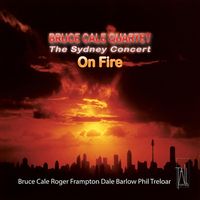
On Fire: The Sydney Concert
Tall Poppies is proud to release this fine recording of the Bruce Cale Quartet: Dale Barlow (flute and saxophones), Roger Frampton (piano), Bruce Cale (bass) and Phil Treloar (drums), each an exceptional creative musician. Recorded in 1980 at the Sydney Musicians’ Club, these performances document a unique musical journey.
Bruce Cale: Orchestral Works
Tall Poppies is delighted to present Australian orchestral works that might well have slipped from view forever but for the archives of their composer, Bruce Cale.
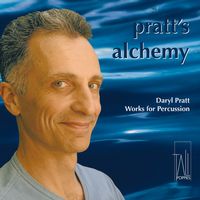
Pratt's Alchemy
Percussion compositions by Daryl Pratt, one of Australia’s finest vibraphonists in classical and jazz settings, and a sought-after general percussionist.
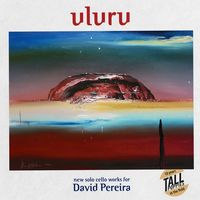
Uluru: New Solo Cello Works for David Pereira
Twelve new Australian solo cello works written for David Pereira, celebrating the handing back of Uluru to its traditional Indigenous owners. Responses range from didgeridoo-like sonorities in Hopkins to the modernism of Dean.
Off the Beaten Track
A rare chance to hear such beautiful horn playing without the distraction of bass and drums. Rader and Frampton work beautifully together on original compositions, standards and new work improvised in the studio.
Viva Sax!
Margery Smith is a Sydney-based saxophonist whose virtuosity meets the full range of this Australian programme, from mid-century sonatas to later works that lean into jazz, improvisation and ensemble colour.