Deep Night: Yearning for the Bell, Vol. 5
Fifth in Riley Lee’s seven-CD survey of the complete lineage of 13th-century Japanese honkyoku—solo meditation pieces for shakuhachi. Lee was the first non-Japanese player to attain grand mastery of the instrument.
Sumptuously recorded at the Australian National Acoustics Laboratory, this is the first such complete overview of the repertoire, and it is beautiful and calming.
Five traditional honkyoku stand at the heart of the shakuhachi canon. The disc is volume five of Lee’s seven-disc Yearning for the Bell survey.
Reviews
It is hard to avoid the myths surrounding the shakuhachi. The Japanese bamboo flute may have been used as a defensive weapon by 17th century samurai, and is associated with the Zen Buddhist 'priests of nothingness' that emerged from this tradition. Recent stories include a master player who, after 'feeling he underperformed' in a cold hall in Devon (UK), was found practising in the snow the next morning in order to harness his skills for such circumstances.
A number of westerners have embarked on mastering this seemingly inaccessible tradition. Australia-based Riley Lee is probably the most renowned, with some 30 commercial recordings to his name, as well as the title of Grand Master, conferred in 1980. Since then, Lee has performed extensively across Australia, in traditional and contemporary solo performances, as well as in various ensemble settings, including Karak Percussion.
For Tall Poppies, Lee recorded a series of 7 CDs with honkyoku, solo repertoire from the two major shakuhachi traditions, which is considered the core of the canon. The list of titles is a work of poetry in itself, including Empty Sky, Autumn Field, and Searching. Volumes 2–7 are first takes: six hours of music recorded in two consecutive afternoon sessions in a single space. That gives the recordings the intensity of a live performance, and is a tribute to the mastery of Lee, whose fabulous control of the instrument and the subtle repertoire lifts these recordings beyond the ordinary.
This sense of a landmark recording is reflected in Lee's own account of the recordings: "Towards the second afternoon of recording, in the middle of playing a piece, I suddenly started crying. Not sobbing; I didn't stop playing, and the piece was recorded successfully. Just tears. This had never happened to me before. I still can't explain why this occurred. I wasn't sad; I wasn't thinking of anything in particular other than performing the piece. It was a good feeling, a bit like, I imagine, the tired, yet excited contentment of having reached the top of a very challenging mountain. That moment seemed to make the years of practice, and the hours playing in that cold concrete box all worth it."
Descriptions of shakuhachi music often seem to resort to new age terminology: meditative, peaceful, uplifting. That may be true, but hardly does justice to these recordings. While the New Age aesthetic tends to build on facile, harmonious chord progressions, this rendering of honkyoku pieces is an impressive and consistent array of artistic gems, constantly engaging in an abstract but clear sense of direction, controlled expression of intimacy, and infinitely refined sculpting of sound and silence.
Artist

Riley Lee
Riley Lee plays the shakuhachi as living breath: honkyoku meditation pieces that float, pulse and yearn, and studio improvisations that turn bamboo into slow landscapes of repose.
Tracks
- Kyorei 8:08
- Suzuru 6:27
- Shôganken Reibo 14:04
- Shin'ya No Kyoku 17:29
- Kokû 17:29
Performers
- Riley Lee · shakuhachi
Where to listen
Deep Night: Yearning for the Bell, Vol. 5 is available for streaming through Apple Music. It can also be purchased through the iTunes Music Store.
Deep Night: Yearning for the Bell, Vol. 5 is available as a CD. It can be purchased online through Buywell Music or the Australian Music Centre which both offer online ordering.
Product details
- Catalogue number
- TP151
- Total playing time
- 63 minutes 37 seconds
- Release date
- 18 May 2000
- Label
- Tall Poppies
- Sound recording
copyright - ℗ 2000 Tall Poppies Records
- Category
- Other Lands
- Genres
- World & Cross-cultural, Folk
- Barcode
- EAN 9399001001514
Related recordings
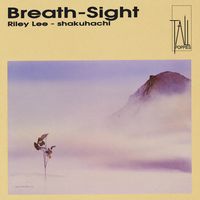
Breath-Sight: Yearning for the Bell, Vol. 1
The first disc in a seven-CD survey of the medieval shakuhachi lineage of meditational melodies known as honkyoku—the first time this complete body of music has been recorded. Riley Lee’s playing is exceptional throughout.
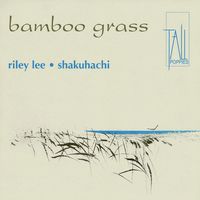
Bamboo Grass: Yearning for the Bell, Vol. 2
Volume 2 in Riley Lee’s seven-CD survey of the complete lineage of medieval Japanese meditational honkyoku. Solo shakuhachi, recorded in the reverberation room of the National Acoustics Laboratory.
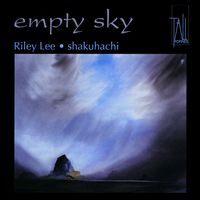
Empty Sky: Yearning for the Bell, Vol. 3
Volume 3 of a monumental seven-CD set. Riley Lee, the first non-Japanese grand master of the shakuhachi, presents the complete lineage of the orally transmitted 12th-century Japanese meditation melodies known as honkyoku.
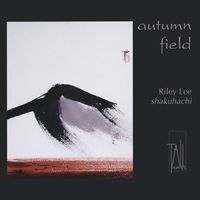
Autumn Field: Yearning for the Bell, Vol. 4
The fourth of seven CDs presenting the complete lineage of thirteenth-century Japanese honkyoku, or meditation pieces, performed by Riley Lee, the first non-Japanese player to attain grand mastery of the shakuhachi.
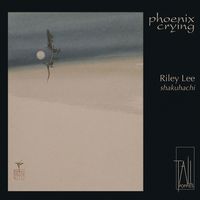
Phoenix Crying: Yearning for the Bell, Vol. 6
Riley Lee continues his survey of Japanese meditation melodies, or honkyoku, for shakuhachi. Recorded in the sumptuous acoustic of the Australian National Acoustics Laboratory reverberation room, the playing seems to float. The programme includes Lee performing both parts of the famous duet Nesting of the Cranes.
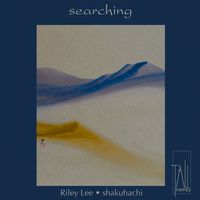
Searching: Yearning for the Bell, Vol. 7
Riley Lee completes his survey of the Japanese meditation melodies, or honkyoku, for shakuhachi. The pieces were recorded in the sumptuous acoustic of the Australian National Acoustics Laboratory reverberation room. Riley sounds as if he is floating.