Empty Sky: Yearning for the Bell, Vol. 3
Volume 3 of a monumental seven-CD set. Riley Lee, the first non-Japanese grand master of the shakuhachi, presents the complete lineage of the orally transmitted 12th-century Japanese meditation melodies known as honkyoku.
This is, quite simply, music for the soul.
The disc is devoted to traditional solo honkyoku. Several volumes in the series were recorded as first takes in concentrated sessions, giving the playing the intensity of live performance.
Reviews
It is hard to avoid the myths surrounding the shakuhachi. The Japanese bamboo flute may have been used as a defensive weapon by 17th century samurai, and is associated with the Zen Buddhist ‘priests of nothingness’ that emerged from this tradition. Recent stories include a master player who, after ‘feeling he underperformed’ in a cold hall in Devon (UK), was found practising in the snow the next morning in order to harness his skills for such circumstances.
A number of westerners have embarked on mastering this seemingly inaccessible tradition. Australia-based Riley Lee is probably the most renowned, with some 30 commercial recordings to his name, as well as the title of Grand Master, conferred in 1980. Since then, Lee has performed extensively across Australia, in traditional and contemporary solo performances, as well as in various ensemble settings, including Karak Percussion.
For Tall Poppies, Lee recorded a series of 7 CDs with honkyoku, solo repertoire from the two major shakuhachi traditions, which is considered the core of the canon. The list of titles is a work of poetry in itself, including Empty Sky, Autumn Field, and Searching. Volumes 2-7 are first takes: six hours of music recorded in two consecutive afternoon sessions in a single space. That gives the recordings the intensity of a live performance, and is a tribute to the mastery of Lee, whose fabulous control of the instrument and the subtle repertoire lifts these recordings beyond the ordinary.
This sense of a landmark recording is reflected in Lee’s own account of the recordings: “Towards the second afternoon of recording, in the middle of playing a piece, I suddenly started crying. Not sobbing; I didn’t stop playing, and the piece was recorded successfully. Just tears. This had never happened to me before. I still can’t explain why this occurred. I wasn’t sad; I wasn’t thinking of anything in particular other than the performing the piece. It was a good feeling, a bit like, I imagine, the tired, yet excited contentment of having reached the top of a very challenging mountain. That moment seemed to make the years of practice, and the hours playing in that cold concrete box all worth it.”
Descriptions of shakuhachi music often seem to resort to new age terminology: meditative, peaceful, uplifting. That may be true, but hardly does justice to these recordings. While the New Age aesthetic tends to build on facile, harmonious chord progressions, this rendering of honkyoku pieces is an impressive and consistent array of artistic gems, constantly engaging in an abstract but clear sense of direction, controlled expression of intimacy, and infinitely refined sculpting of sound and silence.
Of all traditional Japanese instruments, it is probably the bamboo flute known as the shakuhachi that is the best known. The reason for this probably rests with its uniquely haunting, somewhat breathy tone. Instantly calming, its traditional melodies speak of large time-scales, even of meditation.
The first eye-catching aspect of this disc is the performer. Riley Lee is clearly not a Japanese name, and indeed Mr Lee was born in Texas of Chinese/Caucasian parentage. However he was resident in Japan for a period and it was there in 1980 that he discovered his instrument. He was the first ever non-Japanese to attain the rank of dai shihan (Grand Master) in the shakuhachi tradition. He is eminently qualified to present this music, having completed his ethnomusicological PhD at the University of Hawaii on the Zen Buddhist shakuhachi repertoire.
The disc takes its title from the last track (‘Nesasa Kokū’: ‘Empty Sky’ of the Bamboo Grass Sect), a work that utilises the kominuki (‘crowded breath’) technique, a pulsating method intended to focus concentration and energy. ‘Empty’ is a close translation but not accurate, as it implies something which is neither ‘empty’ nor ‘the opposite of full’, rather an absolute, non-rational realm. Whether or not one subscribes to zen, or any form of meditation, for that matter, it remains absolutely mesmeric. Being the longest piece on the disc the phrases have real space within which to breathe. There is no sense of hurry whatsoever.
The first work, ‘Daha’, (‘Pounding Wave’), a prayer for the Will to achieve high aspirations, reflecting both Yin and Yang, might need two starts. The recording level is rather high, so you might need to twiddle the knob a little. Once this is achieved, this aching lament with its airy sound makes a powerful effect. If you listen to much Western music, it may take some time to adjust – of course, the traditional Western ‘expectation/realisation’ construct (to use Western musicologist Leonard B. Meyer’s pet phrase) is not present, as harmonic gravitation fields are different, co-existing rather than pulling one another in a linear way.
This work and the next, ‘Yamagoe’ (‘Crossing the Mountain’) are from the Watazumi Dō (‘The Way of the Ocean Crossing’) tradition, transmitted to Lee by his teacher, Katsuya Yokoyama. The Mountain of the title is most probably the mountain of strong meditation. The next three tracks are from Chikuho Ryū (‘Preserving the Bamboo Lineage’) tradition, received by Lee from Chikuho Sakai II. ‘Honte Chōshi’ (original searching) is the ‘original’ piece among many ‘warm-ups’. The intent is to seal the relationship between player and instrument that is most conductive to meditative practice.
Tehodoki Reihō (‘Initiation into the Dharma of the Bell’) refers to the bell of Fuke, a 9th-century Chinese leader who rang a bell instead of playing shakuhachi. His bell came to symbolise enlightenment. The lonely nature of this piece presumably reflects the endless searching as one walks down the path towards enlightenment.
The 1934 piece Ryūmei Chō (‘Cry of the Dragon’) was composed in January 1934. Slow, stealthy and very breathy to begin with, it invokes the impressive power of the dragon in the same way that the long silences between phrases in Matsu Reibo (‘Yearning for the Bell’) invokes the work’s stated subject. The music carries hauntingly across these silent spaces. When a rare fortissimo is achieved (around 7’20), it carries unexpected power.
A wonderful disc that transports the listener to worlds that seem far removed from hectic Western life.
Artist

Riley Lee
Riley Lee plays the shakuhachi as living breath: honkyoku meditation pieces that float, pulse and yearn, and studio improvisations that turn bamboo into slow landscapes of repose.
Tracks
- Daha 6:32
- Yamagoe 4:56
- Honte Chosi 5:00
- Tehodoki 4:42
- Ryumei Cho 7:56
- Mutsu Reibo 11:47
- Nesasa Koku 16:58
Performers
- Riley Lee · shakuhachi
Where to listen
Empty Sky: Yearning for the Bell, Vol. 3 is available for streaming through Apple Music. It can also be purchased through the iTunes Music Store.
Empty Sky: Yearning for the Bell, Vol. 3 is no longer available on physical media.
Product details
- Catalogue number
- TP118
- Total playing time
- 57 minutes 51 seconds
- Release date
- 18 May 1998
- Label
- Tall Poppies
- Musical work
copyright - © 1998 Tall Poppies Records
- Sound recording
copyright - ℗ 1998 Tall Poppies Records
- Categories
- Improvisation, Other Lands
- Genres
- World & Cross-cultural, Folk
- Barcode
- EAN 9399001111824
Related recordings
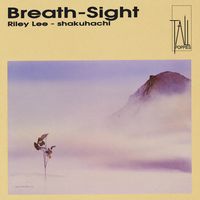
Breath-Sight: Yearning for the Bell, Vol. 1
The first disc in a seven-CD survey of the medieval shakuhachi lineage of meditational melodies known as honkyoku—the first time this complete body of music has been recorded. Riley Lee’s playing is exceptional throughout.
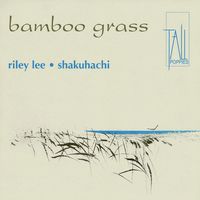
Bamboo Grass: Yearning for the Bell, Vol. 2
Volume 2 in Riley Lee’s seven-CD survey of the complete lineage of medieval Japanese meditational honkyoku. Solo shakuhachi, recorded in the reverberation room of the National Acoustics Laboratory.
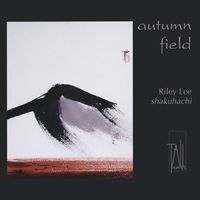
Autumn Field: Yearning for the Bell, Vol. 4
The fourth of seven CDs presenting the complete lineage of thirteenth-century Japanese honkyoku, or meditation pieces, performed by Riley Lee, the first non-Japanese player to attain grand mastery of the shakuhachi.
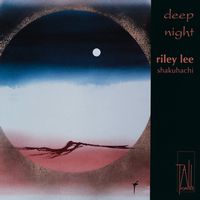
Deep Night: Yearning for the Bell, Vol. 5
Fifth in Riley Lee’s seven-CD survey of the complete lineage of 13th-century Japanese honkyoku—solo meditation pieces for shakuhachi. Lee was the first non-Japanese player to attain grand mastery of the instrument.
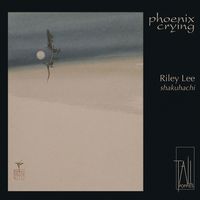
Phoenix Crying: Yearning for the Bell, Vol. 6
Riley Lee continues his survey of Japanese meditation melodies, or honkyoku, for shakuhachi. Recorded in the sumptuous acoustic of the Australian National Acoustics Laboratory reverberation room, the playing seems to float. The programme includes Lee performing both parts of the famous duet Nesting of the Cranes.
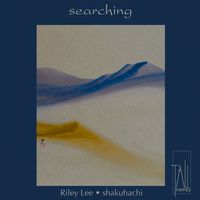
Searching: Yearning for the Bell, Vol. 7
Riley Lee completes his survey of the Japanese meditation melodies, or honkyoku, for shakuhachi. The pieces were recorded in the sumptuous acoustic of the Australian National Acoustics Laboratory reverberation room. Riley sounds as if he is floating.