Phoenix Crying: Yearning for the Bell, Vol. 6
Riley Lee continues his survey of Japanese meditation melodies, or honkyoku, for shakuhachi. Recorded in the sumptuous acoustic of the Australian National Acoustics Laboratory reverberation room, the playing seems to float. The programme includes Lee performing both parts of the famous duet Nesting of the Cranes.
This is the sixth volume in Lee's seven-disc Yearning for the Bell series of traditional honkyoku.
The programme draws on pieces associated with the crane, the empty sky, and the search for enlightenment. It includes both the Chikuho nesting-crane lineage and the Futai Temple reibo.
Reviews
It is hard to avoid the myths surrounding the shakuhachi. The Japanese bamboo flute may have been used as a defensive weapon by 17th century samurai, and is associated with the Zen Buddhist 'priests of nothingness' that emerged from this tradition. Recent stories include a master player who, after 'feeling he underperformed' in a cold hall in Devon (UK), was found practising in the snow the next morning in order to harness his skills for such circumstances.
A number of westerners have embarked on mastering this seemingly inaccessible tradition. Australia-based Riley Lee is probably the most renowned, with some 30 commercial recordings to his name, as well as the title of Grand Master, conferred in 1980. Since then, Lee has performed extensively across Australia, in traditional and contemporary solo performances, as well as in various ensemble settings, including Karak Percussion.
For Tall Poppies, Lee recorded a series of 7 CDs with honkyoku, solo repertoire from the two major shakuhachi traditions, which is considered the core of the canon. The list of titles is a work of poetry in itself, including Empty Sky, Autumn Field, and Searching. Volumes 2–7 are first takes: six hours of music recorded in two consecutive afternoon sessions in a single space. That gives the recordings the intensity of a live performance, and is a tribute to the mastery of Lee, whose fabulous control of the instrument and the subtle repertoire lifts these recordings beyond the ordinary.
This sense of a landmark recording is reflected in Lee's own account of the recordings: "Towards the second afternoon of recording, in the middle of playing a piece, I suddenly started crying. Not sobbing; I didn't stop playing, and the piece was recorded successfully. Just tears. This had never happened to me before. I still can't explain why this occurred. I wasn't sad; I wasn't thinking of anything in particular other than performing the piece. It was a good feeling, a bit like, I imagine, the tired, yet excited contentment of having reached the top of a very challenging mountain. That moment seemed to make the years of practice, and the hours playing in that cold concrete box all worth it."
Descriptions of shakuhachi music often seem to resort to new age terminology: meditative, peaceful, uplifting. That may be true, but hardly does justice to these recordings. While the New Age aesthetic tends to build on facile, harmonious chord progressions, this rendering of honkyoku pieces is an impressive and consistent array of artistic gems, constantly engaging in an abstract but clear sense of direction, controlled expression of intimacy, and infinitely refined sculpting of sound and silence.
The temple bell stops
but the sound keeps coming
out of the flowers
Haiku by Basho (quoted in booklet for Arvo Pärt's Arbos)
The Shakuhachi was introduced to Japan from China in the 8th century but these pieces have their origins in the Edo period (1600–1868) and have mainly been passed down via an oral/aural tradition to the present day. Some of the pieces included are more modern arrangements of traditional pieces (early 20th century).
These two exemplary discs complete a seven disc series which represents a long-standing labour of love for the increasingly essential Tall Poppies label. The shakuhachi is not an instrument I can even begin to claim a great knowledge of but my earliest conscious exposure to it was probably its use in Ry Cooder's atmospheric soundtrack to Walter Hill's seminal Southern Comfort. This was a setting somewhat removed from its original context, as was, although to a lesser extent, the Japanese flute's next incursion into my listening, jazz legend Tony Scott's masterpiece Music for Zen Meditation. The title here gave some indication of the context in which much of this music is grounded, although I was more aware of Zen Buddhism through the beautiful Haiku of the poet Basho at that stage (see example above).
When hearing this pair of discs it was no surprise then that my thoughts turned to the most celebrated of 20th century Japanese composers – the late Toru Takemitsu. A large proportion of his output has a Zen aspect to it and especially chamber scale pieces like the delicate Bryce came to mind. Less predictably, I was also prompted to remember Edmund Rubbra's immortal Jade Mountain sequence, especially the final song, dedicated to a Buddhist priest returning home to Japan from China, but in its essence rather than its substance, given that Rubbra used harp rather than wind accompaniment. The music recorded by Riley Lee, astonishingly almost all of it in two consecutive afternoons, is by necessity, of a purer, more traditional form than any of the musics mentioned above, as it originated with Zen Buddhist priests. The series title "Yearning for the Bell"/"Reibo" provides a common, often revisited thread, and is synonymous with a "yearning for enlightenment". Other recurring themes are references in the titles of pieces to the crane, a bird held sacred to the Japanese, and to the biosphere in general – valleys, sky, pines, boulders….
If I have given the impression of oriental muzak then nothing could be further from the truth, there is just a single bamboo flute at work here (except in one case there is a multitracked duet), beautifully captured by the recording, meditative in the main but also quite austere – very much in keeping with the "more is less" Zen philosophy. There are even some more abrasive, abstract elemental sounds, especially on the aforementioned duet (Nesting of the cranes/Tsuru no sugomori) on Volume 6, although there is nothing on either disc which could be classed as music for people in a hurry – barring one, all pieces top five minutes and many exceed ten. Time is needed to get inside this music but once there it is quite a magical world, albeit something of an acquired taste. Analysis of individual tracks appears somewhat pointless when the whole project, let alone the individual volumes, seems like a self-contained entity, with Riley Lee, despite his Texan origins, living, breathing and believing totally in his art.
Tall Poppies is a visionary label and this enterprise is in many ways typical (even though the music is not) but it is also a key player, along with New Zealand's Rattle, ABC Classics and even Naxos, in raising the highly deserving profile of music from the orient and Australasia into the global consciousness.
This is something special. Riley Lee was the first non-Japanese person to become a grand master on the shakuhachi, the Japanese bamboo flute used by Zen Buddhist monks (priests of nothingness).
The instrument has beautiful simplicity – a piece of bamboo with five holes – and the sound is as it comes: breathy, piercing, heavy, intense, agitated, joyous; like listening to the breathing of a sleeping partner dreaming. This is the sixth of seven discs by Lee of meditative Buddhist pieces or honkyoku, all built from long, haunting notes that echo and ruminate. The quivering around these notes includes exquisitely subtle pulsations of vibrato and remarkable slides between notes that sound as though the music is pure breath and spirit unmediated by the fixed place of finger holes.
The first track, Nesting of the Cranes, mixes this lonely meditative sound with agitated flutterings. Yearning for the Bell starts with a focus on deep notes, almost as though inside some cosmic vibration – a metaphor for enlightenment. Three Valleys of Echo also explores low pitches, like wind blowing around lonely chasms. Cranes Nesting is initially quiet and sad, becoming increasingly light and excited as a young crane takes flight.
Haunting subtlety from a grand master of nothingness.
Artist

Riley Lee
Riley Lee plays the shakuhachi as living breath: honkyoku meditation pieces that float, pulse and yearn, and studio improvisations that turn bamboo into slow landscapes of repose.
Tracks
- Chōshi / Searching 3:33
- Tsuru no sugomori / Nesting of the Cranes [Chikuho lineage] 12:38
- Futaiken reibo / Yearning for the Bell [Futai Temple version] 9:19
- Echigo san'ya / Three Valleys [Echigo district version] 12:42
- Sukaku / Cranes Nesting [old version (Chikuho lineage)] 9:54
- Hokyō kokū / Phoenix Crying in the Empty Sky 8:37
Performers
- Riley Lee · shakuhachi
Where to listen
Phoenix Crying: Yearning for the Bell, Vol. 6 is available for streaming through Apple Music. It can also be purchased through the iTunes Music Store.
Phoenix Crying: Yearning for the Bell, Vol. 6 is available as a CD. It can be purchased online through Buywell Music or the Australian Music Centre which both offer online ordering.
Product details
- Catalogue number
- TP167
- Total playing time
- 56 minutes 43 seconds
- Release date
- 8 Sep 2004
- Label
- Tall Poppies
- Sound recording
copyright - ℗ 2004 Tall Poppies Records
- Category
- Other Lands
- Genres
- World & Cross-cultural, Folk
- Barcode
- EAN 9399001001675
Related recordings
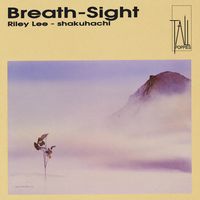
Breath-Sight: Yearning for the Bell, Vol. 1
The first disc in a seven-CD survey of the medieval shakuhachi lineage of meditational melodies known as honkyoku—the first time this complete body of music has been recorded. Riley Lee’s playing is exceptional throughout.
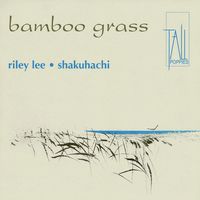
Bamboo Grass: Yearning for the Bell, Vol. 2
Volume 2 in Riley Lee’s seven-CD survey of the complete lineage of medieval Japanese meditational honkyoku. Solo shakuhachi, recorded in the reverberation room of the National Acoustics Laboratory.
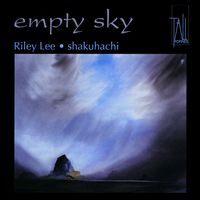
Empty Sky: Yearning for the Bell, Vol. 3
Volume 3 of a monumental seven-CD set. Riley Lee, the first non-Japanese grand master of the shakuhachi, presents the complete lineage of the orally transmitted 12th-century Japanese meditation melodies known as honkyoku.
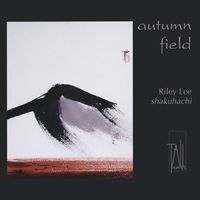
Autumn Field: Yearning for the Bell, Vol. 4
The fourth of seven CDs presenting the complete lineage of thirteenth-century Japanese honkyoku, or meditation pieces, performed by Riley Lee, the first non-Japanese player to attain grand mastery of the shakuhachi.
Deep Night: Yearning for the Bell, Vol. 5
Fifth in Riley Lee’s seven-CD survey of the complete lineage of 13th-century Japanese honkyoku—solo meditation pieces for shakuhachi. Lee was the first non-Japanese player to attain grand mastery of the instrument.
Searching: Yearning for the Bell, Vol. 7
Riley Lee completes his survey of the Japanese meditation melodies, or honkyoku, for shakuhachi. The pieces were recorded in the sumptuous acoustic of the Australian National Acoustics Laboratory reverberation room. Riley sounds as if he is floating.