Kingfisher
This CD is the result of a daring project to commission 21 composers to write new works for Halcyon's two singers, Jenny Duck-Chong and Alison Morgan. Presented over two concerts in their 15th anniversary year, and then recorded at Trackdown.
Jenny Duck-Chong mezzo soprano
Alison Morgan soprano
Geoffrey Gartner cello
Laura Chislett Jones flute
Joshua Hill percussion
Jason Noble clarinet
William Jackson percussion
Stuart Greenbaum composer
Paul Stanhope composer
Elliott Gyger composer
Stephen Adams composer
Jane Stanley composer
Graham Hair composer
Rosalind Page composer
Nicholas Vines composer
Katy Abbott composer
Dan Walker composer
Ross Edwards composer
Kevin March composer
Sharon Calcraft composer
Andrew Schultz composer
Gordon Kerry composer
Raffaele Marcellino composer
John Peterson composer
Nigel Butterley composer
Moya Henderson composer
Gillian Whitehead composer
The music, commissioned from some of Australia's finest composers (all of whom have had involvement with Halcyon), is varied and intriguing and functions as a snapshot of recent Australian composition.
The performances are electric. What more could one want? Oh yes, all the recordings are world premieres!
Halcyon is a dynamic exponent of new vocal music based in Sydney. Since 1998 this virtuosic ensemble has forged connections both in Australia and across the globe with composers, music centres and institutions in the search for the best of contemporary chamber music for voice.
Reviews
Alison Morgan, soprano, and Jenny Duck-Chong, mezzo soprano, formed Halcyon in 1998. They first set out to perform rarely heard new works, particularly those by Australian composers, and also mounted projects to promote composition for vocal chamber ensemble. Their enterprising First Stones project of 2011 was a series of seminars and workshops where, under the mentorship of composer Elliott Gyger, emerging Australian composers were encouraged to develop their vocal writing skills. The project culminated in a memorable performance of the new works, as part of the New Music Network’s 2011 concert series. With this and their regular concerts over the past decade, they have built strong working relationships and friendships with many composers. Now the Kingfisher project has made a further significant contribution to the body of vocal chamber works, and this CD will be an inspiring and useful resource for singers interested in exploring new works for singers and chamber ensemble.
The background to the CD is as follows: Halcyon commissioned 21 Australasian composers to write short new chamber works suited to their voices, with accompaniment by various combinations of cello, percussion, flute and clarinet. It culminated in two concerts in 2014 and later, the release of the CD in November 2015 by Tall Poppies. Thus Kingfisher offers a valuable insight into the field of recent Australian composition for vocal chamber ensemble. It will remain an important legacy. All the composers gifted their pieces to Halcyon on the occasion of their 15th birthday, and in the introductory notes they all provided for the CD booklet, one finds many expressions of gratitude and admiration for Halcyon’s huge contribution over the years to contemporary art music in Australia.
The commissions requested that the works should be inspired in some way by the word “halcyon” with all its various meanings – the mythical bird which had the power to calm troubled seas, happy idyllic times, the Asian kingfisher. Some extended their inspiration to include the moods of the ocean, and some even to reflecting on their friendship with the ensemble itself (eg. Andrew Ford’s To My Excellent Lucasia, on Our Friendship, Katy Abbott’s Follow Me through the Shadow and Rosalind Page’s Aquila’s Wing). Composers thus chose their own texts, usually poems, and wrote pieces of up to six minutes’ duration, with a good working knowledge of the highly developed musicianship skills of the two singers and the particular timbre of their voices.
As the choice of accompanying instruments was limited to percussion (vibraphone mainly used), flutes, clarinets and cello, there are similarities in the overall sound of the 21 tracks on the CD. Most pieces are composed for the two voices, and as they are so very well blended with a similar timbre and minimal vibrato, it is often hard to distinguish one voice from the other. Some composers used this blending to advantage, treating the two voices as one instrument with a huge range. So Stuart Greenbaum’s beautiful piece, Opalescence, uses their perfect unisons dissolving into harmonies to provide a wonderfully evocative expression of the play of light on water. In Page’s Aquila’s Wing, the two unaccompanied singers sound as one, as if reflecting their close relationship.
Some of the compositions are extremely difficult (eg. Gyger’s The Pleiades at Midnight and Graham Hair’s All about Anna), but Morgan and Duck-Chong negotiate demanding leaps and dissonances without problems. It sounds as though they revel in them in fact. They are extraordinary musicians with near perfect intonation and superb phrasing.
One of the delights of the CD was the discovery of some wonderful poetry including the verses written by three of the composers: Aquila’s Wing – Rosalind Page, A King’s Manifesto – Nicholas Vines, and Andrew Schultz – Lake Moonrise.
Some used words or fragments of words as musical elements in themselves, not as part of a meaningful sentence, or just chose significant phrases from the texts (eg. Jane Stanley’s Round the Bay). The comprehensive CD notes have explanations from the composers about each song and this is very helpful, though of course, the best works needed no explanations in order to enjoy them, but the composer’s intentions were always interesting to read. All the lyrics are included too and biographies of the composers and musicians.
With such variety of compositional techniques used, and so many different texts, it seemed appropriate to comment separately on each work to do justice to this important CD. The performances are very fine. Occasionally there was strain in Morgan’s voice in the upper register – perhaps some of the vowels used were not ideal for vocal lines sitting above the stave.
When the diction was totally obscured by the accompaniment or a very high tessitura, I thought the pieces lost an important element. Why not exploit the fact that voices can sing text? Instruments cannot. Why should the listener be forced to refer to the notes to find out what the songs are about? Surely a good vocal work would stand up on its own without notes to explain what was sung, except if the composer intentionally was using the voice like another instrument? The successful works for me were the ones which evoked feelings and ideas related to the text, and then reading the poem again separately confirmed and deepened what one had sensed or already heard. The works I thought were most successful are found on tracks 1, 2, 3, 4, 5, 9, 10, 12, 15, 17, 19 and 20.
1. Andrew Ford’s To My Excellent Lucasia, on Our Friendship uses a rhyming poem by Katherine Phillips (17th century) – a declaration of the boundless love between two souls. It is accompanied by percussion, vibraphone and clarinet. A steady slow beat, clear tonality, melodic repetition and absence of dissonance convey a sense of the strength of the lover’s bond. The blended timbres of the singers is a characteristic of Halcyon and here, it also suggests the joining of the two souls in this very satisfying piece.
2. Stuart Greenbaum’s Opalescence uses a beautiful impressionistic poem by Ross Baglin, suggesting the play of reflected light on a pool from stars and moon. Soft vibraphone sustained tones and glissandos in the vocal parts perfectly convey this watery phosphorescence. The voices join in unisons and then dissolve apart into gentle harmonies, and a cello joins in adding watery depth. It is well suited to the voices, and Greenbaum has made the wonderful text very clear in the vocal parts, which certainly adds to one’s enjoyment.
3. Paul Stanhope chose an anonymous witty Elizabethan poem called My Love in Her Attire and set it for soprano, clarinet and vibraphone. It is short, amusing and effective with the clarinet embellishing the soprano line with trills and rippling patterns.
4. Elliott Gyger uses his own translation of a wonderful Danish poem The Pleiades at Midnight by Johannes Carsten Hauch for this piece, which ‘is a meditation about differing perceptions of the passing of time, on vastly different scales… told from the point of view of the Pleiades themselves’ (Gyger’s own words). Its spikey atonal nature is reminiscent of the 12-tone techniques of Webern. Gyger worked closely with Halcyon in the First Stones project in 2011 and with his intimate knowledge of their vocal prowess and splendid musicianship, he has composed a really demanding work where they have to negotiate huge leaps, extreme high notes, and great dissonance. The words become another type of percussive sound. Initially I found it irritating that the text was so obscured, but with repeated hearings, the beauty and interesting structure of the composition revealed itself.
5. Stephen Adams: Sometimes snow fell, sometimes darkness… The text is a memorable line from a great Turkish Sufi poet (Şeyh Galip) and the two voices are accompanied by a single flute in a haunting and exquisitely beautiful piece that draws one into its sound world, where one is again reminded of the power of music to express the things that words cannot describe.
6. Jane Stanley’s Round the Bay uses key words and phrases from a poem by Judith Beveridge. It evokes the image of a bay reverberating with the echoes of its past. Flute, cello and vibraphone accompany the mezzo in a slow-moving opening, which gradually becomes denser and more rhythmic, but its atmospheric haunting tranquillity is never troubled – a lovely evocative work well sung by Duck-Chong. The voice becomes another instrument and part of a blended texture in this interesting piece.
7. Graham Hair contributed All about Anna, a setting of the 8th chapter of Finnegans Wake (James Joyce) with its characteristic onomatopoeic wordplay. The scene is of two gossiping washerwomen. This is brilliantly captured in a virtuosic piece for the two singers, flute and vibraphone, with fast angular phrases, alternating with slower melismatic passages.
8. Rosalind Page’s Aquila’s Wing is an unaccompanied duet celebrating the two singers’ long professional and personal friendship. Page wrote the text. The slow tempo and intertwining lines that merge and diverge seem to reflect this close relationship. However the diction is unclear and one needs to study the poem to fully enjoy this work.
9. Nicholas Vines too wrote a fine poem specially for the occasion. A Knight’s Manifesto (for soprano, cello and percussion) celebrates Halcyon’s courage and tenacity as wonderful performers and progenitors of new music over 15 long years. He describes a kingfisher as a King surveying his sandstone realm, as he imagines ways of creating a fertile land from sand. The music has clever word painting, but is very vocally demanding having many huge leaps, and while Morgan’s lower register is lovely, some of the high tones sound harsh.
10. Follow Me Through the Shadow by Katy Abbott is another gentle work written in a minor tonality with cello accompaniment, the two voices often in unison then gently separating in curving arcs interspersed with pregnant silences. Again this merging and diverging and the use of silence deepens the ideas in the text in this effective work: ‘Follow me through the shadow, Step through the other side’, which was originally graffiti on a wall in Melbourne!
11. Dan Walker contributed The Mystic Blue (poem of D. H. Lawrence) for mezzo soprano, alto flute and vibraphone. It sits very well in Jenny Duck-Chong’s voice and is attractive from first hearing, alternating between calm moments and energetic sections representing the idea of a great blue kingfisher emerging from a pool like the rising phoenix, a symbol of purity and beauty.
12. Ross Edwards’ A Tranquil Mind uses the two voices, clarinet and cello, and the text is from the Bhagavad Gita: ‘The tranquil mind is like a flame in a windless place’. Edwards enjoys music associated with contemplation and meditation and this stunning piece engenders a calm state with its low cello drone, slow-moving vocal lines that flow with small intervals and the gentle ripples of soft clarinet played to resemble a shakuhachi flute. This work is beautifully sung, very appealing indeed, and one of my favourites on the CD.
13. Kevin March’s Sea-blue Bird uses a short ancient Greek poem by Alcman, which refers to the legend that aged male kingfishers (halcyons) are carried by the female birds on their wings. The two voices are accompanied by fast passages from the flute and vibraphone, suggestive of flying. The many high tones in the long vocal lines sound strident unfortunately in this recording, marring one’s enjoyment.
14. Sharon Calcraft used as her lyrics a letter by Gustav Mahler where he describes the varying moods of the sea to explain his intense emotions when composing. The piece is called Verathmende, Schillernde, Blitzende… (Breathtaking, Iridescent, Flashing…) and is for soprano, flute and cello. Sung in German, it is atonal with a disjoint melody and lots of sprechstimme. Despite repeated hearings I could not warm to this very cerebral piece and found the vocal tone often too shrill.
15. Andrew Schultz observed ‘a stunning moonrise over Lake Cootharaba in Queensland from a fire-wrecked palm valley where the burnt trees were adorned with red-slashed cockatoos’ (his words). He was awestruck. His very memorable and powerful contribution is a prelude and fugue for mezzo soprano, clarinet, vibraphone and cello called Lake Moonrise, Opus 94 with excellent lyrics of his own. The vocal line resembles a Bach chorale, moving stepwise slowly so every word carries weight, while the accompaniment has fast-moving, detached, syncopated phrases weaving an intricate pattern behind the voice.
16. Gordon Kerry wrote for the two voices with the same three instruments as Schultz, and set a poem by John Kinsella called Music (La Musique) about the changing moods of the ocean and the emotions they evoke. The vocal lines are closely intertwined in graceful arcs with a shimmering effect from the accompaniment. This beautiful piece works very well though there was again some shrillness in Morgan’s upper notes.
17. Raffaele Marcellino chose a splendid Walt Whitman poem, Halcyon Days, and his piece, Turbulent Passions Calm, does it full justice. The two voices, flute and vibraphone weave a magical feeling of calm in a gentle slow work that reflects the serenity that comes in old age. It concludes with a peaceful unison – beautiful!
18. See, the Prismatic Colours Glisten by John Petersen also has an evocative text from Walt Whitman. Accompaniment is cello, clarinet and vibraphone and both voices sing almost constantly in harmony, but unfortunately the vocal sound is often harsh, especially during loud passages where the dissonance grates on the ear. For me this composition did not reflect the intrinsic beauty of Whitman’s poetry at all.
19. Nature Changes at the Speed of Life is a fine contribution from Nigel Butterley for soprano and cello using poetry of Kathleen Raine, a twentieth century Northumbrian. Cello and voice are in canon in a soft gentle piece of great beauty that reflects the breathless awe felt by an observer of the miraculous small changes in nature such as the ‘dandelion’s evanescent sphere’ (Raine).
20. Moya Henderson composed I Lost a World the Other Day, using the powerful and enigmatic poem by Emily Dickinson. What struck me about the composition was just how well it sat in the voice and how beautifully the accompanying cello supported the vocal line throughout. Also how cleverly the song’s structure reflected the text. This is a superb piece and wonderfully performed by Duck-Chong and Gartner!
21. The final track, called All One Water, is a piece by Gillian Whitehead who has worked with Halcyon for years. Texts are Thin Ice – four lines by Dunedin artist and writer, Claire Beynon, and It Is All One Water, a much longer poem by the same poet written in collaboration with others. It describes the ocean from different viewpoints, including the idea that it connects us all. It starts with the two voices unaccompanied and intertwining in extended phrases. Sounds resembling ice melting appear before the vibraphone joins in, first with sustained notes, then a fast moving energetic section. Unfortunately this particular performance is marred by the obvious strain in the soprano’s upper register.
Congratulations to Halcyon for this very interesting and exciting CD – it is a great contribution to the contemporary art music scene and a must-have for all singers and music teachers!
The word halcyon conjures up diverse meanings. Traditionally, the halcyon days are those we remember as our best. In ornithology, the word denotes a genus of kingfishers. In Greek mythology, that fabled bird calmed the winds and waves while nesting on the sea during the calm week of the winter solstice.
No doubt all these meanings were in the minds of Sydney-based singers Jenny Duck-Chong and Alison Morgan when they formed vocal-based chamber group Halcyon 15 years ago to propagate the work of emerging and established Australian composers.
This album celebrates those glistening years, with 21 composers (six of them women, a special consideration of Halcyon’s programming) contributing short pieces, none more than six minutes long, all of them premiere recordings. The two female voices (Duck-Chong and Morgan) are front and centre of most tracks; on several occasions they are joined by an ensemble of flutes (Laura Chislett Jones), clarinets (Jason Noble), cello (Geoffrey Gartner) and percussion (William Jackson and Joshua Hill). All pieces were written or rearranged primarily for the female voices and the composers have responded with little gems that caress the ear in beauteous, rhapsodic and reflective sounds.
The recording sound is mellifluous and lucid, the liner notes comprehensive. In a sense, this is a beguiling sampler of recent Australian music and a testament to 15 years of Halcyon music-making.
The human voice — and some of the best harmonising you’re likely to hear anywhere — is at the centre of Kingfisher (TP236), 21 songs composed for Halcyon, soprano Alison Morgan and mezzo Jenny Duck-Chong.
The list of composers reads like a who’s who of Australia’s current music scene with contributions from Andrew Ford, Stuart Greenbaum, Ross Edwards, Paul Stanhope, Elliott Gyger and Nigel Butterley among others.
As you would expect the subject matter, style and demands on the twin vocalists are diverse and often challenging. Morgan and Duck-Chong are accompanied by a skilful blend of woodwind multi-instrumentalists Laura Chislett Jones and Jason Noble, alongside cellist Geoffrey Gartner and percussionists William Jackson and Joshua Hill.
Artist
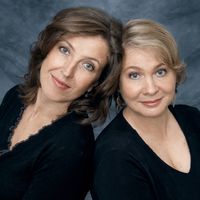
Halcyon
Regarded as a leading light in the field of new music, Halcyon presents stunning performances of vocal chamber music from around the world, with a special emphasis on Australian content.
Tracks
- To My Excellent Lucasia, on Our Friendship Andrew Ford 2:47
- Opalescence Stuart Greenbaum 4:04
- My Love in Her Attire Paul Stanhope 1:46
- The Pleiades at Midnight Elliott Gyger 4:32
- Sometimes Snow Fell, Sometimes Darkness... Stephen Adams 3:47
- Round the Bay Jane Stanley 3:37
- All About Anna Graham Hair 4:14
- Aquila's Wing Rosalind Page 2:56
- A King's Manifesto Nicholas Vines 6:11
- Follow Me through the Shadow Katy Abbott 3:06
- The Mystic Blue Dan Walker 3:49
- The Tranquil Mind Ross Edwards 3:25
- Sea-Blue Bird Kevin March 4:14
- Verathmende, Schillernde, Blitzende... Sharon Calcraft 3:15
- Lake Moonrise, Op. 94 Andrew Schultz 4:02
- Music (La Musique) Gordon Kerry 3:05
- Turbulent Passions Calm Raffaele Marcellino 3:51
- See, the Prismatic Colours Glisten John Peterson 4:55
- Nature Changes at the Speed of Life Nigel Butterley 2:49
- I Lost a World the Other Day Moya Henderson 3:45
- All One Water Gillian Whitehead 4:24
Performers
- Halcyon · ensemble
- Jenny Duck-Chong · mezzo soprano
- Alison Morgan · soprano
- Geoffrey Gartner · cello
- Laura Chislett Jones · flute
- Joshua Hill · percussion
- Jason Noble · clarinet
- William Jackson · percussion
Composers

Katy Abbott
Katy Abbott’s music is refreshingly genuine. She is part of a new wave of composers who emerged after the style wars that dominated Australian music in the nineties, and her work has no hint of either forced intellectualism or fluffy popularism.
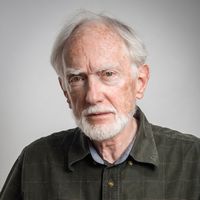
Nigel Butterley
Nigel Butterley (1935–2022) was an Australian composer and pianist. His catalogue ranges from radiophonic and choral scores to chamber, vocal and orchestral works, and as a pianist he was closely identified with contemporary music and the prepared piano.
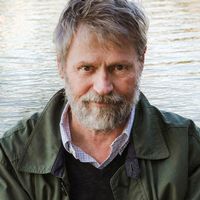
Ross Edwards
One of Australia's best known and most performed composers, Ross Edwards lives and works in Sydney. His commitment to music as a positive and regenerative force has led him to explore beyond the confines of Western art music.
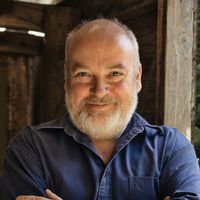
Andrew Ford
Andrew Ford is an Australian composer, writer and broadcaster whose work ranges from chamber and vocal scores to opera and piano cycles. He has won the Paul Lowin Prize for the song cycle Learning to Howl and a Green Room Award for the opera Rembrandt’s Wife.
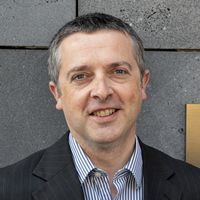
Stuart Greenbaum
Stuart Greenbaum’s sound has overt connections to jazz, pop and minimalism, yet is equally grounded in the Western art music tradition, across a large body of orchestral, chamber, choral and stage works.
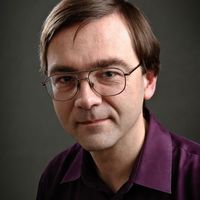
Elliott Gyger
Elliott Gyger was born in Sydney, and has been writing music since about the age of ten. His compositional and research interests include the creation of a purely musical sense of drama and narrative, and the multilayered interplay of music and text.
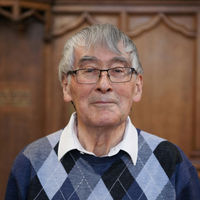
Graham Hair
Born in Geelong, composer Graham Hair has received numerous commissions from such organisations as Duo Contemporain and the Massachusetts Institute of Technology. In 1990 he took up the position of Gardiner Professor at the University of Glasgow.
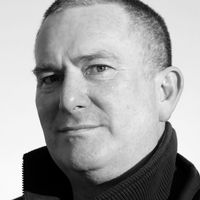
Gordon Kerry
Gordon Kerry's music ranges from the symphonic through chamber music to choral music and opera. Australian orchestras, chamber ensembles, festivals and soloists commission him regularly, as do ensembles in the USA and Europe.
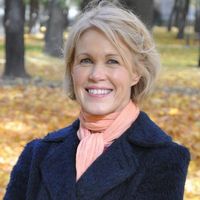
Rosalind Page
Rosalind Page is an Australian composer whose works span theatre, chamber music, orchestra and electronica. Her scores often turn on poetry, film and the discourse between sound, image and text.
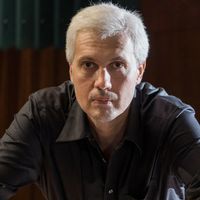
Andrew Schultz
Andrew Schultz, a graduate of the Universities of Queensland and London, has received numerous awards and commissions for chamber, orchestral and vocal works, and is Emeritus Professor of Music at UNSW Sydney.
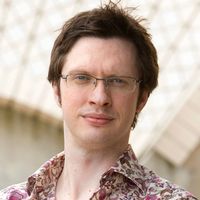
Nicholas Vines
Described as “riveting” (The New York Times) and “full, extravagant and wild” (Sydney Morning Herald), the works of Nicholas Vines (b.1976, Sydney) have been commissioned, performed and celebrated by organisations around the world.

Stephen Adams
Stephen Adams is an Australian composer of contemporary vocal and choral music, known for atmospheric settings that draw on prose and poetry.
Sharon Calcraft
Sharon Calcraft is an Australian composer of contemporary chamber music. Her recorded work includes the intense seven-harp piece Sevenfold Amen and a German-language song for soprano, flute and cello.
Moya Henderson
Moya Henderson's music is warm, sincere and distinctively Australian: chamber works such as G'Day Africa and Cross Hatching, art songs and carols, and scores that remember Gallipoli and the land with directness.
Raffaele Marcellino
Raffaele Marcellino writes chamber, choral and instrumental music that favours wit and idiosyncrasy over dogma. His scores can be ballistic and explosive, or spare and enigmatic, always alert to text, colour and the physical life of the instruments.
Paul Stanhope
Paul Stanhope writes chamber and choral music charged by landscape and light: sea, rainforest, dawn and open space. His scores for voice, strings and choir balance precision with verve, and he has shaped that sound from the podium as well as the page.
Jane Stanley
Jane Stanley is an Australian composer of contemporary chamber and solo piano music, writing spare, atmospheric scores that sit readily with voice and with the modern recital piano.
Dan Walker
Dan Walker is a countertenor and composer active in contemporary Australian music, heard both as a singer in new opera and as a writer of chamber song.
Gillian Whitehead
Gillian Whitehead writes chamber, vocal and orchestral music that can feel like weather over land and water: atmospheric, dreamy, and rooted in the sounds and seasonal cycles of Aotearoa. Manutaki and The Journey of Matuku Moana show how fully she can hold a landscape in instrumental colour.
Where to listen
Kingfisher is available for streaming through Apple Music. It can also be purchased through the iTunes Music Store.
Kingfisher is available as a CD. It can be purchased online through Buywell Music or the Australian Music Centre which both offer online ordering.
Product details
- Catalogue number
- TP236
- Total playing time
- 78 minutes 34 seconds
- Recording Engineer
- Daniel Brown
- Mixing Engineer
- Daniel Brown
- Mastering Engineer
- Christo Curtis
Utopia Audio - Release date
- 1 Nov 2015
- Label
- Tall Poppies
- Sound recording
copyright - ℗ 2015 Tall Poppies
- Category
- Australian Classics
- Genres
- Contemporary Classical, Vocal & Opera
- Barcode
- EAN 9399001002368
Related recordings
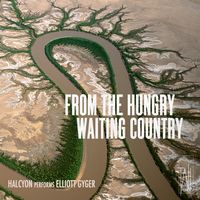
From the Hungry Waiting Country
Three astounding works by Elliott Gyger are presented by Halcyon, featuring the thrilling voices of Jenny Duck-Chong and Alison Morgan with some of Australia’s best performers. Challenging music that rewards every listen, full of mystery and glistening textures, its narrative holds you to the end.
This Moment Must Be Sung: Chamber Songs of Andrew Schultz
A special recording of chamber vocal music by Australian composer Andrew Schultz. Halcyon—Alison Morgan and Jenny Duck-Chong with a fine instrumental ensemble—has championed his writing for one and two voices across two decades.
The Sonata Project
Bernadette Harvey performs four large-scale solo piano works: Aristea Mellos’s three-movement Sonata, Melody Eötvös’s two-movement Piano Sonata No. 1, Jane Stanley’s Piano Sonata framed by Prelude and Postlude, and Ross Edwards’s Sea Star Fantasy.
Mass of the Dreaming
It is remarkable that 2016 brought the first recording by an Australian choir devoted entirely to Australian sacred choral music. This disc fills that long gap with newly commissioned and recent works.
Midnight Songs
Three is a Melbourne-based trio of trumpet, trombone and guitar. With little extant repertoire for this combo, the group commissioned four Melbourne composers and pairs those works with Jane Hammond’s arrangement of Percy Grainger’s Random Round.
Mantras and Night Flowers
One can be sure that Australian music might be finally coming of age when one record label can contemplate a third recording of a recent piano work – Carl Vine's magnificent Piano Sonata No. 1 is now released for the third time by Tall Poppies.