Music for Percussion and Electronics
Western Australian percussionist Louise Devenish, known for work with Decibel, Speak Percussion and The Sound Collectors, recorded this programme from her Music for One Percussionist recitals (2012–14). The composers are award-winning middle-generation Australians whose music is heard nationwide.
Together these works for percussion and electronics offer an immersive listening experience and a twenty-first-century snapshot of Australian music.
The programme pairs solo percussion with fixed media, processing and sub-bass. Glockenspiel, Balinese bossed gongs, tam-tam and vibraphone carry pieces written or adapted for Devenish between 2007 and 2016.
Reviews
Andrián Pertout’s Exposiciones for glockenspiel and fixed media (2007) was adapted from an earlier acousmatic piece using toy piano samples and microtonal tunings. A vestige of the original is retained: a gong-like sound acting as a tonal centre and another similar sound an octave higher. These two sounds provide a kind of regular pulse but in very irregular rhythmic counterpoint with each other. Aurally it is hard to make much structural sense of these two elements across the duration of this 7-minute piece. Over this backing-track, we hear a very flamboyant glockenspiel solo, although, according to the CD booklet notes, it is constructed in a strictly mathematical way using a logical sequence of durational ratios. It sounds, however, far less mathematical than the fixed media elements, undoubtedly as a result of the stunning virtuosity of Louise Devenish’s performance.
While Pertout reveals that he used the Indonesian pelog and slendro scales for the glockenspiel part of his piece, Stuart James adopts the sound-world of gamelan music in a more direct way for his Kinabuhi / Kamatayon for Balinese bossed gongs and electronic processing (2015). This five-movement work lasting 17 minutes is sonically very attractive but arguably somewhat lacking in compositional invention. It is based heavily on ostinati and abstract textural combinations rather than coherent melodic or other structural designs, at least ones that are tangibly evident to my ears. Perhaps a barrier to appreciation of the compositional design of this work is the rather repetitive booklet annotation for the piece which essentially comes down to one idea: that the piece “is concerned with the compression and rarefaction of time”. It would be good to have been given some clue as to how this idea is practically realised in the work and what the listener should be specifically trying to listen for. Even so, what we are listening to are the ravishing sounds of Balinese gongs wonderfully struck by Devenish. In addition the electronic processing results in appealing sonic ambiences to underpin the performed elements.
The electronic processing in Cat Hope’s Tone Being for tam tam and subwoofer (2016) is not so appealing. Hope’s visual score, involving “ten unique approaches to the surface of the tam tam”, has inspired Devenish to create scintillating sounds and sound textures from the instrument, but the constant booming low-frequency subwoofer drone elements distract from the sonic magnificence of the tam tam in my view.
The most impressive (and longest) work on the CD is Kate Moore’s Coral Speak for vibraphone and stereo tracks (2016). The program annotation quotes Moore as describing it as “a percussion suite of laments and playful dances in homage to the Great Barrier Reef, where the corals are currently under threat due to climate changes and human intervention…” The work is in three movements titled Spel I, Spel II and Spel III (“Spel”, according to my Dutch/English dictionary, means “play” or “game”). Spel I is for the most part a vibraphone solo based on a continuous stream of even notes outlining a constantly changing chord progression and emphasising bass tones and melodic tones. Towards the end of this solo the “stereo tracks” come in to play, sounding at first like scratchy radio static, perhaps emblematic of encroaching pollution on the reef. The electronic sounds of the stereo tracks continue under the vibraphone in Spel II. Here the vibraphone plays rapidly repeated block chords which change constantly, the top notes outlining melodic shapes. The underlying electronic sounds simulate metallic rattling and glass (perhaps coral) wind chimes. Towards the end of this movement the vibraphone music drops out and the chimes are transformed into pulsating sustained sounds accompanied by insect-like buzzing and frying sounds. Spel III introduces a slower more circumspect vibraphone melodic line and electronic elements sounding like the rapid striking of singing bowls. Near the end there is a return to the vibraphone chords and the sustained electronic sounds of Spel II.
The combination of the vibraphone solos and the electronic stereo tracks in this striking work compels the listener to imagine vividly the tragic degradation of the reef.
Artist
Tracks
- Exposiciones Andrián Pertout 7:07
- 1 3:52
- 2 4:13
- 3 2:43
- 4 2:50
- 5 3:20
- Tone Being Cat Hope 13:27
- i. 6:41
- ii. 9:42
- iii. 7:12
Kinabuhi / Kamatayon Stuart James
Coral Speak Kate Moore
Performers
- Louise Devenish · percussion
Composers
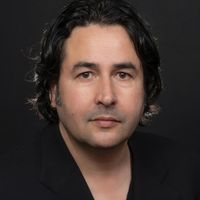
Andrián Pertout
Andrián Pertout (b. 1963) is a Chilean-born Australian composer who settled in Melbourne in 1972. His rigorously structured music draws on wide cultural and mathematical resources and has been performed in more than forty countries.

Cat Hope
Cat Hope writes experimental music that leans into low frequencies, noise and animated scores. Her works for Decibel and solo forces pair acoustic instruments with electronics, sub-bass and unconventional vocal forces.
Stuart James
Stuart James is an Australian composer and recording engineer whose work pairs acoustic instruments with electronics and processing. His music often turns on texture, timbre and the shaping of time.
Kate Moore
Kate Moore writes chamber and electroacoustic works that treat instruments as physical objects in motion: beads on a broken rosary, coral on vibraphone, oil drums as resonant bodies. Her Tall Poppies pieces sit among Australian new music for violin, percussion and ensemble.
Where to listen
Music for Percussion and Electronics is available for streaming through Apple Music. It can also be purchased through the iTunes Music Store.
Music for Percussion and Electronics is available as a CD. It can be purchased online through Buywell Music or the Australian Music Centre which both offer online ordering.
Product details
- Catalogue number
- TP248
- Total playing time
- 61 minutes 7 seconds
- Release date
- 1 Nov 2017
- Label
- Tall Poppies
- Musical work
copyright - © Tall Poppies Records
- Sound recording
copyright - ℗ 2017 Tall Poppies Records
- Category
- Australian Classics
- Genres
- Contemporary Classical, Experimental
- Barcode
- EAN 9399001002481
Related recordings
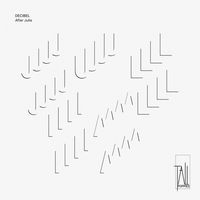
After Julia
After Julia gathers eight contemporary works by Australian women composers responding to Julia Gillard’s tenure as Prime Minister. Decibel Artistic Director Cat Hope was spurred by the gender discrimination around that prime ministership, and by what it revealed about politics and the new music sector.
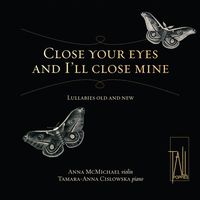
Close Your Eyes and I'll Close Mine: Lullabies Old and New
Lullabies (or berceuses) have been around as long as humans have been singing their children to sleep. This CD presents a unique collection of mostly modern lullabies, many written for this project.
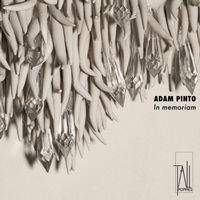
In Memoriam
Roger Smalley AM (1943–2015) shaped contemporary composition in Australia. This project grew from his dual gift as a virtuoso pianist and as a composer of visceral solo piano music.