One
Claire Edwardes is one of Australia’s most charismatic performers, and this is her third solo CD for Tall Poppies. Her first (Coil, TP193) gathered important Australian works; her second (Flash, TP215) mixed children’s-piano miniatures with new commissions and won the 2012 Art Music Award for Excellence.
Matthew Schlomowitz composer
Erik Griswold composer
Laurence Crane composer
Javier Alvarez composer
Stuart Greenbaum composer
Karlheinz Stockhausen composer
Frederic Rzewski composer
Roberto Sierra composer
Her drive to commission new works shapes all of Claire’s recordings. One is no exception: new pieces written for her by Australian and international composers sit beside staples by Xenakis, Stockhausen and Rzewski. What stands out is the sheer range of approaches to percussion’s sound world, often with no more than her voice and a single source—a hi-hat, or ordinary flower pots.
This CD is a wild ride, so strap on your seatbelt and enjoy!
Reviews
Claire Edwardes has had a stellar career as a solo percussionist of new classical music. This, her third solo CD release with Tall Poppies Records, presents repertoire for small collections of percussion instruments that will conveniently all “fit into a car”. Edwardes considers that when composers write for a solo percussionist and limit the number of instruments, their efforts are stronger and more compositionally focused. This collection of recordings, including several works written specially for the project, is a tour de force of new music percussion performance interpretation. The selection of works is impressive and the execution flawless.
The opening tracks, Rebonds A and Rebonds B (1987-89) by Iannis Xenakis, are groove-based pieces, scored for instruments such as bongos, congas and woodblocks. The composition strategy is effectively based on the gradual development of repetitive musical ideas.
Matthew Shlomowitz’ Hi Hat and Me, written specially for this recording project, utilises only the standard drum-kit apparatus of the hi-hat. Shlomowitz writes effectively for this instrument but also asked the percussionist to vocalise while playing. The vocal execution is precise but could be more theatrically expressive.
Experimentalist composer/performer Eric Griswold’s short Chooks! is an appealing exercise in rhythmic counterpoint on toy piano. By contrast Laurence Crane’s Solo for Claire Edwardes is an exercise in combining atmospheric pre-recorded electronic ideas with live tuned-percussion material using minimalistic chordal textures. Javier Alvarez’ texturally complex Temazcal (1984) takes the electronic pre-recorded and processed recorded elements to a higher level.
Stuart Greenbaum’s Clockwork Lemon (2007) represents a return to the album’s idea of composing using a limited sonic palette, in this case only snare drum and high hat. The work effectively combines new music and jazz groove ideas.
A toy piano features again in Stockhausen’s “Aquarius” movement from Tierkreis (1975). The companion movement, “Taurus”, employs similar textures using a music box, toy glockenspiel and bowed crotales.
Balancing the earlier Hi Hat and Me, Frederic Rzewski’s To the Earth combines a minimalistic instrumental texture with a poetic text performed by Edwardes. The final track Bongo-0 also projects vocal utterances into a virtuoso bongo performance.
Although one is performed by one percussionist, it has a surprisingly large range of engaging sounds and textures. Highly recommended!
In 1939 John Cage is famously said to have declared, ‘percussion music is revolution’. And it may well have been. Steven Schick opens his book on percussion with this quotation, writing that percussion music in the twentieth century ‘took flight in a culture where velocity and cacophony were mirrored in a music founded upon striking and friction’. Schick’s book might be considered a defining statement on the percussion repertoire and its performance practice; in it, he reiterates the truism that percussion is considered an instrument of the twentieth century. It was in this century that percussion came into its own, expanding not only into chamber music but developing a solo repertoire. This, it is often argued, would not have been possible without that century’s move away from the all-importance of pitch toward a focus on timbre and sound. However, a percussion repertoire that is purely reactive has no room to grow. And to understand it in this way does not allow for the possibility of a percussion tradition. In the twenty-first century, there is the opportunity for the emergence of new approaches and repertoire defined by today’s composers and performers. These two recent CD releases have the potential to speak as much about current trends in percussion performance as they do about recent music written for percussion. They present the evolution of the tradition of composition for percussion, of the performance of percussion in chamber music and in experimental music, and of the personal styles and approaches of the performers they represent.
Claire Edwardes’s varied programme presents works by a group including both emerging and more established composers. The CD thus combines differing and competing personalities. The brief liner notes identify Rebonds, by Xenakis, which opens the CD, as a defining twentieth-century work for percussion. Edwardes’s is certainly a driving, committed and powerful performance that launches both the CD and the programme as a whole. Schick asserts that the ultimate message of Rebonds is that ‘strength is not brutality; intelligence is not weak; change is inevitable.’ This is clearly applicable not just to Edwardes’s performance of this work but throughout her programme. Indeed, it is this committed approach to the performance of a group of works that are equally but differently demanding that most clearly argues for the possibilities of new directions in writing for percussion in the twenty-first century.
Rather than present all subsequent works as mere responses to Rebonds, the rest of Edwardes’s CD is more like a constellation. Again, the importance of collaboration clearly speaks through the music; the composers are united more by their working relationships with Edwardes than by their compositional approaches. And despite the title, One, most of the single instrument works include the addition of either voice or electronics. Remarkable about many of the pieces is their short length, from which most benefit: they are like snapshots of the possibilities of percussion, or individual statements of ideas rather than a whole, homogeneous body of work. That said, aside from Rebonds, the pieces that stand out here are Tierkreis by Stockhausen and To the Earth by Rzewski.
For many listeners, the pieces that make up Tierkreis now have their own familiar and recognisable identity, and so perhaps these function as an island, anchoring the listener in the programme. In their simplicity they link to Rzewski’s well-known piece; described by Schick as ‘among the most intimate and approachable works in the solo percussion repertoire,’ in which can be found, ‘friction between the competing activities of speaking and playing.’ Edwardes rethinks this friction between competing activities through links with the newer works: the addition of speech in Matthew Shlomowitz’s Hi Hat and Me is more harmonious than frictional, the voice and percussion imitating each other and performing together rather than against each other. Similarly, the addition of electronics in Javier Alvarez’s work Temazcal seems to aim for a blended duet rather than a meeting of two individual parts.
As a statement about percussion repertoire and performance, Edwardes’s small and singular instrument set-ups eschew the idea of intimacy and simplicity of solo percussion performance in favour of links made across ensembles and works. Christian Wolff’s duets also create this impression in their performances: even in music such as Wolff’s, the possible sound-world and sound experience offered is expanded by the introduction of another instrument or sound. Both CDs offer the message that in the twenty-first century percussion no longer sits on its own. Another general conclusion offered by these discs is the importance of tradition. The newer solo works seem richer for their inclusion beside Xenakis, Stockhausen and Rzewski, and duets enriched by their drawing upon a tradition of performance and composition rather than being particularly radical interpretations. If music for percussion is indeed revolution, then perhaps its latest revolution may be its integration into intimate chamber music. Velocity, cacophony, striking and friction: here these give way to harmony, balance, proportion, sound and space.
A vast array of tonal colours and new ideas are apparent in the third CD from Australian percussionist, Claire Edwardes. This is a disc that not only contains established repertoire, but also new pieces specially composed for Edwardes. The undertaking, however, was to assemble music for only one percussion instrument, hence the CD title.
Starting with Xenakis’s Rebonds, a work written close to the composer’s death in 2001, and which Edwardes describes as “probably the most important composition for percussion solo to date”, contrasts of simplicity of rhythmic and tonal ideas with more complex statements abound.
Engaging vocalisation (a specific and quite fascinating text) with a hi-hat in Shlomowitz’s Hi Hat & Me aids the non-pitched element. Again using voice in the recitation of a simple 7th century poem (a prayer to Gaia, the Goddess of the Earth), Rzewski’s To the Earth utilizes unusually a set of four flower-pots as the percussive instrument (with differing pitches). Another piece which uses Edwardes not only as instrumentalist, but additionally as vocalist, is Sierra’s Bongo-O, which is a discovery of different tonal devices created by contrasting ways of producing the sound (fingers, sticks, voice).
Stuart Greenbaum’s Clockwork Lemon, for snare drum and hi-hat, explores rhythmic ratios, and is played with clockwork precision.
Interlocking rhythms between toy piano and wood blocks make Chooks! by Eric Griswold a distinctively quaint piece, whilst Karlheinz Stockhausen’s Tierkreis exudes a complexity which is masked by the use of melodica, toy piano, music box, toy glockenspiel and bowed crotale.
Written for Edwardes whilst living in Amsterdam, Laurence Crane’s Solo for Claire Edwardes sees a pre-recorded part combined with live performance, and was given its debut at the Huddersfield Festival in 2005.
The soundscape that is so integral to Javier Alvarez’s piece, Temazcal, can be quite confronting, as the sounds switch from speaker to speaker suddenly, creating unsettling surprises.
Displaying the brilliant solo work of Claire Edwardes, this recording is at times mesmerising with its repetitive strains, but is also highly energetic and exciting as well. The multitude of different colours and layers, along with the sometimes intricate rhythmic challenges, makes this a disc of exceptional bravery by a performer who brings to her work a creativity and uniqueness that is so often not experienced.
In the year 2000 the Beatles produced a CD that they called 1. In 2013 Claire Edwardes has produced her own version of ONE and a very interesting and effective one it is. It all sounds like a wonderful musical magic mystery tour. The CD repertoire of eleven percussion works is a mix between existing works and some commissions.
Xenakis is well-represented with his Rebonds B and Rebonds A, where we hear bongos, congas, tom-toms, bass drums and woodblocks all wonderfully rhythmically fused. Adelaide-born Matthew Shlomowitz chose the hi-hat but expects the performer to vocalise which reveals a little about the performer. Old MacDonald’s Yellow Submarine by Eric Griswold, drawing on influences from John Cage, is an exploration of sounds and interlocking rhythms. Laurence Crane composed his Solo for Claire Edwardes, which was premiered in 2005. The style is reflective with an interesting pre-record aspect to the performance. With Mexican-born Javier Alvarez’s Temazcal the maraca material is drawn from traditional Latin-American rhythm patterns where we encounter sound sources on tape, harp, a folk guitar and pizzicato double bass. Stuart Greenbaum’s Clockwork Lemon, written solely for snare drum and hi-hat, explores 2/3 and 5/8 rhythms and is naturally a playful reference to the film Clockwork Orange. Stockhausen’s Aquarius and Taurus, Rzewski’s To the Earth and Roberto Sierra’s Bongo-O complete the highlights.
Edwardes continues to show amazing technique on a whole variety of colourful instruments and she’s now sorted for the moment the problem of accommodating her instruments in the back of her car.
Artist

Claire Edwardes
Claire Edwardes is an internationally acclaimed percussion soloist, chamber musician and artistic director of Ensemble Offspring. The press has described her as a ‘sorceress of percussion’, performing with ‘spellbinding intensity’ and ‘graceful virtuosity’.
Tracks
- Rebonds B Iannis Xenakis 5:48
- Rebonds A Iannis Xenakis 6:42
- Hi Hat and Me Matthew Schlomowitz 5:07
- Chooks! (from Old MacDonald’s Yellow Submarine) Erik Griswold 1:51
- Solo for Claire Edwardes Laurence Crane 9:16
- Temazcal Javier Alvarez 8:08
- Clockwork Lemon Stuart Greenbaum 6:09
- Aquarius 2:08
- Taurus 2:15
- To the Earth Frederic Rzewski 8:34
- Bongo-0 Roberto Sierra 4:31
Tierkreis Karlheinz Stockhausen
Performers
- Claire Edwardes · percussion
Composers

Stuart Greenbaum
Stuart Greenbaum’s sound has overt connections to jazz, pop and minimalism, yet is equally grounded in the Western art music tradition, across a large body of orchestral, chamber, choral and stage works.

Erik Griswold
Erik Griswold is an American-born, Australian-based composer and pianist whose work spans contemporary classical, improvised and experimental music, with a strong focus on prepared piano.
Iannis Xenakis
Iannis Xenakis writes music of fierce architecture and physical force: piano works that demand absolute mastery, chamber pieces that scrape and glissando into eerie space, and percussion grooves that build from simple cells into relentless drive.
Where to listen
One is available for streaming through Apple Music. It can also be purchased through the iTunes Music Store.
One is available as a CD. It can be purchased online through Buywell Music or the Australian Music Centre which both offer online ordering.
Product details
- Catalogue number
- TP223
- Total playing time
- 60 minutes 29 seconds
- Release date
- 30 Jun 2013
- Label
- Tall Poppies
- Sound recording
copyright - ℗ 2013 Tall Poppies
- Categories
- Australian Classics, Modern Masterpieces
- Genres
- Contemporary Classical, Modernist Classical
- Barcode
- EAN 9399001002238
Related recordings
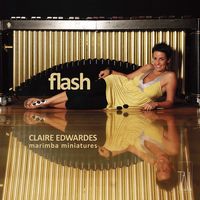
Flash: Marimba Miniatures
Flash is Claire Edwardes’s second Tall Poppies recording: a warm programme of marimba miniatures drawn from her pianist beginnings and life with two young daughters, pairing new Australian works with transcribed children’s piano gems on the five-octave marimba.
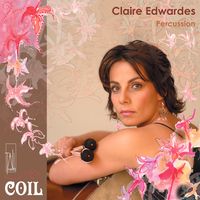
Coil: Australian Music for Solo Percussion
Claire Edwardes had already marked the Australian contemporary music scene after the ABC Young Performer of the Year award in 1999 and the Freedman Fellowship in 2005. Back from European study and performance, she was active in new-music ensembles and building a solo career.
Kingfisher
This CD is the result of a daring project to commission 21 composers to write new works for Halcyon's two singers, Jenny Duck-Chong and Alison Morgan. Presented over two concerts in their 15th anniversary year, and then recorded at Trackdown.
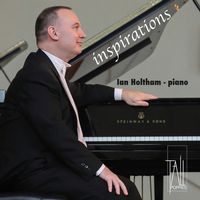
Inspirations
They say there is nothing new under the sun. New works of art challenge this notion. In this piano recording by Ian Holtham, all the works, commissioned from his Melbourne composer colleagues, are responses to major works in the piano literature. Something new has arisen, phoenix-like, out of something old.
The Metallic Violins
This CD is crammed with world premiere performances and scintillating playing. These two violinists inspired wonderful new works by Australian composers, yielding the first recording of Australian music for two violins, from Hindson’s raunchy title piece to Finsterer’s dreamy Spherica I.
A Day in the Life of a Clarinet
Peter Jenkin presents the clarinet in its many modern guises, equally at home with Alban Berg, multi-tracked Bach, klezmer, tango, jazz and electronics.