Peter Sculthorpe: Music for Cello
The cello has been a major expressive tool for Sculthorpe throughout his career. Parting was conceived in 1947 and waited forty-eight years to appear in this form. The 1959 Sonata lay dormant after its premiere; its material later became the Sonata for Viola and Percussion.
From Saibai was premiered by Pereira and Munro in Wales. Pereira has long championed the Requiem, originally written for Nathan Waks. He gives a gutsy, passionate account of every work here, while Ian Munro brings the musicianly qualities that would later mark his recording of Sculthorpe’s complete piano music.
The programme runs from the single-movement Sonata of 1959 through the six-movement Requiem to later landscape and memorial pieces: Djilile, Tailitnama Song in both solo and duo forms, Threnody, Into the Dreaming, Parting, and From Saibai.
Reviews
It is somewhat surprising to me that we have not had an album of Peter Sculthorpe’s cello music from Pereira before. Into the Dreaming has appeared in several different collections, but no major works have I encountered. Now here is a 10-minute solo sonata, a 20-minute suite on the requiem mass and more. (I note that the cellist has to tune the C string down to B-flat for much of this).
Sculthorpe's music runs the gamut from folk settings to fairly dissonant and technically demanding material, complete with Bartok pizzicatos and other sound effects. It's nice to have a composer that can do several idioms effectively.
It is also fascinating that so much of his cello music is for cello alone. Over 45 minutes of this music is solo material. One of the pieces, Tailitnama Song, is played both with and without accompaniment. It comes out shorter with the piano keeping the cello moving, I note. This is a lovely and unusual collection, played with Pereira's usual gutsy warmth of tone.
Peter Sculthorpe, the great Tasmanian born Australian composer, is someone whose music I have listened to with ever-increasing interest since my first encounter on an early Kronos Quartet LP. His is a multi-faceted art, drawing on Pacific Rim influences (no doubt encouraged not only by his homeland's geographical and cultural legacy but also his studies in Britain with Edmund Rubbra), aboriginal music and myth, and the nature mysticism/folk naivete of early Mahler. It is a potent and generally accessible (I would say magnetic!) brew. This disc, one in a series celebrating Tall Poppies tenth anniversary, offers us an overview of Sculthorpe's output for cello ("one of my favourite instruments") and it gives an excellent insight into where he is, artistically speaking, coming from.
The disc begins with the single movement Sonata which makes clear the Mahlerian influence but there is never (here as in any Sculthorpe) any danger of the extreme pathos or, alternatively, the bombast that afflicts some of that composer's work clouding what is always a supremely lucid artistic vision. Sculthorpe's ideal conception of Mahler, very much like my own, is the one of the child wandering carefree in Alpine meadows (see the second volume of the Sculthorpe string quartets, for more specific references). The following Requiem draws heavily on plainchant and distils deep emotional currents (there are echoes here of James MacMillan or even John Tavener's more austere inspirations, e.g. Eternal Memory). In contrast, Djilile is based on an aboriginal chant about a "whistling duck on a billabong (watering hole)" and has appeared in several guises - I was already familiar with the solo piano version but the cello certainly adds something extra - it is a subdued but truly haunting piece of music and is typical of Sculthorpe in that, without resort to any histrionics whatsoever, it captures the wild strangeness of the Australian outback absolutely perfectly.
The Tailitnama Song, again an aboriginal inspiration, appears here in two versions, one with piano and one without. Again it is rooted in the natural surroundings which generated it and is equally poetic in either incarnation. The song it is based on concerns "the glowing of the mountains" and "the coming of the dawn" which should give the uninitiated a good idea of what Sculthorpe's muse is driven by. Nature is writ large but not, in any sense, in a twee or sanitised way - if you are looking for comparisons (in intensity rather than style) the Scandinavians (Nielsen, Sibelius, Tveitt) and unsurprisingly Lilburn (NZ) spring to mind. However, Sculthorpe is very much more overtly tuned in to the Oriental, southern hemisphere, Pacific Rim mindset. Threnody is based on the orchestral work Kakadu (after the national park) and is dedicated to the memory of conductor Stuart Challender. The composer has written many works which function as laments and, as with his nature-painting, he reveals a great gift for doing so.
Into the Dreaming used to be called Cello Dreaming but now exists in alternative versions for other instruments (including one for guitar, recorded by John Williams for Sony). Again it is a memorial piece for a dead friend but is also inspired by the awesome landscapes of the Uluru (Ayers Rock) national park, and again it cuts to the craw emotionally without ever descending to sentimentality. Parting is an arrangement of a song setting of Heine. It is highly appropriate that the lyrical cello is the singer here (the texts appear in the booklet) and this is yet another tribute to a life cut short prematurely (the journalist Andrew Olle). The disc concludes with From Saibai, a truncated version of the excellent clarinet work Songs of Sea and Sky (also available on Tall Poppies). It typifies Sculthorpe's recent fascination with the music of the peoples of the Torres Strait (the narrow seaway between northern Australia and Papua New Guinea), which has also inspired some of the later string quartets (Island Dreaming etc.). Like virtually everything on this disc (and in any other Sculthorpe) it sings a joyous yet realistic, accessible yet profound song of the elements, of the natural world and the people who live in close proximity to it.
David Pereira proves, as on other Tall Poppies recitals, that he is a world class cellist, in this case ably accompanied by Ian Munro. Belinda Webster's vision as a recording engineer is among the most astute in the world and this CD, a 70th birthday tribute (in 1999) to Peter Sculthorpe, is among the most satisfying of modern chamber recordings I have ever heard and a true work of art. Recommended without reservation.
Cellist David Pereira and pianist Ian Munro celebrate our most renowned present-day composer. This generous grouping of Peter Sculthorpe's works for cello reinforces the special strengths he has gained through the fusion of western music with indigenous culture. Several of the pieces were composed for performance by Pereira, while a particularly moving piece, Requiem, for "Cello Alone", was dedicated to another fine Australian musician, Nathan Waks. The Threnody, for solo cello, was written to commemorate the life of conductor Stuart Challender, a lament so fitting for the cello's deep sonorities.
The cello is clearly a special instrument for Sculthorpe. To date his output for the instrument consists of 16 works spanning more than four decades. Here we have most of the solo works and three that include piano accompaniment.
What's special about the cello for Sculthorpe? His statement is clear enough: 'I love its sound, its range, its shape,' he says in the sleeve notes, although one suspects there is more to it than this. The cello seems to be a magnifying glass for him: through its dark, sinewy texture he is able to reach closer to the expressive ideals he aims for in all his music. His writing for the instrument in a way is the 'pure Sculthorpe': it is serious, intense and meditatively inward - a solitary voice that responds in a characteristically static way to visual and emotional subjects. In a word, it is spiritual music.
True to form, many of the pieces are connected with landscape. But it is an urge to connect with ancient human culture more than depictions of the purely visual, picturesque kind, that seems to underpin them. Most memorable are From Saibai (1997), employing traditional melody from Torres Strait, Djilile (1986), which responds to Aboriginal chant from Arhnem Land, and Tailitnama Song, which comes from the composer's acquaintance with traditional Central Australian verse. Another, Into the Dreaming (1993), is inspired by the mythic beliefs of the traditional owners of Uluru.
All these pieces show Sculthorpe's predilection for slow, chant-like melody and modes using a flattened second degree - typically it is the phrygian mode. Two works that best typify these chief ingredients of his style are the rhapsodic Djilile for cello and piano, and the intense, insistent Tailitnama Song, here given in its original cello and piano version (1989) and a more recent adaptation for solo cello (1997).
For Sculthorpe the cello is also a vehicle for elegiac expression. Threnody (1991), occasioned by the death of Stuart Challender, and Parting (1995), written in memory of Andrew Olle, are the most distinctly personal works in this collection. So too is the six-movement Requiem (1979) although this work enigmatically discloses no subject (except that it is dedicated to Nathan Waks). The latter is the most far-reaching of Sculthorpe's cello works: invested in dark profundo expression, it is closely tied to plainchant and consists of a slow-turning meditative melody over a throbbing pizzicato accompaniment.
Pereira plays throughout with admirable understanding and control. As the included discography shows, he has been closely involved with Sculthorpe's cello output for at least 14 years, and he shows a complete mastery of the composer's idiom and particular lyrical demands of the instrument. Munro is a fine, sensitive collaborator.
The recording quality is first-rate: Pereira's playing is given a rich, voluptuous and highly involving recorded sound.
There is one error: the track listing for numbers 9 and 13 (being the two versions of Tailitnama Song) are reversed.
A follow-up disc could be issued giving Sculthorpe's seven other cello works, which include Cello Dreaming with orchestra and the recent solo Soliloquy & Cadenza. One looks forward to this possibility.
Tall Poppies is celebrating 10 years "in the field", a cute way of saying it has been producing Australian chamber and solo music, and other work played by Australian artists, for a decade. Founder Belinda Webster has also commissioned more than 50 works - a heroic act of support. In a rush of birthday spirit Tall Poppies has released seven new discs, including chamber music from Nigel Butterley and a group of Australian art songs sung by Merlyn Quaife with the redoubtable Michael Kieran Harvey at the piano. But pride of place must go to Music for Cello, starring the elder statesman of Australian composition, Peter Sculthorpe, with David Pereira on cello and Ian Munro on piano in unstinting support. Sculthorpe loves the cello and loves testing its possibilities. He calls most of his work for it lyrical in nature; it is lyricism mixed with a particularly personal mix of open-heartedness and not a little melancholy. The key work is the Requiem for cello, with Pereira capturing exactly the timeless, spacious qualities of the mass for the dead. Sculthorpe's unswerving commitment to reconciliation imbues Djilile and Tailitnama Song (both for cello and piano), the instruments representing the composer's belief that cultures can meet in peace. Works written for the memorial services of conductor Stuart Challender and broadcaster Andrew Olle are touching pieces d'occasion - the man really is our composer laureate and a national treasure.
Peter Sculthorpe needs little introduction to Australian audiences. This CD comprises nine pieces written between 1959 and 1997. Sculthorpe, born in 1929 was educated at Launceston Church Grammar School, at the University of Melbourne and at Oxford. Until recently he was Professor in Composition at the University of Sydney, where he had taught since 1963.
He has been awarded many honours including an OBE in 1977 and an Order of Australia (OA) in 1990. Elected as one of Australia’s 100 living National Treasures, a year later in 1999, Sculthorpe was identified as one of Australia’s 45 Icons.
Much of his music has been influenced by the music of Asia, Japan and Indonesia. However much is also deeply rooted in Aboriginal lore and inspired by the extraordinary contrasts and textures of the Australian landscape.
The first track, Sonata for Cello Alone written in London in 1959, by today’s standards a perfectly playable and beautiful piece, is in one movement consisting of variations upon three ideas. The Australian cellist for whom it was written refused to perform it, insisting it was unplayable. Clearly, cellist David Pereira has overcome any technical difficulties that may have been the preoccupation back in 1959. Requiem for Cello Alone, starts with "Introit", (included in AMEB Grade 8 List A) and is followed by five other sections all of which are to be found in the AMEB syllabus for licentiate level. The lowering of the fourth string down a tone adds a rich sonority. The concern of the composer, of imploring and forgiveness and the wish for eternal life, is very heartfelt throughout the Requiem.
The following piece Djilie for cello and piano was originally written for piano solo, but the composer then added a cello part demonstrating the principal of dualism - co-existence of two independent ideas. The composer suggests that it is possible for Australia’s indigenous people and white Australians to live together in harmony.
The CD Tailitnama song for cello solo is later heard with piano accompaniment, and the composer suggests that the work can be played in both forms.
Parting for cello and piano (1995) was originally written for soprano and piano with a text by Heine. Peter Sculthorpe arranged it for cello and piano for the memorial service of journalist Andrew Ollie.
As one of Australia’s best known artists David Pereira has recorded more Australian music than any other cellist. He is an extremely thoughtful musician who innately and convincingly projects Sculthorpe’s ideas. David here pays full tribute to a composer for whom he has a deep affinity.
Since 1990, David Pereira has been Senior Lecturer in Cello at the Canberra School of Music, and prior to that was principal cellist for the Sydney Symphony Orchestra, the Australian Chamber Orchestra and cellist of the Australia Ensemble.
Distinguished Australian pianist Ian Munro accompanies David Pereira impeccably on this mainly cello solo album.
Tall Poppies continues its tradition of bringing together fine Australian artists and composers. The recorded sound here is warm yet clear.
Artist
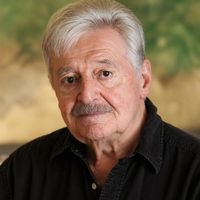
Peter Sculthorpe
Peter Sculthorpe (1929–2014) was a Tasmanian-born composer whose orchestral and chamber music drew the Australian landscape, neighbouring Asian traditions and Indigenous materials into a clear, personal language. He wrote extensively for strings, piano and voice.
Tracks
- Sonata for Cello Alone Peter Sculthorpe 10:14
- Introit 2:39
- Kyrie 2:24
- Qui Mariam 5:25
- Lacrimosa 2:06
- Libera Me 3:10
- Lux Aeterna 4:17
- Djilile (for cello and piano) Peter Sculthorpe 3:58
- Tailitnama Song (for solo cello) Peter Sculthorpe 6:25
- Threnody (for solo cello) Peter Sculthorpe 7:08
- Into the Dreaming (for cello alone) Peter Sculthorpe 2:42
- Parting (for cello and piano) Peter Sculthorpe 2:18
- Tailitnama Song (for cello and piano) Peter Sculthorpe 5:54
- From Saibai (for cello and piano) Peter Sculthorpe 9:55
Requiem for Cello Alone Peter Sculthorpe
Performers
- David Pereira · cello
- Ian Munro · piano · tracks 8, 12–14
Contributors

Liner Notes, Cover [Concept]
Adrienne Levenson
Liner Notes, Cover [Concept]
Peter Sculthorpe
Peter Sculthorpe (1929–2014) was a Tasmanian-born composer whose orchestral and chamber music drew the Australian landscape, neighbouring Asian traditions and Indigenous materials into a clear, personal language. He wrote extensively for strings, piano and voice.
Piano tuner
Wayne Stuart
Where to listen
Peter Sculthorpe: Music for Cello is available for streaming through Apple Music. It can also be purchased through the iTunes Music Store.
Peter Sculthorpe: Music for Cello is available as a CD. It can be purchased online through Buywell Music or the Australian Music Centre which both offer online ordering.
Product details
- Catalogue number
- TP136
- Total playing time
- 68 minutes 35 seconds
- Producer
- Belinda Webster
- Recording Engineer
- Belinda Webster
- Mastering Engineer
- Don Bartley
- Credit
- Adrienne Levenson
Peter Sculthorpe
Wayne Stuart - Release date
- 12 May 2002
- Label
- Tall Poppies
- Musical work
copyright - © 2002 Tall Poppies Records
- Sound recording
copyright - ℗ 2002 Tall Poppies Records
- Categories
- Australian Classics, Modern Masterpieces
- Genres
- Contemporary Classical, World & Cross-cultural
- Barcode
- EAN 9399001113620
Related recordings
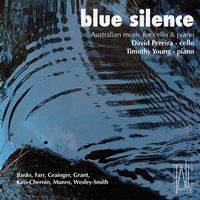
Blue Silence: Australian Music for Cello and Piano
This is the first disc of its kind released in Australia: an overview of important works for cello and piano spanning 108 years. The earliest is Grainger’s Scandinavian Suite, a tour de force that deserves a place in the concert hall.
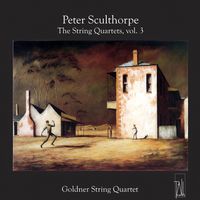
Peter Sculthorpe: The String Quartets, Vol. 3
Tall Poppies presents this third volume of Peter Sculthorpe’s string quartets as a tribute on the occasion of his 80th birthday in April 2009.
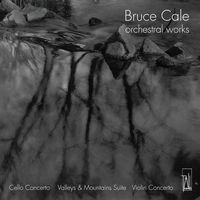
Bruce Cale: Orchestral Works
Tall Poppies is delighted to present Australian orchestral works that might well have slipped from view forever but for the archives of their composer, Bruce Cale.
Chamber of Horrors
Tall Poppies presents chamber music by Elena Kats-Chernin, one of Australia’s most loved composers, in works written for the musicians who play them here.
Musica Viva: 60th Anniversary, Selected Commissions 1975–2004
This disc marks sixty years of Musica Viva Australia’s work commissioning Australian chamber music. Since 1945 the organisation had helped bring nearly a hundred new works into being, building a distinctive national repertoire. A full list of those commissions is included with the CD.
Water Settings: Australian Music for Percussion Duo
Match is a new Australian percussion duo featuring two of the country’s finest players: Daryl Pratt, Head of Percussion at the Sydney Conservatorium and a prolific composer, and Alison Eddington of Synergy Percussion. Most of the programme is by Pratt.