Rautavaara: Cello Music
All of these cello works by the Finnish composer Einojuhani Rautavaara appear here in world premiere recordings. Spanning nearly fifty years of his writing, they chart the major compositional influences that shaped his craft.
The solo sonata and the two sonatas with piano deserve a place in the cello repertoire, for all their virtuosic technical demands. David Pereira is joined by pianist Ian Munro and, in the Polska, by cellist Bonnie Smart.
Reviews
In the late 1990s the Finnish composer Einojuhani Rautavaara (b.1928) swept to international attention with his hypnotic Seventh Symphony, Angel of Light. Yet his compositional portfolio encompasses both a wide range of genres and stylistic preoccupations. For instance the Sonata for solo cello (1969) is quite an austere work of considerable technical difficulty, having been written for the virtuoso cellist Erkki Rautio. The style is neo-Baroque, particularly in the first two movements with an actual quote from Bach's Toccata in the Allegretto, and David Pereira certainly emphasises this element in his performance.
The earlier Two Preludes and Fugues (1955) is equally appealing in its direct yet tightly organised material. Some of its content seems to pay homage to Bartok but the style perhaps reflects Rautavaara's study in America with Persichetti, Copland and Sessions. Pereira gives an impressive and accurate account of this work, although perhaps the opening of the second prelude could have manifested a more expressive sense of line.
Of the other pieces, Polska for two cellos and piano (1977) is particularly striking, based on a folk tune from Rantasalmi in Finland: closer inspection of the source reveals that the origin is more Bohemian than Finnish, which explains the suggestion of Eastern European folk music. The audacious technical writing is delivered with plenty of panache from both Pereira and Bonnie Smart, the combined forces of two cellos giving a tremendous timbral intensity to the music. A more Messiaenesque style starts to surface in the First Cello Sonata which was written in 1972 but revised at a far later date (2001). Again Pereira shows a clear understanding of the musical structures. His technical delivery is at ease with all of Rautavaara's demands and there are some lovely moments of eloquence in the high-floating cello lines. Occasionally the recording touches on the dry side, but this is most definitely a disc to explore.
Finnish composer Einojuhani Rautavaara came to international prominence in the 1990s with a series of "angel" pieces, one of which, Angels and Visitations, was performed by the Sydney Symphony Orchestra this year.
He is sometimes described as neo-romantic, although there is little "neo" about it - Rautavaara has been writing music that way for more than half a century. The opening quotation by Rautavaara from Anni Heino's informative sleeve-notes says it best: "A romantic has no co-ordinates. In time he is yesterday or tomorrow, never today. In place he is there or thence, never here."
This disc of his cello music starts with two preludes and fugues from the 1950s. The preludes are cello solos, the piano joining for the fugue, but the pieces establish an important aspect of his craft: his ability to engage interest through small unifying motives. It is not exactly a new idea - much European music from Bach to Schoenberg exploits the same principle - but it gives Rautavaara's music a coherence and order to which the ear can quickly establish a relationship.
The Sonata for Cello, from 1969, is quietly modelled on Bach's suites in the heady years when most of Rautavaara's European contemporaries adopted attitudes of fierce iconoclasm. Cellist David Pereira is in his element here with an abundant tone and a spontaneous rhetorical and expressive freedom.
In a single, unbroken span, the first Sonata for Cello and Piano (1972) is the most romantically extravagant piece of the disc. Quietly and mysteriously exploring a singular harmonic world against quietly striving cello melodies, it rises to two points of frenetic emphasis with thick cascades of chords (in these moments pianist Ian Munro is heroic).
The Polska, for two cellos (Pereira and Bonnie Smart) and piano returns to the unity of motive (apparently derived from a Finnish folktune) of the preludes and fugues.
The final work, a second Sonata for Cello and Piano from 1991, is closest to the style those who have heard his orchestral music might expect: spaciously expressive, harmonically interesting, terse, unified of motive and having a sense of freedom, cold loneliness and expansiveness. Ideal for those dreaming of a white Christmas.
Grateful am I that our fearless leader has recently sent for review a number of CDs containing music by contemporary Baltic and Finnish composers who were previously known to me mainly in name only. Within recent issues, I've had the pleasure to become acquainted with Latvia's Peteris Vasks (b. 1946), Estonia's Erkki-Sven Tüür (b. 1959), Finland's Leevi Madetoja (1887-1947), and now Einojuhani Rautavaara (b. 1929). I've been more receptive to some than to others, yet I am always appreciative of the opportunity to explore the new and unfamiliar.
Rautavaara studied at the Sibelius Academy with Aarre Merikanto (another composer with whom I am only peripherally familiar). He was then chosen by Sibelius himself to receive a scholarship to Juilliard. It was during his time spent in the US that Rautavaara met and received guidance from Persichetti, Copland and Roger Sessions. It is not surprising therefore, that his recent works reveal both neo-Classical and neo-Romantic tendencies. From here, Rautavaara went on to Switzerland, where he continued his studies under Wladimir Vogel, adopting 12-tone technique. This would last, however, only until the mid 1960s, when he began to abandon serialism for a more personalised and unapologetically Romantic style of expression. Rautavaara's output is large – eight symphonies, numerous concertos for piano, violin, cello, flute, and harp, much chamber music, opera, and a very considerable volume of vocal and choral works in a variety of forms.
The works on this program offer what may be a representative cross-section of the composer's various styles, all the more clearly delineated here by virtue of focusing our attention on how he approached writing for the same medium (the cello) over an extended period of time. The pieces presented are arranged in chronological order on the disc, beginning with the very Shostakovich-sounding Two Preludes and Fugues from 1955. Next, from 1969, comes the Sonata for Solo Cello. This is an extremely Romantic-sounding, rhapsodic work, and not a little evocative of Bach's solo cello suites, but in that déjà vu way that Ysaÿe's solo violin sonatas also evoke Bach's own unaccompanied violin sonatas and partitas. Rautavaara's Solo Cello Sonata is not only nearly the longest work on the disc, but for me, it is also the most musically nourishing. I find it a very expressive piece, and it is played quite magnificently by cellist David Pereira.
The Sonata for Cello and Piano designated No. 1, was originally written in 1972, and then extensively revised in 2003. Despite repeated listening, I find it a strange work, one that bears all of the fingerprints of Rautavaara's various styles, yet somehow can't quite seem to make up its mind what it wants to be. A passage that sounds vaguely reminiscent of Debussy (from approximately 3:30 to 6:00) rises to a glorious climax, only to suddenly go away (at 6:10) in a series of violently fisted tone clusters. This is just one example. Towards the end (from about 13:00 on), it becomes highly agitated, fierce and stomping, like a wild peasant dance that reminded me briefly of Bartók's Allegro barbaro, before it finally ends quietly, with a whimper rather than a bang. The admixture of styles and techniques never quite gels into a coherent whole. Once again, however, Pereira manages to sail through the obviously formidable technical challenges with unruffled aplomb and a real beauty of tone that never becomes forced or raw. Pianist Ian Munro is likewise unperturbed by the clanging and banging that Rautavaara requires.
In Polska ("Polka"), a short work for two cellos and piano from 1977, Pereira is joined by cellist Bonnie Smart. According to the booklet note, it is a set of variations based on a folk tune from Finland's eastern region. It is not easy to discern the number of variations, where one variation ends and the next begins, or even, for that matter, exactly what is being varied. All one can really say is that the dance derivation is obvious.
Finally, we have another Sonata for Cello and Piano, this one without number. It was completed in 1991, but according to the note, its gestation goes back as far as 1974. Overall, I found it to be more successful and satisfying than the Sonata No. 1. Stylistically, it strikes me as more unified and cohesive. It is loosely based on 12-tone technique, but it is not exactly "atonal" (I hate that word) in the way one expects dodecaphonic music to sound. Nonetheless, it does have its isolated moments when it cannot avoid sounding like Schoenberg.
So, what is my final verdict? Well, it seems a bit unfair to draw conclusions based on the hearing of a single CD. Rautavaara wrote a lot of music, and in just about every genre and form, so the works presented here, despite what I said earlier, may or may not be a representative sampling. But assuming they are, and given the fact that they do span most of the composer's creative career thus far, I would have to say that I find this music more interesting intellectually than engaging emotionally. The only work here that really grabbed my attention and held it throughout was the Solo Cello Sonata. Even with that, I can't say I'm ready to add Rautavaara to my list of desert-island composers. That said, all of the performances here are first-rate, and the Tall Poppies recording provides very good sound and nice, ambient space around the players. All of the artists, as well as the record company, by the way, are of Australian origin. I have encountered only one or two Tall Poppies CDs prior to this one, so US distribution may be limited. However, I am sure you can order it directly from the company's website at www.tallpoppies.net. I would not say this is urgent fare, but it is certainly worthy of your attention should you have an interest in contemporary Finnish music. On these grounds, recommended.
Artist

Einojuhani Rautavaara
Einojuhani Rautavaara (1928–2016) was a Finnish composer of classical music, among the most widely heard Finnish voices after Sibelius. His large output moves from early serial writing to neo-romantic and mystical scores across symphonies, concertos, operas, and chamber music.
Tracks
- i. (1955) 3:22
- ii. (1955) 5:43
- i. (1969) 6:10
- ii. (1969) 1:50
- iii. (1969) 6:35
- iv. (1969) 3:06
- Sonata for Cello and Piano No. 1 (1972–3/2001) Einojuhani Rautavaara 16:00
- Polska (1977) Einojuhani Rautavaara 4:45
- i. (1991) 6:06
- ii. (1991) 4:29
- iii. (1991) 7:44
Two Preludes and Fugues Einojuhani Rautavaara
Sonata for Solo Cello Einojuhani Rautavaara
Sonata for Cello and Piano Einojuhani Rautavaara
Performers
- Ian Munro · piano · all except tracks 3–6
- David Pereira · cello
- Bonnie Smart · cello · track 8
Where to listen
Rautavaara: Cello Music is available for streaming through Apple Music. It can also be purchased through the iTunes Music Store.
Rautavaara: Cello Music is available as a CD. It can be purchased online through Buywell Music or the Australian Music Centre which both offer online ordering.
Product details
- Catalogue number
- TP156
- Total playing time
- 65 minutes 50 seconds
- Release date
- 7 Jun 2002
- Label
- Tall Poppies
- Musical work
copyright - © 2002 Tall Poppies Records
- Sound recording
copyright - ℗ 2002 Tall Poppies Records
- Category
- Modern Masterpieces
- Genre
- Contemporary Classical
- Barcode
- EAN 9399001001569
Related recordings
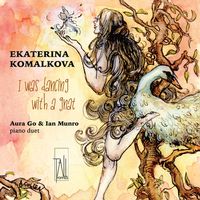
I Was Dancing with a Gnat: Music by Ekaterina Komalkova
Duo pianists Aura Go and Ian Munro bring the music of Russian composer Ekaterina Komalkova to Western listeners for the first time in this generous collection of eighty re-imagined national songs.
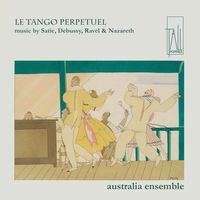
Le Tango Perpetuel
Ian Munro, superb pianist and imaginative composer, turns piano masterworks into chamber colour for the Australia Ensemble. The disc also preserves a rare late performance by tenor Gerald English in Satie’s Sports et Divertissements.
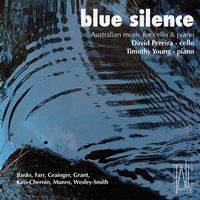
Blue Silence: Australian Music for Cello and Piano
This is the first disc of its kind released in Australia: an overview of important works for cello and piano spanning 108 years. The earliest is Grainger’s Scandinavian Suite, a tour de force that deserves a place in the concert hall.
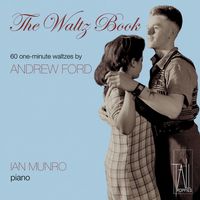
The Waltz Book
The Waltz Book is an impressive achievement by any standard. Andrew Ford has composed a set of 60 waltzes to a commission from pianist Ian Munro, organised so that they are exciting and make a coherent whole.
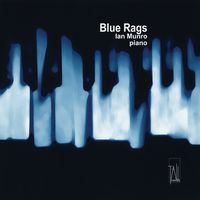
Blue Rags
Ian Munro plays contemporary piano rags by Elena Kats-Chernin, Ann Ghandar and himself, with Graeme Koehne’s Blues and Dmitri Yanov-Yanovsky’s composer-portrait Silhouettes.
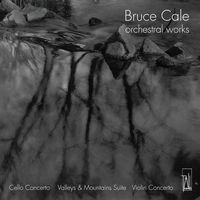
Bruce Cale: Orchestral Works
Tall Poppies is delighted to present Australian orchestral works that might well have slipped from view forever but for the archives of their composer, Bruce Cale.