Shostakovich
Two of Shostakovich's most powerful and popular chamber works, given hair-raising performances by Australia's finest chamber ensemble.
Dene Olding violin
Julian Smiles cello
Australia Ensemble ensemble
Irina Morozova viola
David Bollard piano
The programme pairs the Piano Quintet in G minor, Op. 57 with the Piano Trio in E minor, Op. 67.
The Australia Ensemble recorded the quintet at ABC Studio 200 in Sydney in December 1992 and the trio there in August 1993.
Reviews
There are so many recordings of these great pieces that I didn't expect much from this one, I'd never heard of the players. But fame is unimportant in music. Let the TV-and-movies crowd fuss over celebrities; all that matters to us is the way the music is put across. And it is quite wonderfully put across here.
Both are rather slow and brooding performances, Yet they are not careful or cautious; instead they seem extroverted? they reach out to you, and they let their hair down. Instead of a finicky fussing over details, they pound it out and let it be what it is. And it comes across just beautifully. The pianist is not too percussive, the violinist never too shrill. But they seem fully in the spirit of the music, and many others who have recorded these do not.
I don’t mean to imply that there are not other fine recordings; of course there are. There must be 40 or 45 recordings of the trio, and probably half of them are superb. It's wonderful, wonderful mus!c, and it brings out the best in many musicians ? especially, I would say, younger musicians. It didn't catch on until the last 10 or 15 years; no one paid much attention to It. This is one of the slowest I know. The music unfolds naturally? but it is not genial music. It's rough, but still so beautiful. These people convey the full emotion of the music without tricks of “interpretation". They seem to just let it say what it says. You get full value musically? and in sound? and you will love what you hear.
The same applies to the less-recorded piano quintet. It is every bit as great a piece as the trio, This was the greatest composer of chamber music in the 20th century, and there is no other piano trio, no quintet, as great, as powerful, as moving? as beautiful? as these. This is simply wonderful music. I think this recording of the quintet is the greatest I have ever heard. So many telling details add up to a great performance, and the competition is not as overwhelming as in the trio. It's not as refined as some, but I think the slight roughness is appropriate and works really well. It makes a few other performances sound too refined, even effete.
Vroon.
…it's the Quintet that steals the limelight, thanks to a performance of rich warmth that grips your attention from the start and never lets it go. The Trio is also very well done… The Tall Poppies recordings are, as usual, first class.
More intense than his symphonies, Shostakovich's music bears the full extent of the agony he experienced in Soviet Russia. Dene Olding and the other members of the Australia Ensemble realise much of this agony in their reading of these two demanding works.
If I venture the opinion that the best thing about the Australia Ensemble's new Shostakovich disc is David Bollard's wholly idiomatic, steel-fingered piano playing, this should take nothing away from the quality of the string playing. One seldom hears recordings in which a string ensemble is wildly out-of-tune, but every so often a disc comes along where the playing is wildly in tune… Some of violinist Dene Olding's high playing takes the breath away with its sureness of intonation – sinewy and expressive, every note smack in the middle. The interpretation too, is fascinating. I compared the scherzo of the Piano Quintet with the recording by Victor Aller and the Hollywood String Quartet… What a contrast! The Australia Ensemble takes three-and-a-half minutes over a movement that the Hollywoods dispatch in a mere two and three-quarters, and it set me wondering about changing attitudes to Shostakovich. Perhaps the darker, more grimly ironic character of the Australia Ensemble's version is a result of what we now know…to have been the composer's real intent. The Hollywood Quartet, back in 1952, treated the movement more as a light-hearted romp; their reading has overtones of Prokofiev at his most cheery. It's brilliant playing, but the Australia Ensemble is altogether more searching in its approach, and more characterful in its interpretation.
There are so many recordings of these great pieces that I didn’t expect much from this one. I'd never heard of the players. But fame is unimportant in music. Let the TV-and-movies crowd fuss over celebrities; all that matters to us is the way the music is put across. And it is quite wonderfully put across here.
Both are rather slow and brooding performances. Yet they are not careful or cautious; instead they seem extroverted – they reach out to you, and they let their hair down. Instead of a finicky fussing over details, they pound it out and let it be what it is. And it comes across just beautifully. The pianist is not too percussive, the violinist never too shrill. But they seem fully in the spirit of the music, and many others who have recorded these do not.
I don't mean to imply that there are not other fine recordings; of course there are. There must be 40 or 45 recordings of the trio, and probably half of them are superb. It's wonderful, wonderful music, and it brings out the best in many musicians – especially, I would say, younger musicians. It didn’t catch on until the last 10 or 15 years; no one paid much attention to it. This is one of the slowest I know. The music unfolds naturally – but it is not genial music. It's rough, but still so beautiful. These people convey the full emotion of the music without tricks of "interpretation". They seem to just let it say what it says. You get full value musically – and in sound – and you will love what you hear.
The same applies to the less-recorded piano quintet. It is every bit as great a piece as the trio. This was the greatest composer of chamber music in the 20th century, and there is no other piano trio, no quintet, as great, as powerful, as moving – as beautiful – as these. This is simply wonderful music. I think this recording of the quintet is the greatest I have ever heard. So many telling details add up to a great performance, and the competition is not as overwhelming as in the trio. It's not as refined as some, but I think the slight roughness is appropriate and works really well. It makes a few other performances sound too refined, even effete.
Artists
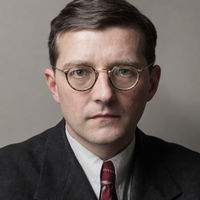
Dmitri Shostakovich
Dmitri Dmitriyevich Shostakovich (25 September 1906 – 9 August 1975) was a Soviet Russian composer and one of the most celebrated of the twentieth century, whose symphonies, chamber works and piano music remain central to the repertoire.
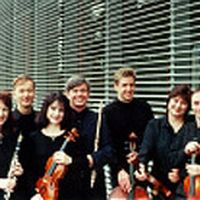
Australia Ensemble
The Australia Ensemble, resident at the University of New South Wales since its founding in 1980, is widely recognised as Australia’s leading chamber music ensemble. Seven principal instrumentalists form its core, joined by guests for standard repertoire and unusual combinations.
Tracks
- Prelude: Lento 4:32
- Fugue: Allegro con brio 10:28
- Scherzo: Allegretto 3:37
- Intermezzo: Lento 7:29
- Finale: Allegretto 7:36
- Andante 8:32
- Allegro con brio 3:07
- Largo 5:59
- Allegretto 11:24
Piano Quintet in G minor, Op. 57 Dmitri Shostakovich
Piano Trio in E minor, Op. 67 Dmitri Shostakovich
Performers
- Dimity Hall · violin · tracks 1–5
- Dene Olding · violin
- Julian Smiles · cello
- Australia Ensemble · ensemble
- Irina Morozova · viola · tracks 1–5
- David Bollard · piano
Contributors

Illustration
Bill Leak
Bill Leak supplied cover art and illustrations across Tall Poppies chamber, piano and song discs, from an irreverent Mozart cartoon to quieter painted sleeves that sit beside Australian and classical programmes without drowning them out.
Liner Notes
Roger Covell
Where to listen
Shostakovich is available for streaming through Apple Music. It can also be purchased through the iTunes Music Store.
Shostakovich is available as a CD. It can be purchased online through Buywell Music or the Australian Music Centre which both offer online ordering.
Product details
- Catalogue number
- TP052
- Total playing time
- 62 minutes 44 seconds
- Producer
- Belinda Webster
- Recording Engineer
- Belinda Webster
- Venue
- ABC Studios, Sydney
- Credit
- Bill Leak
Roger Covell - Release date
- 18 May 1996
- Label
- Tall Poppies
- Musical work
copyright - © 1996 Tall Poppies Records
- Sound recording
copyright - ℗ 1996 Tall Poppies Records
- Category
- Modern Masterpieces
- Genre
- Modernist Classical
- Barcode
- EAN 9399000005223
Related recordings
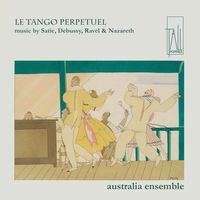
Le Tango Perpetuel
Ian Munro, superb pianist and imaginative composer, turns piano masterworks into chamber colour for the Australia Ensemble. The disc also preserves a rare late performance by tenor Gerald English in Satie’s Sports et Divertissements.
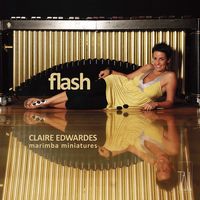
Flash: Marimba Miniatures
Flash is Claire Edwardes’s second Tall Poppies recording: a warm programme of marimba miniatures drawn from her pianist beginnings and life with two young daughters, pairing new Australian works with transcribed children’s piano gems on the five-octave marimba.
Merry-Go-Round
Australia's foremost chamber group meets one of the country's most engaging composers. Martin Wesley-Smith draws on politics (East Timor, Afghanistan), Lewis Carroll, and personal tributes to Don Banks and Peter Platt.
Musica Viva: 60th Anniversary, Selected Commissions 1975–2004
This disc marks sixty years of Musica Viva Australia’s work commissioning Australian chamber music. Since 1945 the organisation had helped bring nearly a hundred new works into being, building a distinctive national repertoire. A full list of those commissions is included with the CD.
Mozart & Brahms: The Clarinet Quintets
Catherine McCorkill joins the Australia Ensemble for two pillars of the clarinet chamber repertoire: Mozart’s Clarinet Quintet in A major, K. 581, on basset clarinet, and Brahms’s Clarinet Quintet, Op. 115.
Raft Song at Sunrise: Chamber Music, Vol. 2
Following the best-selling first volume of Ross Edwards’s chamber music (TP051), this disc gathers some of his most enduring works, recorded here for the first time.