Still Life: Australian Music for Viola
This is the third solo viola disc on Tall Poppies, and one of the few such albums ever issued in Australia. Patricia Pollett is widely regarded as among the country’s finest musicians, and the violist who has done most to draw new works for the instrument.
Philippa Robinson clarinet
Stephen Emmerson piano
Colin Spiers piano
Patricia Pollett viola
Peter Sculthorpe composer
Robert Davidson composer
Andrew Ford composer
Nigel Sabin composer
Stephen Cronin composer
Gerard Brophy composer
Paul Stanhope composer
Betty Beath composer
The programme takes its name from Elena Kats-Chernin’s six-part Still Life, intimate studies for viola and piano with Brisbane pianist Stephen Emmerson. In Robert Davidson’s Lento Pollett is partnered by Newcastle pianist Colin Spiers, once her colleague in Perihelion; he also joins her in Betty Beath’s three mood pieces From a Quiet Place. Gerard Brophy’s spirited miniature The Room of the Saints adds Daryl Pratt on darabuka for an exotic rhythmic colour.
The remaining works are unaccompanied. Peter Sculthorpe’s Threnody, first written for cello, sits brilliantly on the viola. Andrew Ford’s Swan Song is a strenuous workout that calls on every ounce of Pollett’s virtuosity. Stephen Cronin’s Flux is a showcase of the instrument’s harmonics. Nigel Sabin, once Perihelion’s clarinettist, contributes two gently rollicking travel pieces for viola and clarinet, with Philippa Robinson, then Perihelion’s clarinettist, as partner.
Almost all of these works were written especially for Patricia, who brings a palpable expressive intensity to the music.
Reviews
Nine Australian composers here prove that it is still possible to write interesting music in a relatively conservative vein. The viola is often allotted what Rivka Golani calls 'elegy music' and there is a fair amount of it on this release; but, after all, singing in its mellow middle register is what the instrument does best.
The connecting link is Patricia Pollett, an outstanding player who has already recorded a disc of viola music by her compatriots. Most of these pieces were written specially for her and the performances, recorded at three venues over a four-year span, all have an air of being definitive.
The most compelling piece is Peter Sculthorpe's solo Threnody, written originally for cello, in memory of a friend. Haunting and declamatory by turns, it receives a terrific performance and fine recording. Elena Kats-Chernin provides the excellent and varied suite which gives the disc its title and Betty Beath's suite of two quiet pieces and one more up-tempo one closes the recital. Andrew Ford's solo Swansong takes the Gibbons madrigal The Silver Swan as its point of arrival, Britten-style. Stephen Cronin's Flux (only part of it played here) exploits harmonics. Nigel Sabin's two Postcards from France pair the viola with a clarinet in enjoyable Minimalist mode while Gerard Brophy's piece backs the viola with drumming. Whereas Sculthorpe uses an actual Aboriginal theme, Paul Stanhope's Dawn Lament is inspired by an Aboriginal poem. Robert Davidson's Lento is exactly what it claims to be.
Pollett's partners are all first-rate and the recordings, though a little variable, are never less than adequate.
Australia's shining light of the viola, Patricia Pollett, needs little introduction to most string players. Pollett is well known internationally where she has performed as both a soloist and chamber musician. She has been particularly active in promoting and performing the works of contemporary Australian composers.
This is her second disc of Australian viola works. The first, entitled Viola Power (Tall Poppies, TP098), featured works by Ross Edwards, Percy Grainger, Nigel Sabin, and Margaret Sutherland, among others. This latest release continues Pollett's deep commitment to leading Australian composers as well as to younger talents.
Her recital begins with Elena Kats-Chernin's "Still Life." This highly imaginative score, set in six short movements, moves swiftly through different moods from slow and hypnotic to blues to an energetic tango before finally returning to the first soft, haunting theme. Pollett brings her tonal skills into full play, characterizing each segment with a warm and intimate sound when required, lean and spare when the simplicity of the music demands it. The playing is idiomatic and technically impeccable.
"Threnody" by Peter Sculthorpe is based on the main theme of his orchestral piece Kakadu, a free version of an aboriginal lament. Originally written for cello, "Threnody" equally well suits the viola in its poetic feeling and intensity. This beautiful lament is dedicated to the memory of the late conductor Stuart Challender.
Robert Davidson's "Lento," written for Pollett, is dark-hued and melancholy but never bleak. The lyrical passages are finely shaped and the bell-like and transparent piano accompaniment (beautifully played by Colin Spiers) adds a ray of hope to the inner stillness. Pollett blends romantic freedom and poetic introspection with a highly disciplined and masterful technique.
"Swansong" by Andrew Ford moves through an intense emotional spectrum with a tonal and harmonic texture that is nevertheless sparse and angular. There are interesting double-stops evoking bagpipe effects, and a more lively rhythmic and vividly dramatic middle section ensues before the swan gives up the ghost at the very end. (This finale is an excerpt from Orlando Gibbons' famous madrigal.)
Nigel Sabin's "Postcards from France," for clarinet and viola, is entirely delightful. Evoking a train journey to Paris, clarinetist Phillipa Robinson combines with Pollett in a perfectly integrated duo achieving an ideal balance and wonderfully blended sound. This is highly evocative music that is also witty and agile. The duo plays with great drive and vitality, indeed with a rhythmic zest that is irresistible.
"Flux" by Stephen Cronin, again composed expressly for Pollett, is written entirely in harmonics and has the effect of jewel-like notes seen through a prism of kaleidoscopic color. Pollett plays with deep feeling and finesse, bringing a luminous tone to this intriguing piece and an overall feeling of relaxation and effortlessness.
Gerard Brophy's "The Room of the Saints" is chaste and voluptuous in turn, with an underlying rhythmic drive and exoticism that reveals his interest in non-Western instrumentation. Pollett is always sensitively attuned to its changing moods.
Leading the younger generation of Australian composers, Paul Stanhope wrote his "Dawn Lament" as a response to an aboriginal poem—a ritual wailing for the dead. However, the piece can also be viewed as a lament for the wrongs done to indigenous people. Pollett sensitively portrays this reflective, finely spun work.
Betty Beath's work as composer, pianist and educator is unrivaled. She actively promotes and performs the music of women composers and her works have been performed and recorded worldwide. Her composition "From a Quiet Place" is a fitting conclusion to this collection of Australian viola music. Inspired by Pollett's playing and her oneness with her instrument, "Quiet Place" is also influenced by the beautiful sounds of Nepalese bells. The piano intertwines in a dialogue that is integral to the whole, exquisitely underpinning the music as it moves through moods of tranquility and meditative calm to "exaltation and a final serenity" (in Beath's own words).
Australian composers as well as her listeners owe Pollett a great debt for her dedication and for her immense skills in interpreting these works. With this recording she further validates her position as one of Australia's finest string players.
Vanitas, Netherlandish still life painting of the 16th Century, mused on life and death, using symbolic forms such as candles, skulls and fruit and flowers to philosophise on the human condition and the transience of life. The paintings were more than decoration or exercises in high artistic technique–they spoke of weighty matters. It is perhaps unsurprising then that 4 of the 9 works on Patricia Pollett’s new Still Life CD are laments of some kind–Peter Sculthorpe’s Threnody, Robert Davidson’s Lento, Andrew Ford’s Swansong and Paul Stanhope’s Dawn Lament. All 9 composers on this showcase disc fully explore the lyrical, ethereal and melancholic capacities of the viola.
Elena Kats-Chernin’s Still Life (2001) itself comprises 6 miniatures for viola and piano, each with its own discrete flavour. Unlike Moussorgsky’s Pictures at an Exhibition, there is no connecting theme running through these pictures, though each commences in the key of D minor. Some are serious, some quirky and some humorous. They are moments of expressive colour and dramatic gesture, Pollett’s articulate viola bringing out their tone and character. Following Kats-Chernin’s work, the mood darkens with Sculthorpe’s much-appreciated Threnody (1999). Originally scored for cello, this is a lament based on his Kakadu theme and dedicated to the late conductor Stuart Challender. Pollett gains a sonority that is cello-like–rich and telling. The reflective mood continues with Davidson’s exquisitely poised Lento (1997) for viola and piano–elegiac, haunting, and suggestive of Japanese influences, perhaps recalling Anne Boyd’s goldfish. Davidson’s music shifts from fragile intensity to mournful sighing and back again, like passages from a funeral speech given between inward thoughts.
It gets even slower with the opening of Andrew Ford’s Swansong (1987). The solo viola is initially muted and double-stopped, a soft drone supporting a dark, minimal melodic line that culminates in the long, descending slur of the bird’s collapse. The intensity suddenly increases with a declamatory outburst, as if the creature is announcing its final demise, before quietening again. The viola’s lush tone is admirably suited to such a poem, recalling the cor anglais of Sibelius’s Swan.
Nigel Sabin’s Postcards from France (1991) returns the theme to the pictorial and the mood to the joyous. Sabin’s writing for clarinet is personal and evocative, and here it teams with the viola to create an extraordinary duet of simple, weaving lines evoking a bumpy train-ride, with some fragments that sound like quotations of music heard in transit. The mood relaxes again with Stephen Cronin’s ethereal Flux (1995), based on the viola’s harmonics, with the barest of motifs–it’s as if we are now entering the instrument itself. Ideally, Cronin’s work should be heard in the still of night, after a period of meditation. And then hit the pause button and walk around for a while before proceeding to Gerard Brophy’s The Room of the Saints (1995), whose quizzical viola line gently skates around the driving, rhythmic drumming of middle-eastern dance.
Paul Stanhope’s short Dawn Lament (1999/2001) is the most voluble and emotional of the laments on this disk, a soliloquy that cries out its grief, recalling darker passages from Bach’s partitas and sonatas for violin. Betty Beath’s 3-movement From a Quiet Place (1997) is the longest and most fully developed piece of writing on the CD. It draws the listener into complex thoughts and moods and, through fragments of Nepalese instrumentation, induces trance-like moments. Why isn’t there more literature for the solo viola, pitched on the alto or tenor stave, a singing voice that can bridge the gravity of the baritone and the colour of the soprano? Perhaps because there are not enough Patricia Polletts to do the music justice.
This is a CD of quality playing, albeit confined to mainly shorter works. Despite its somewhat introspective feel, there is no mushy sentimentalism or neo-romanticism in this disc, nor is the music intellectualised. The writing is generally clear, articulate and expressive without being overly conservative. Neither, though, is it radical or innovative. These are mainly small-scale works refined to a high degree, rather than epic masterpieces. Perhaps each needs to be listened to by itself–contemplating them all in one sitting is a bit like rushing through the gallery. This is a CD in which you can immerse yourself, still your life.
Artist

Patricia Pollett
Patricia Pollett plays the viola with passion and a big, warm tone that makes the instrument sing. Her recordings run from Brahms and Bruch with orchestra to Australian chamber scores written expressly for her.
Tracks
- i. 2:32
- ii. 1:53
- iii. 1:03
- iv. 1:30
- v. 2:02
- vi. 2:32
- Threnody Peter Sculthorpe 7:19
- Lento Robert Davidson 8:06
- Swan Song Andrew Ford 9:43
- i. Brittany 2:53
- ii. By Train to Paris 3:40
- Flux Stephen Cronin 5:19
- The Room of the Saints Gerard Brophy 3:43
- Dawn Lament Paul Stanhope 3:59
- i. 4:49
- ii. 8:59
- iii. 1:52
Still Life Elena Kats-Chernin
Postcards from France Nigel Sabin
From a Quiet Place Betty Beath
Performers
- Daryl Pratt · darabuka · track 13
- Philippa Robinson · clarinet · tracks 10 and 11
- Stephen Emmerson · piano · tracks 1–6
- Colin Spiers · piano · tracks 8, 15–17
- Patricia Pollett · viola
Composers
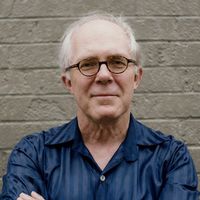
Gerard Brophy
Gerard Brophy is a contemporary Australian composer whose colourful, rhythmically alert scores range from solo miniatures to orchestral works and have been heard widely at home and abroad.
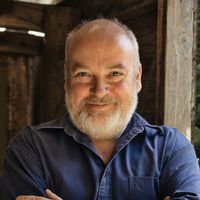
Andrew Ford
Andrew Ford is an Australian composer, writer and broadcaster whose work ranges from chamber and vocal scores to opera and piano cycles. He has won the Paul Lowin Prize for the song cycle Learning to Howl and a Green Room Award for the opera Rembrandt’s Wife.
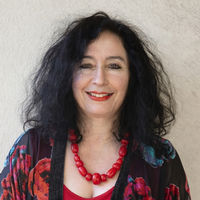
Elena Kats-Chernin
Elena Kats-Chernin AO (born 1957) is an Australian composer whose piano rags, chamber miniatures, ballet and stage scores have become central to contemporary Australian repertoire.

Nigel Sabin
Nigel Sabin is an Australian clarinettist and composer. A founding force behind the chamber ensemble Perihelion, he has performed widely as a soloist and orchestral musician, and his own works have been taken up by leading ensembles and symphony orchestras.
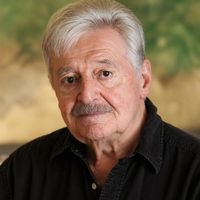
Peter Sculthorpe
Peter Sculthorpe (1929–2014) was a Tasmanian-born composer whose orchestral and chamber music drew the Australian landscape, neighbouring Asian traditions and Indigenous materials into a clear, personal language. He wrote extensively for strings, piano and voice.
Betty Beath
Betty Beath composes chamber music, art song and piano works that lean toward lyric line and reflective mood, often coloured by Balinese and Javanese scales and a quiet sense of place.
Robert Davidson
Robert Davidson writes music that listens hard to speech and turns its rise and fall into line, pulse and colour. His chamber pieces for viola and guitar sit beside larger speech-driven works, always clear in contour and alive to how words already sing.
Paul Stanhope
Paul Stanhope writes chamber and choral music charged by landscape and light: sea, rainforest, dawn and open space. His scores for voice, strings and choir balance precision with verve, and he has shaped that sound from the podium as well as the page.
Where to listen
Still Life: Australian Music for Viola is available for streaming through Apple Music. It can also be purchased through the iTunes Music Store.
Still Life: Australian Music for Viola is available as a CD. It can be purchased online through Buywell Music or the Australian Music Centre which both offer online ordering.
Product details
- Catalogue number
- TP162
- Total playing time
- 71 minutes 54 seconds
- Producer
- Belinda Webster
- Recording Engineer
- Belinda Webster
Geoff McGahan - Editing Engineer
- Geoff McGahan
- Release date
- 3 Aug 2003
- Label
- Tall Poppies
- Musical work
copyright - © 2003 Tall Poppies Records
- Sound recording
copyright - ℗ 2003 Tall Poppies Records
- Category
- Australian Classics
- Genre
- Contemporary Classical
- Barcode
- EAN 9399001001620
Related recordings
Chamber of Horrors
Tall Poppies presents chamber music by Elena Kats-Chernin, one of Australia’s most loved composers, in works written for the musicians who play them here.
Raft Song at Sunrise: Chamber Music, Vol. 2
Following the best-selling first volume of Ross Edwards’s chamber music (TP051), this disc gathers some of his most enduring works, recorded here for the first time.
Viola Power
It's hard to imagine a CD of Australian music for the viola, but here it is. From Grainger's chirpy love song through Ross Edwards' intricate dance to Peter Sculthorpe's masterful work with percussion.
Works for Viola and Orchestra
Patricia Pollett's debut solo disc makes a strong case for the viola beyond the usual elegiac repertoire, pairing orchestrated Romantic sonatas with Bruch and a new Australian work.
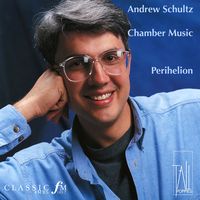
Andrew Schultz: Chamber Music
Andrew Schultz is a younger Australian composer. This first disc devoted to his music gathers chamber works from the rollicking solo piano Sea-Change to the dramatic ensemble piece Mephisto and the poignant song cycle Dead Songs.
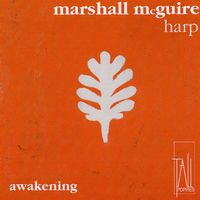
Awakening
Marshall McGuire is a formidable asset to Australia’s contemporary music scene, and the only harpist specialising in both baroque harp and all forms of modern music. This Tall Poppies disc remains a catalogue best-seller.