Nigel Westlake: The Hinchinbrook Riffs
Tall Poppies presents The Hinchinbrook Riffs: five chamber works by Nigel Westlake, whose amiable, approachable style has won him a wide and loyal audience in Australia and beyond.
Craig Ogden guitar
Goldner String Quartet ensemble
Michael Kieran Harvey piano
Synergy Percussion ensemble
Westlake’s music is always engaging, often delightfully witty, and capable of plumbing real emotional depth. The passion and commitment of these performances show the regard in which he is held by his colleagues.
The Piano Trio was commissioned by the Macquarie Trio, making their Tall Poppies debut here; they meet its virtuoso demands with real flair. The Hinchinbrook Riffs is played by Australian guitarist Craig Ogden, then building a major career in Europe. The String Quartet No. 2 was commissioned by Ken Tribe for his 90th birthday and recorded just after its November 2005 premiere: a passionate, vibrant score. Kalabash, written during Westlake’s HC Coombs Creative Arts Fellowship at ANU, is a serious romp for percussion, delivered with the verve expected from Synergy. The disc closes with Michael Kieran Harvey in the Piano Sonata written for him, a Jean Bogan Prize winner later submitted by the ABC to the International Rostrum of Composers in 2000.
See also the first volume of Nigel’s chamber music on Tall Poppies (Onomatopoeia, TP047).
Reviews
Although he may be best known for some highly successful film scores such as that for the IMAX film Antarctica (Tall Poppies TP012 - see review), Nigel Westlake has also composed a good deal of chamber and orchestral music. This release is in fact the sequel to Tall Poppies’ earlier disc devoted to his chamber music (TP047 that I have not heard so far), and includes some fairly recent pieces, the earliest dating from 1997.
The Piano Sonata was commissioned by Michael Kieran Harvey who gave the first performance at the 1998 Sydney Festival. It is a compact single movement piece falling into three contrasted sections (fast-slow-very fast). The outer sections are brilliantly toccata-like in character with much rhythmic and percussive writing, calling for considerable strength and agility, whereas the central section is a beautiful, lyrical outpouring.
The Hinchinbrook Riffs is a short work for guitar and digital delay, on which I commented when reviewing Tim Kain’s earlier recording (on TP 169 - see review). It is an attractive, fairly simple piece of music, in which digital delay is used to create subtle displacements of rhythm.
The Piano Trio, completed in 2003, is a substantial piece in three movements. The first opens in tranquillity: muted strings over flowing piano gestures. The music, however, gains some momentum alternating rhythmically alert and calmer sections before reverting briefly to the opening mood, thus preparing for the contemplative mood of the central movement. This is a beautiful reverie for violin and cello supported by a simple piano accompaniment building-up to a tenser climax before receding into tranquillity. The Trio ends with a lively, virtuosic and dance-like finale, with jazzy inflections. The music, however, tiptoes away lightly.
The title of Kalabash for percussion ensemble alludes to the African balofon, the forerunner of the modern marimba, made of wooden bars suspended above a collection of different-sized kalabash gourds. The music neither quotes nor borrows from African music. This is foot-stamping, hand-clapping and finger-snapping music of great fun; a real showcase for percussion.
The String Quartet No.2 is the most recent work here, composed in 2005. Again, it is a substantial work this time in four movements. The first opens with fragmented, almost disparate elements that at first clash against in a kaleidoscopic way, before the music eventually coalesces while gaining some considerable impetus to move towards its strongly assertive close. A short capricious interlude follows, bridging into the tranquil mood of the warmly melodic third movement. The music again reaches an intense climax before dying away peacefully. The fourth movement opens with a quasi-improvised introduction leading straight into the concluding fast section, again full of vitality and capricious, intricate rhythms.
All these pieces receive immaculate and committed readings by musicians who clearly believe in the music and relish every ounce of it. Very fine recorded sound too.
This generously filled disc will appeal to those who already know some of Westlake’s music, and who want to know more about it. On the other hand, his music is, I think, likely to convince “unbelievers” that contemporary music can also be attractive, beautiful and accessible. A lovely disc that I thoroughly enjoyed from first to last.
Typecast as a film composer, Westlake's output covers a wealth of material on this CD. His vocabulary, sophisticated and contemporary, is tailored to his commissioners and interpreters. His Piano Sonata is a gift for Michael Kieran Harvey's percussive brilliance, while the Macquaries, now sadly disbanded, gives an authoritative account of the 2003 Piano Trio. While the String Quartet No. 2 from the Goldners is the longest and most recent piece presented, the CD's title refers to a guitar solo from Ogden. Its material derived from some early Westlake ideas or "riffs", later developed into this construct for guitar, celebrating the beautiful North Queensland island with an easy poetry.
Nigel Westlake's compositional career began twenty years ago with Omphalo Centric Lecture (1984) and has developed steadily on several fronts since that auspicious beginning. His many film credits include scores for Babe; his orchestral music includes, recently, his marvellous Antarctica Suite for guitar and orchestra; and there has been a steady trickle of chamber music, often featuring guitar, percussion and/or his own instrument, the clarinet.
Which brings us to The Hinchinbrook Riffs, an anthology of five of his more recent and more significant chamber works; as such, it is the sequel to Onomatopoeia.
The title track is dated 2003 but, according to Westlake's liner notes, its origins go back to 1975 when he first visited Hinchinbrook. Now an eight-minute piece for guitar and digital delay, its rippling figurations beautifully evoke the waters of the island it is named for, endlessly changing but always the same.
Kalabash (2004), for four players at two marimbas, is similarly relaxed and is almost the same length. Its infectiously happy swing will immediately say 'jazz' to most listeners but the composer explains that its roots are actually in West African folk music; that, of course, makes it a younger sibling to Omphalo Centric Lecture.
The other three pieces are much more intense, much more closely argued, and significantly longer. All are performed here by the people who commissioned them and the recordings were produced by the composer.
The Piano Trio (2003) opens casually but the drama builds very quickly before unwinding towards its opening mood. The long, slow second movement is another arch shape emotionally; it begins meditatively, but tensions inexorably emerge and build to shrieking fury before resolving. The finale breaks into barbaric dance rhythms and segues through contrasting episodes before ending as diffidently as the first movement began.
The String Quartet no 2 (2005), a fraction longer at 23 minutes, is nominally in the four classical movements, fast-scherzo-slow-fast. The first movement, however, ends with a slow, lightly accompanied viola solo which could have stood alone, and the fourth movement opens with a two-minute continuation of the lovely but unresolved third movement before breaking into the fast, strongly accented finale proper.
The 1997 Piano Sonata can now be seen as a forerunner of these two rather than an isolated, uncharacteristically abstract work. The first movement (not so identified, but the divisions are clear) is fast, unsettled, toccata-like; the second is spacious - a sky full of brilliant stars - and the third is quite short, a frenzied outburst reflecting and resolving the first.
These three works meet the giants of the Grand Tradition of chamber music on their own ground: they are certainly more Eurocentric than stereotypically Australian. Westlake's experience as a composer for film is apparent, even in these most classical of instrumentations, in his total mastery of colour and texture; perhaps that is one reason they remind me of Bartok and Stravinsky more than other composers.
Every item on Hinchinbrook Riffs is rewarding but the disc as a whole is a little less so. The two lighter pieces, placed second and fourth on the disc, may have been intended as points of relaxation between the more complex works but, to me at least, they would have been better kept separate to be enjoyed on their own terms; fortunately, modern CD players are programmable.
Thanks, again, to Tall Poppies for another wonderful recording of Australian music. Presenting 75 minutes of definitive performances of major new works by one of our leading composers, the disc is essential listening for anyone seriously interested in new music.
Nigel Westlake spreads his net widely. Originally a clarinettist he studied composition in Amsterdam before returning to his native Australia. There he was a member of the Australia Ensemble, later joining John Williams’s group Attaca for which he also wrote. He has also written film scores. The Imax film Antarctica is one, and you will certainly know him from his scores for both Babe films.
His concert work is full of energy and colour. The Piano Trio of 2003 has impressionist hues alongside the more aggressively animated sonorities. The crepuscular second movement is especially diverting with its dialogue between the strings underpinned by the insistent piano. The finale has a rather jaunty, jazzy outlook maybe leavened by a touch of John Adams. I was taken by Westlake’s use of the cello as an ersatz jazz-propulsive double bass.
The riffs of The Hinchinbrook Riffs, the work that gives the disc its title, are digitally copied with a delay and repeated approximately half a second later. This creates wave-like patterns, which increase in seductive pleasure, not least the more absorbing jazzy ones. The guitar is the perfect medium for the caressing delicacy and mesmeric quality of the writing. The booklet photograph by the way shows Hinchinbrook Island in all its glory.
The most recent of the works is the String Quartet of 2005 and it’s also the longest. There are hints of a kind of polyrhythmic minimalism here but the percussive, patterned drive takes it far away from any sense of repetitious accumulation of themes. There’s a long rather melancholic first movement viola solo over pizzicati that is affecting. The grave solo over pizzicato is a feature of the third movement as well. There’s something excitingly Janáček and Bartók-like about the finale. A Folk-improvisatory lilt combines with pizzicato drama and a sense of fantasy and colour. This is wonderful stuff, rich in élan and a sense of the string quartet lineage. In contrast Westlake draws on West African music for the percussion piece Kalabash. Here his nod toward boppish jazz licks broadens the range of influence; this is a piece full of circling patterns and big dynamics and sonorities, perfect for percussion ensembles worldwide.
Finally there is the 1997 Piano Sonata, a one movement, dynamic and driving piece. It summons up but doesn’t quite embrace a kind of hyperactive boogie but its heart is the clearly defined slow central section – spare and lyrical by turn and a movement that shows how adept Westlake is at spinning real melody. The finale is a driving intoxicating workout.
This is an altogether diverting and exciting showcase for Westlake’s abundant talents. His dedicatees and performers alike play with uninhibited brilliance and the recordings are splendid.
Artist

Nigel Westlake
Westlake has played in fusion bands and soundtrack sessions, with Australia’s leading instrumental groups, and as a soloist with orchestras and classical ensembles in Australia and in major cities worldwide, from London and Paris to Tokyo, Beijing and New York.
Tracks
- i. 5:31
- ii. 8:58
- iii. 6:27
- The Hinchinbrook Riffs (2003) Nigel Westlake 8:15
- i. 5:02
- ii. 2:39
- iii. 6:54
- iv. 8:26
- Kalabash (2004) Nigel Westlake 7:35
- Piano Sonata (1997) Nigel Westlake
Piano Trio (2003) Nigel Westlake
String Quartet No. 2 (2005) Nigel Westlake
Performers
- Macquarie Trio · ensemble · tracks 1–3
- Craig Ogden · guitar · track 4
- Goldner String Quartet · ensemble · tracks 5–8
- Michael Kieran Harvey · piano · track 10
- Synergy Percussion · ensemble · track 9
Where to listen
Nigel Westlake: The Hinchinbrook Riffs is available for streaming through Apple Music. It can also be purchased through the iTunes Music Store.
Nigel Westlake: The Hinchinbrook Riffs is available as a CD. It can be purchased online through Buywell Music or the Australian Music Centre which both offer online ordering.
Product details
- Catalogue number
- TP187
- Total playing time
- 59 minutes 47 seconds
- Release date
- 18 May 2006
- Label
- Tall Poppies
- Sound recording
copyright - ℗ 2006 Tall Poppies Records
- Category
- Australian Classics
- Genre
- Contemporary Classical
- Barcode
- EAN 9399001001873
Related recordings
Six Fish
Guitar Trek began in 1987 and broke new ground for the guitar with a special “family” of instruments: standard guitars by Greg Smallman, treble guitars by Eugene Philp and Greg Smallman, and baritone and bass guitars by Graham Caldersmith.
Electric Cello
David Pereira plays solo Australian cello works, each scored for cello with pre-recorded tape or delay. The Wesley-Smith and Ford pieces are world premiere recordings.
Mirrors of Fire
Every now and then a CD comes along that makes you glad to be alive: the music is so infectious and the performances brilliant. This is one such disc, featuring Timothy Kain, Australia’s virtuoso guitarist.
An Australian Collection
Nineteen tracks drawn from the Tall Poppies catalogue, chosen to show the range and depth of Australian composition and performance across the label’s first decade.
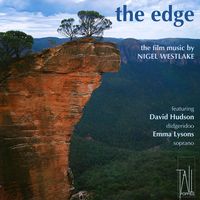
The Edge
This music was written for an IMAX film about the Blue Mountains west of Sydney. The film concerns itself with the environment, the ancient Aboriginal presence and the recently discovered prehistoric Wollemi Pines.
Synergy With Samuels
This CD grew from a concert collaboration between Australia’s best-known percussion quartet and America’s finest vibraphonist, Dave Samuels. Together they cook up a storm.