Transformation: Music for Percussion, Piano and Electronics
Roger Smalley was one of Australia’s most respected composers. He eschewed popular styles and left an oeuvre that is both thrilling and challenging, always at the highest musical level.
This project is a loving tribute from three musicians from Perth, WA. They have recorded three previously unrecorded works by Smalley (* = world première recording). The other two had been recorded but were unavailable.
These five distinctive works were composed between 1969 and 2008, spanning two continents and almost forty years. The disc charts the developments in Smalley’s technique and style, and the influences that shaped his compositional process.
Reviews
Many regard the late British-born composer-pianist-conductor-scholar Roger Smalley (1943-2015) as perhaps the leading all-round composer in late 20th century Australian music. This album of five works wisely focuses on his keyboard and percussion palette, all splendidly parlayed by three Perth-based musicians for whom Smalley was “teacher, mentor and friend”, to quote their generous program notes. Monody was one of Smalley’s early “party pieces” for solo piano and ring modulation; its appealing bell-like sonorities and jaunty, jazz-infused riffs breathed fresh air over our Stockhausen-stale landscape. Two percussion pieces, both played by the splendid Paul Tanner, reveal how Smalley created his music like an abstract painter, juxtaposing rather than superimposing his materials. Finally, pianist Adam Pinto has a shot at the short Morceau de Concours. After all the rhythmic vitality and linear astringency of the earlier pieces, it feels strangely out of place — but it also suggests there’s a helluva lot more in Smalley’s closet that needs to be revisited and recorded.
Performers Adam Pinto, Paul Tanner, and Chris Tonkin have dedicated this meticulously recorded CD to the composer of all the pieces, Roger Smalley (1943-2015), their ‘teacher, mentor and friend’.
It consists of only five pieces covering the period 1968 to 2007, two composed in England, two in Perth after Smalley’s move to Australia in 1976, and one upon his move to Sydney from Perth in 2007.
Monody for piano with live electronic modulation (1971-72) is a monophonic exploration of seven different tones of the harmonic series. Basically it is set of variations on these tones using different pitch and rhythmic patterns. The electronic modulation changes the timbre of the piano and also the pitches that can be heard. Often the note produced on the piano results in two distinct pitches, and thus the single-line performance results in parallel intervals. A feature of this work is that the pianist is also asked to perform a percussion part (4 drums and four triangles) in certain sections. Although the piece sits squarely in the music modernism tradition, often the melodic lines sound like funky riffs. Adam Pinto interprets the work with impressive rhythmic precision, ably assisted by modulator, Chris Tonkin.
Music for an Imaginary Ballet for solo percussion (1993) was premiered by percussionist Paul Tanner. It has an interesting structure based on three “scenes” with respectively 3, 4, and 5, sections. The first two sections of each scene use brake drums/china cymbals and tom toms respectively and all the other sections (called dances) use different instruments or instrument combinations focused on pitched percussion such as marimba, vibraphone, glockenspiel and crotales. Apart from the variety of instrumentation there is also a wide range of textural approaches. The negotiation of the tricky multi-instrument combinations is handled with finesse by Paul Tanner.
For Transformations for piano and live music modulations (1968-69, revised 1971), pianist Adam Pinto and electronic modulator Chris Tonkin had to reconstruct the score directions for the modulation component by consulting composition sketches and historical recordings of the work. The modulation techniques in this work are far more diverse than those of Monody. The musical language is also much more modernistically flamboyant and dissonant than the earlier work. Although the piano sounds are always foregrounded, the electronic manipulations provide many fascinating timbral embellishments to the piano scoring. Pinto and Tonkin interpret the work with both flair and sonic sensitivity.
Paul Tanner plays all four parts on Ceremony I for percussion quartet (1987). A feature of the work is its use of one or two different percussion instruments in each of its six movements. The first uses only claves, beginning with sparse patterns that build increasingly into a frenzied interplay. The second features cuicas (friction drums) and whistles, again becoming more active as it progresses. The third employs snare drum patterns and drum sticks hit together in alternating sections. The fourth is a four-part canon of jangling tam tam sonorities. The fifth uses bongos, beginning somewhat unmetrically but building to a strong homorhythmic finish. The sixth is a surprise because it involves four instruments (bass drum, vibraphone, crotales and cymbals) and is the only movement using tuned percussion. The flourishes of the crotales and vibraphone bring the work to a joyous conclusion. Paul Tanner’s synchronised performance of the four parts is flawless. This is no mean feat as Smalley’s often chaotic-sounding textures are achieved by precise rhythmic patterns constructed from incrementally increasing and decreasing values.
Morceau de Concours for solo piano (2007) was commissioned for the 2008 Sydney International Piano Competition (The title translates as “Competition Piece”). Clearly Smalley has designed this work to challenge the competitors. It begins slowly and impressionistically before exploring a myriad of complex textural ideas mostly at a furious pace. Adam Pinto navigates the virtuosic terrain of the work with effortless ease.
In 1976, when Roger Smalley AM (1943-2015) emigrated from England to take up a position at the School of Music at the University of Western Australia he was well established as an internationally renowned composer. Intermodulation, the new music group he cofounded in 1969, described as a "four-person live electronic improvisation type ensemble", performed regularly throughout Europe in the following seven years. A formidable pianist, Smalley had studied with Stockhausen, given British premiere performances of several of his Klavierstücke, and brought this deep immersion in the European experimental music scene with him to Perth, where he remained teaching, researching, performing and conducting until retirement in 2007.
Smalley had a profound impact on the development of contemporary musical composition in this country. Now, three Perth-based musicians have come together to celebrate and record five works by their "teacher, mentor and friend" composed between 1969 and 2008.
Transformation (1969) is the earliest and is cited by some as the first use of the electronic technique of ring modulation in conjunction with piano (generally attributed to Stockhausen's Mantra, from 1969-70). Transformation was not performed in Australia until a 2016 concert in tribute to Smalley (who had died the previous year) by new music ensemble Decibel, whose Artistic Director Cat Hope also had a long association with Smalley. The incomplete score was painstakingly recreated from sketches, notes and archival material by Adam Pinto and Chris Tonkin, who performed the work (on piano and electronics) in 2016 and feature on this world premiere recording. It's an exciting, glistening work, full of shimmering overtones, recorded with beautiful presence and resonance.
Monody (1972) is also scored for piano and electronics, and followed chronologically by two percussion works: Ceremony I (1987) and Music for an Imaginary Ballet (1994). Both are performed by Paul Tanner, whose precision and artistry produces a sonic landscape of tremendous depth and nuance.
A late work, finally: Morceau de Concours (2008) for piano, commissioned for the Sydney International Piano Competition and performed by Pinto. It begins in languid, impressionist style but quickly veers into a Scriabin-like frenzy: testing, virtuosic, and thrilling. Again, Pinto is first in the world to record it.
This is a beautifully recorded collection of works, consummately performed and of considerable historical significance, particularly for recent developments in Australian musical composition.
Artist
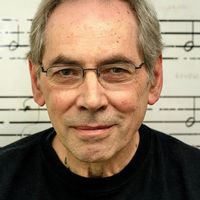
Roger Smalley
Roger Smalley AM (1943–2015) was an English-born composer and pianist who made Australia his home from the mid 1970s. Composition and a distinguished life at the keyboard ran together throughout his career.
Tracks
Roger Smalley — Monody
— Music for an Imaginary Ballet*
— Transformation*
— Ceremony I
— Morceau de concours*
— * = world première recording
Performers
- Adam Pinto · piano
- Paul Tanner · percussion
- Chris Tonkin · live electronics
Where to listen
Transformation: Music for Percussion, Piano and Electronics is available as a CD. It can be purchased online through Buywell Music or the Australian Music Centre which both offer online ordering.
Product details
- Catalogue number
- TP256
- Release date
- 2018
- Label
- Tall Poppies
- Category
- Australian Classics
- Genres
- Modernist Classical, Contemporary Classical
Related recordings
The Metallic Violins
This CD is crammed with world premiere performances and scintillating playing. These two violinists inspired wonderful new works by Australian composers, yielding the first recording of Australian music for two violins, from Hindson’s raunchy title piece to Finsterer’s dreamy Spherica I.

Electric Cello
David Pereira plays solo Australian cello works, each scored for cello with pre-recorded tape or delay. The Wesley-Smith and Ford pieces are world premiere recordings.
An Australian Collection
Nineteen tracks drawn from the Tall Poppies catalogue, chosen to show the range and depth of Australian composition and performance across the label’s first decade.

Voices
Composer–pianist Roger Smalley presents a personal recital of lean, often quiet Australian piano works from the 1960s and 1970s, many appearing on CD here for the first time.
Spinning: New Australian Flute Music
Geoffrey Collins has single-handedly shaped the Australian flute repertoire, and this is his third solo recording. Five of these works were written for him, and they show how freely composers respond to his playing.
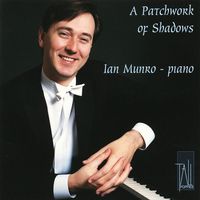
A Patchwork of Shadows
In 1994 Ian Munro was one of only two or three major pianists based in Australia. Passionate about the music of his composer peers, he shaped one of the most carefully chosen programmes then available on disc.