A Virtuoso Recital: David Stanhope Piano
This is the third solo CD that David has recorded for Tall Poppies (see also Virtuoso Transcriptions, TP088, and David Stanhope Plays, TP135). The centrepiece is Rachmaninoff's Preludes, Op. 32, which he plays magnificently.
Gabriel Fauré composer
Sergei Rachmaninoff composer
Felix Mendelssohn composer
Jean Sibelius composer
David Stanhope transcription
Franz Liszt transcription
Rounding out the programme are the Schumann and Fauré works, neither of which is for the faint-hearted pianist; Liszt's rarely played transcription of Mendelssohn's Wedding March and Elves' Dance; and lastly David's own transcription of Sibelius' song The Tryst.
Treat yourself to some scintillating Aussie pianism!
Reviews
David Stanhope - composer, conductor, arranger, trombonist, pianist - has been known to collectors best as a conductor, frequently on Australian Broadcasting Company anthology recordings. He is best known in his native Australia as the former conductor of the Australian National Opera and as a frequent guest with the Sydney Alpha Ensemble. But he also conducts for new films and has made a number of recordings of new music for the Tall Poppies label. He started in Melbourne as a pianist, later switching to brass instruments, but periodically returns to the keyboard, as in this new release from Tall Poppies containing several works he has long wanted to record, when he could get away from conducting and composing.
From the description above we might expect this to be a disc of modern Australian piano music, but the pianist is the only Australian here and the most recent composer is Sibelius. Though the great Finn is the last composer on the disc we can begin with him because the work is a transcription of the well-known song The Tryst; the transcription by David Stanhope. Stanhope demonstrates yet another aspect of his talent - the song is arranged so well that one almost forgets that it wasn't created in this form. Stanhope plays The Tryst as idiomatically as he arranged it, though once or twice it traveled south-eastward to Rachmaninov territory.
To go back to the beginning of the disc, we have another of Stanhope's favorites: Schumann's Toccata. Here my reaction was very different. I felt Stanhope saw the piece as an exercise in the original meaning of the term toccare and not as a thought-out piece of music. When I found in the accompanying notes (by David Stanhope) that the Toccata is the piece he regularly warms up with before recitals, I was not surprised. Fauré, the next composer on the disc seemed much more to Stanhope's taste with the ever-present Ballade Op. 19. I believe that this is the fourth version of this piece that I have listened to this month, but this did not stop me from finding this the best performance on the CD. The phrasing is very good and the overall structure of the performance is admirably thought out, with one section developing effortlessly from the one before; not a characteristic of all of the other three performances I've recently heard. The Mendelssohn/Liszt extracts from A Midsummer Night's Dream are well played, but the performance drags and is almost two minutes longer than another version I reviewed a couple of months ago.
Since Rachmaninov's Op. 32 Preludes occupy more than half of this CD it is most likely for their performance that one would purchase this disc. The Preludes as a complete entity have been recorded a number of times, going back to Moura Lympany. In the more recent past we've had sets from Peter Katin, Howard Shelley, Vladimir Askenazy, Alexis Weissenberg, Dmitri Alexeev, Idil Biret, to name only a few. Stanhope's approach here is less athletic than the other items on this disc would suggest, but also avoids what the Russians call doska (pervasive gloom and world weariness) which some performers regard as essential for Rachmaninov. He gets off to a slow start but responds well to the folksiness of No. 3 and demonstrates great control of dynamics in No. 4. Numbers 5 to 8 show that he can bend his pianist style to meet the needs of the composer, unlike in the Schumann, evincing a fresh response to the familiar Rachmaninov idiom. No. 9 is less exciting, but Stanhope's playing is very evocative in No. 10, which Rachmaninov told Benno Moisewitch was inspired by the painting The Return Home. Stanhope brings out the tolling bells inherent in the score. Number 11 is handled playfully, but No. 12 could be more exciting. Number 13 (in Db) completes the tonal scheme of the set (No. 1 is in C#) and Stanhope brings this out very strongly, as well as reminding us that the Preludes were written a short time after the Concerto No. 3, whose third movement theme is lightly heard in the last Prelude. Thus ends Stanhope's fine traversal of the Op. 32 Preludes, one in which takes a middle road between virtuosity and emotional depiction.
David Stanhope is something of a polymath. A leading conductor in Australia his credits include the Australian stage premiere of Berg's Lulu, he has a nice sideline in conducting soundtracks for feature films such as Babe. He has a background as an orchestral player having been both a principal horn-player and a bass trombonist. He is making a name for himself as a composer. So it might come as something of a surprise to find him recording a disc of virtuoso piano music, especially as this is his third such disc for Australian label Tall Poppies.
Previous discs have included Liszt transcriptions of Beethoven Symphonies, Busoni and Grainger. On this disc he gives us a recital of pieces he describes as some of his favourite pieces.
Virtuoso piano music rather falls into three categories. There is the 'look at me aren't I clever' sort (think Liszt's operatic paraphrases) where display is of the essence. Then there are the pieces where the pianist's struggle with the piano is almost part of the piece. And finally those where the player must transcend the difficulties and often hide them from us to reveal the music beneath.
This recital is mainly composed of pieces from the third category. Schumann, Rachmaninov and Fauré were all distinguished composer-pianists. Unlike Liszt, their piano writing was not designed to show off their technique, so a player must be able to absorb the pianistic difficulties, use the notes to create real music and get beyond just playing the notes.
Stanhope is undoubtedly a fine player and his playing on all the items in this recital is creditable, musical and not a little exciting. The performance of the Schumann Toccata seems merely hectic, it neither approaches that demonic energy that Richter could bring to it - admittedly at a slower pace - nor does it subsume the pianistic difficulties into a more poetic world.
Bringing out the innate poetry of a piece is something that needs doing in many of Fauré's more complex works. It is all too easy to get involved in the rippling piano texture and forget the longer singing lines. It must be admitted that Stanhope's textures are lovely and fluid and in the quieter sections he has a lovely feel for the poetry. But in the more complex passages I missed a sense of a singing line over-arching the busy piano texture.
The centre-piece of the recital is Rachmaninov's Op.32 Preludes. Rachmaninov wrote this, his first set of Preludes in 1901 at a time when he was writing the Variations on a Theme of Chopin. The Chopin theme came from one of Chopin's Op. 28 Preludes. The thirteen preludes in the Op.32 set were written in 1910 at the time of the Third Piano Concerto and the Liturgy of St. John Chrysostom. Rachmaninov intended that the Opp. 32 and 23 preludes, together with the Prelude in C sharp minor, written when he was 19, would make a complete set of 24 preludes. They cover every tonality and so could be played as a complete set, though he never played them as such in public.
The Op.32 preludes are very varied in style and make a good organic whole. Stanhope neatly captures the varied nature of the pieces but I must confess that I found his playing a little too even tempered. Capable and satisfying though his playing might be, I wanted something more. In the slower, quieter pieces he could have been more quixotic and the stronger pieces lacked the ultimate in passion; perhaps, in the end, what I missed was a sense of the dark Russian soul underlying the piece. Something that I think Howard Shelley captures well on his recording for Hyperion. This can be a problem in much of Rachmaninov's music: it is too easy to take the surface brilliance and melodic charm and forget the underlying Russian depths that the music can bring up.
Stanhope's performance will undoubtedly please some and, embedded as it is in an intriguing recital, it will prove attractive. But it is not a performance for my library shelves.
Stanhope completes his recital with a couple of showier pieces. First of all Liszt's amusing take on Mendelssohn's music from A Midsummer Night's Dream. First of all Liszt hilariously plays with variants of the Wedding March and then at the end brilliantly combines elements from both the Wedding March and the Fairies music. This is show-off music par excellence and Stanhope shows off quite brilliantly.
Finally Stanhope gives us one of his own transcriptions, of Sibelius's song 'The Tryst'. He manages brilliantly, walking a tight-rope between showing off and taking the song seriously.
A well planned recital then, one that is well executed with some dazzling playing. But if you've already got a satisfying version of the Rachmaninov Preludes, don't go rushing out to buy this disc especially for them.
Artist

David Stanhope
David Stanhope is an Australian conductor, composer and pianist whose career also takes in horn and bass trombone. He has led opera, ballet, film scores and orchestras across Australia, and is widely known for his wind-band and brass writing.
Tracks
- Toccata Op. 7 Robert Schumann 5:07
- Ballade Op. 19 Gabriel Fauré 13:41
- No. 1 in C major 1:08
- No. 2 in B-flat minor 3:10
- No. 3 in E major 2:13
- No. 4 in E minor 5:17
- No. 5 in G major 3:00
- No. 6 in F minor 1:19
- No. 7 in F major 1:50
- No. 8 in A minor 1:41
- No. 9 in A major 2:30
- No. 10 in B minor 6:24
- No. 11 in B major 2:25
- No. 12 in G-sharp minor 2:21
- No. 13 in D-flat major 4:44
- Wedding March and Elves' Dance from A Midsummer Night's Dream (Liszt transcription) Felix Mendelssohn Arr: Franz Liszt 9:25
- The Tryst (Stanhope transcription) Jean Sibelius Arr: David Stanhope 3:06
Preludes Op. 32 Sergei Rachmaninoff
Performers
- David Stanhope · piano
Composers
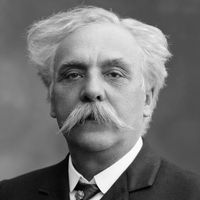
Gabriel Fauré
Gabriel Fauré (1845–1924) was a French composer, pianist, organist and teacher whose music links late Romanticism with early modernism. His best-known works include the Requiem, the Pavane, and a large body of songs and piano music.
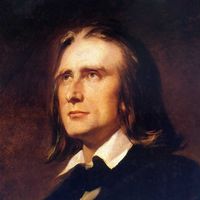
Franz Liszt
Franz Liszt (1811–1886) was a Hungarian composer, virtuoso pianist, conductor and teacher of the Romantic era. His vast output reshaped piano technique, invented the symphonic poem and pushed harmony toward the twentieth century.
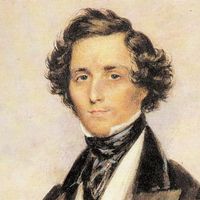
Felix Mendelssohn
Jakob Ludwig Felix Mendelssohn Bartholdy (1809–1847) was a German composer, pianist, organist and conductor of the early Romantic period. His works include symphonies, concertos, oratorios, piano music and chamber music.
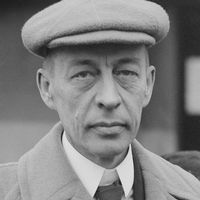
Sergei Rachmaninoff
Sergei Vasilievich Rachmaninoff (1873–1943) was a Russian composer, pianist and conductor, widely considered one of the finest pianists of his day and, as a composer, one of the last great representatives of Romanticism in Russian classical music.
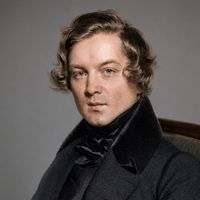
Robert Schumann
Robert Schumann (1810–1856) was a German composer and music critic of the early Romantic era. His piano works and songs remain among the most enduring of the period.
Jean Sibelius
Jean Sibelius wrote music steeped in northern light, from the seven symphonies and Finlandia to intimate cello pieces, lullabies and songs that carry the same cool passion in miniature.
Contributors
Piano Tuner
Terry Harper
Where to listen
A Virtuoso Recital: David Stanhope Piano is available for streaming through Apple Music. It can also be purchased through the iTunes Music Store.
A Virtuoso Recital: David Stanhope Piano is available as a CD. It can be purchased online through Buywell Music or the Australian Music Centre which both offer online ordering.
Product details
- Catalogue number
- TP184
- Total playing time
- 69 minutes 21 seconds
- Producer
- Belinda Webster
- Recording Engineer
- Belinda Webster
- Venue
- Sydney Opera House
- Credit
- Terry Harper
- Release date
- 6 Jun 2005
- Label
- Tall Poppies
- Musical work
copyright - © 2005 Tall Poppies Records
- Sound recording
copyright - ℗ 2005 Tall Poppies Records
- Genre
- Romantic & Impressionist
- Barcode
- EAN 9399001001842
Related recordings
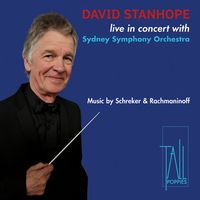
David Stanhope: Live in Concert
In an era of ubiquitous digital streaming, it is good to be reminded of the energy and excitement of live performance. This concert, with its scintillating late-Romantic repertoire, recalls what a diet of studio recordings can leave out.
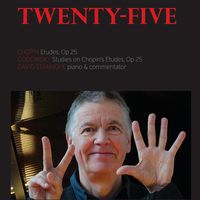
Twenty-Five (DVD)
After a break from the Chopin Op. 10 études and Godowsky studies, David Stanhope returns to some of the most fiendish piano repertoire: the Godowsky Studies on Chopin's Études, Op. 25.
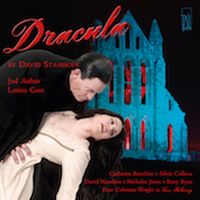
Dracula
Not only a world premiere, but the first opera commercially presented with a digital orchestra: David Stanhope’s Dracula, with two companion works.
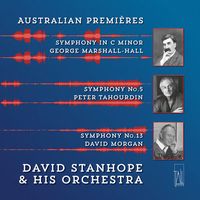
Australian Premières, Vol. 1
None of these three Australian symphonies has ever been heard in public. Once you know them, their neglect is hard to explain. David Stanhope’s digital orchestra gives the scores a first hearing and makes their musical worth plain.
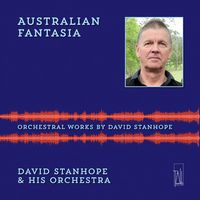
Australian Fantasia: Orchestral Works by David Stanhope
Orchestral works by David Stanhope and four of his transcriptions, realised with a digital orchestra. Apart from Olympic Fireworks, written for the 2000 Sydney Olympic Games opening ceremony, these scores had not been heard in public performance.
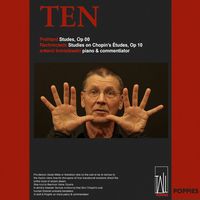
Ten (DVD)
David Stanhope returns to the keyboard for some of the most technically fiendish piano repertoire: Godowsky’s Studies on Chopin’s Études, Op. 10. Written to open up new possibilities of pianism, they still astonish modern listeners.