Terrains: Piano Interiors
Michael Hannan performs Peter Sculthorpe’s piano-interior classics Landscape and Koto Music I & II alongside eight of his own works, built from layered, atmospheric textures drawn from inside the piano, often with tape and tape loops.
Michael Hannan: piano interior.
The programme pairs three Peter Sculthorpe piano-interior works from the 1970s with eight pieces by Hannan. Several of Hannan’s works use multi-track recording and tape loops drawn from sounds inside the piano.
Reviews
Michael Hannan began working with piano-interior sounds in the early 1970s when he was Peter Sculthorpe’s assistant. Sculthorpe and Hannan built tape loops from interesting piano-interior sounds and used them as backgrounds for structured improvisation. In 1996 Hannan began to use direct-to-disc digital recording technology, which opened up a whole new world for his exploration of the piano. Older works – his own and Schulthorpe’s – could be reinvigorated in the digital domain, resulting in cleaner-sounding music (less hiss and tape echo).
This disc collects three Sculthorpe pieces and eight by Hannan. The latter fall into two groups: those from the 1970s and since 1996, when he started to employ digital techniques. The Sculthorpe items are from the 1970s. We’re very far from Henry Cowell’s casual strumming of the strings (Smithsonian / Folkways SF 40801): The piano interior is treated as if Sculthorpe or Hannan had never sat down in front of a keyboard. Sounds include greatly amplified plucking of the strings, tapping the piano’s metal frame, tapping or rolling glass rods on the higher strings, and using timpani mallets on the lower strings.
Sculthorpe’s Landscape (1971), the work that got Sculthorpe and Hannan going with the piano interior, starts with the gentle thunder of timpani mallets on the lower strings and a low string being scraped with a coin. Then the delicate sounds of glass rods bouncing on the strings and gentle tapping of the interior are gradually introduced. Because of its sparseness and rejection of melody, this is more musique concrète than a piece for piano. Sculthorpe’s other two, Koto Music I (1973) and Koto Music II (1976), are gamelan-like with ostinatos that center around specific sets of pitches, and the piano interior sounds contribute an exotic quality.
Like Sculthorpe’s Landscape, the majority of Hannan’s pieces are delicate in-depth explorations of piano sounds using multi-track recording techniques. Piano Collage I (1978) drops slowly changing groups of plucked pitches (one group sounds like the opening harp notes from Mahler’s Ninth Symphony) over gentle tapping, some bowed pitches, and a rapid strumming sound. Valley of the Winds (1997) is the most cinematic effort (Hannan has done studio and commercial music). On top of an omnipresent wind-like sound (“…created by slowly and firmly rubbing the hand along the lower strings of the piano while the sustaining pedal is up and the strings are not free to resonate…”), a string is intermittently scraped with metal, and very high strings are lightly tapped. The result is ghostly and sinister. In Piano Chant (1997), Hannan has captured the fleeting sound of resonating piano strings just after vowels are sung onto them – perhaps the best example of today’s technology being put to use. It’s hard to hear the sound of water that has been added to this piece, but there’s occasionally a distinctive bell-like sound (a string lightly touched while its key is struck very loudly) that turns the work into a contemplative ritual.
Most of this disc could easily fall into the electroacoustic category. The source sounds come from inside the piano, but the final mixing of recorded improvisations with tape loops happens in the studio. Regardless of category, these are skillfully and delicately assembled works. Each work explores a minimum of sounds and never outstays its welcome. Well, one work is somewhat grating, but understandably: Hannan's Cicadas (1997) is a six-minute-plus onslaught sounding successively like amplified cicadas on steroids, pneumatic drills, and ringing telephones. The abrasive sounds stick in the ear, even as the next piece starts.
“Terrains” is the right title for this disc: Hannan describes vast spaces that contain a few well-placed objects. It’s admirable that he doesn’t overload his works with all the neat sounds he has discovered. His works are generally brief, and each one explores a small palette of intriguing and consummately recorded sounds. This particular type of restraint is characteristic of a master composer and performer. You have probably never heard a piano sound quite like this, and close listening will enrich your appreciation for the piano.
Artists

Michael Hannan
Michael Hannan (born 1949) is an Australian composer, pianist and musicologist. His work ranges from concert music and layered piano-interior soundscapes to shorter character pieces, alongside a substantial body of writing on Australian composition.
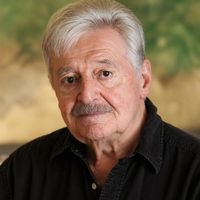
Peter Sculthorpe
Peter Sculthorpe (1929–2014) was a Tasmanian-born composer whose orchestral and chamber music drew the Australian landscape, neighbouring Asian traditions and Indigenous materials into a clear, personal language. He wrote extensively for strings, piano and voice.
Tracks
- Landscape Peter Sculthorpe 14:47
- Piano Collage I Michael Hannan 9:28
- Desert Dance Michael Hannan 3:05
- Cicadas Michael Hannan 6:20
- Cageian Loops Michael Hannan 2:27
- Koto Music I Peter Sculthorpe 6:29
- Koto Music II Peter Sculthorpe 5:14
- Circle Journey Michael Hannan 5:03
- Valley of the Winds Michael Hannan 5:00
- Piano Collage II Michael Hannan 4:08
- Piano Chant Michael Hannan 7:02
Performers
- Michael Hannan · piano
Where to listen
Terrains: Piano Interiors is available for streaming through Apple Music. It can also be purchased through the iTunes Music Store.
Terrains: Piano Interiors is available as a CD. It can be purchased online through Buywell Music or the Australian Music Centre which both offer online ordering.
Product details
- Catalogue number
- TP152
- Total playing time
- 69 minutes 3 seconds
- Contributor
- Lina Eve
- Producer
- Mic Deacon
Michael Hannan - Recording Engineer
- Mic Deacon
- Editing Engineer
- Mic Deacon
Michael Hannan - Mastering Engineer
- Mic Deacon
- Release date
- 7 Nov 2001
- Label
- Tall Poppies
- Musical work
copyright - © 2001 Tall Poppies Records
- Sound recording
copyright - ℗ 2001 Tall Poppies Records
- Category
- Australian Classics
- Genres
- Experimental, Contemporary Classical
- Barcode
- EAN 9399001001521
Related recordings
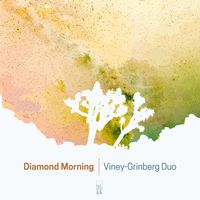
Diamond Morning
Two pianos and (maximal) minimalism. This recording celebrates musical minimalism – and its ability to move in time, space and memory – in a maximal way.
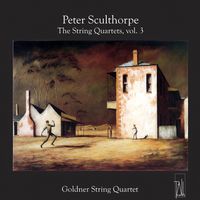
Peter Sculthorpe: The String Quartets, Vol. 3
Tall Poppies presents this third volume of Peter Sculthorpe’s string quartets as a tribute on the occasion of his 80th birthday in April 2009.
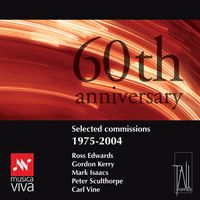
Musica Viva: 60th Anniversary, Selected Commissions 1975–2004
This disc marks sixty years of Musica Viva Australia’s work commissioning Australian chamber music. Since 1945 the organisation had helped bring nearly a hundred new works into being, building a distinctive national repertoire. A full list of those commissions is included with the CD.
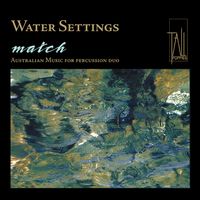
Water Settings: Australian Music for Percussion Duo
Match is a new Australian percussion duo featuring two of the country’s finest players: Daryl Pratt, Head of Percussion at the Sydney Conservatorium and a prolific composer, and Alison Eddington of Synergy Percussion. Most of the programme is by Pratt.

Still Life: Australian Music for Viola
This is the third solo viola disc on Tall Poppies, and one of the few such albums ever issued in Australia. Patricia Pollett is widely regarded as among the country’s finest musicians, and the violist who has done most to draw new works for the instrument.
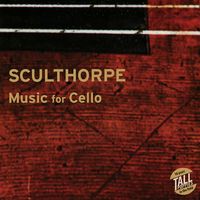
Peter Sculthorpe: Music for Cello
The cello has been a major expressive tool for Sculthorpe throughout his career. Parting was conceived in 1947 and waited forty-eight years to appear in this form. The 1959 Sonata lay dormant after its premiere; its material later became the Sonata for Viola and Percussion.