Larry Sitsky: Violin Concertos 1 & 3
Issued for Jan Sedivka's 80th birthday in 1998, this disc presents two Larry Sitsky violin concertos written for the Czech-born violinist who made Tasmania his home and inspired a generation of Australian players.
Jan Sedivka violin
Vančo Čavdarski conductor
Tasmanian Opera Company Chorus And The Lyric Singers female voices, chorus
Tasmanian Symphony Orchestra orchestra
His long association with Larry Sitsky produced many works for solo violin and several concertos. Two of them appear on CD here for the first time.
The First Concerto (1972), Mysterium Cosmographicum, draws on material from Busoni and is cast as a large single span with female voices. The Third (1987), I Ching: The Eight Kua, is a gentler cycle of eight short movements inspired by the trigrams, coloured by Chinese string portamento and percussion.
Reviews
Though Larry Sitsky's Violin Concertos are the focus of interest of this disc from a repertoire point of view, the name that first adorns the CD is that of the soloist and dedicatee of the works, the Czech born violinist Jan Sedivka. It was issued to time with his 80th birthday back in 1998 – though the recordings date from 1974 (No. 1) and 1992 (No. 3). So a word about Sedivka. He was a pupil of Kocian and Ševčík and afterwards of Thibaud in Paris. His travels across Europe led to London where he took further studies with Max Rostal and began to forge a noted career. He was a teacher at Trinity and Goldsmiths amongst others and had a London International Trio with whom he premiered some chamber works by Alan Bush. He left for Australia in 1961 settling in Tasmania where he became Director of the Conservatoire and inspired a host of new work for his instrument from amongst others Colin Brumby, Edward Cowie, Eric Gross and Sitsky. I first came across Sedivka's name when I found a BBC Transcription recording he'd made with pianist Ruth Bauerova of Emil Axman's Violin Sonata. Axman's was hardly a big name – then or now – but I was intrigued and the performance is a good one. All this shows at least that Sedivka has always been a questing and adventurous musician, with a wide range of interests generally and ambitious for the future repertoire of the violin.
Larry Sitsky has dedicated his Violin Concertos Nos. 1, 2, 3 and 4 to Sedivka, a good friend. The first in 1972 takes Kepler's Mysterium Cosmographicum as its sub-title and poetic force. The musical material is derived from Busoni's Faust – taking chordal progressions and other material – and is cast in five movements lasting thirty-six minutes. Doubtless Sitsky's immersion in Busoni's music, which does lend an impressionistic tint to it, in part derives from his studies with Busoni's great pupil and propagandist, Egon Petri. The Concerto opens with an elusively complex violin cadenza, which forms the introduction. Sitsky's scoring should be noted, as the violins and violas don't make their appearance until towards the end of the work. Sitsky employs a battery of percussion at climactic moments and some driving lower string writing; the texture can also be eruptive and violent but there is also real lyrical expression here, albeit one with a keen edge to it. The central movement is slow and glinting (Harmonicus is the title Sitsky gives to it) with shafts of light flecking the score. In the final panel the chorus sings the titles of each movement before a return to the opening material via the agency of the soloist.
The Third Concerto (1987) is much more gently scored and was inspired by the I Ching. Thus the work is divided into eight sections – Water, Wind, Mountain and so on – and all are quite short, unified by the all-embracing theme. Sitsky, who was born in China but left when he was sixteen, attempts here to evoke the sound of Chinese music but not to replicate it; his approach is mystical and spiritual. Technically he makes use of the so-called Chinese string portamento with accompanying percussive support. Rhythmically there is plenty of dance material – as in the second movement Wind, a dance that is skittish and accompanied by a truly impressive Chinese brass section. There is an eternal horizon feel to Mountain and a brassy enveloping in the nocturnal Mist (that picks up the brass motif from Wind). Sitsky evokes these elements of Chinese music with great sensitivity and timbral and rhythmic intricacy. I particularly enjoyed the propulsively percussive writing in Heaven, a moto perpetuo, and the contemplative and elliptical Fire. Fittingly Earth explores the registral depth of the bass and the height of the flute in its encompassing wholeness.
Throughout, Sedivka is a protagonist and interweaver of distinction; he mediates between Sitsky's elevated vision and the violin's technical realities with perfect judgement. The recordings sound very well indeed and the notes are not too florid; just right, in fact.
I was completely captivated by this beautiful work [Violin Concerto no 3], by the excellent sound, by Sedivka's superb performance, and by the fine playing of the Tasmanian Symphony.
Artists
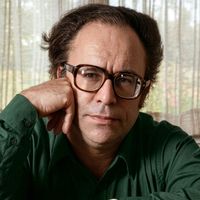
Larry Sitsky
Larry Sitsky's activities as a composer, pianist, writer, broadcaster and teacher place him among the foremost ambassadors of contemporary Australian piano music. His work has made a lasting contribution to the Australian musical tradition.

Jan Sedivka
Jan Sedivka gave Australian violin music a distinctive voice through premieres and dedicated concertos, above all Larry Sitsky’s cycle. His playing joins intensity with a wide, questing colour that suits large-scale modern scores.
Tracks
- Concerto for Violin, Orchestra and Female Voices Mysterium Cosmographicum (1972) Larry Sitsky
- i. Water: Recitative 4:06
- ii. Wind: Dance 3:21
- iii. Mountain: Aria 2:36
- iv. Thunder: Prelude and Canons 4:20
- v. Mist: Nocturnal 6:01
- vi. Heaven: Perpetual Motion 2:18
- vii. Fire: Chant 7:28
- viii. Earth: Accompanied Cadenza 6:18
Violin Concerto No. 3 Larry Sitsky
Performers
- Christopher Lyndon-Gee · conductor · tracks 2–9
- Jan Sedivka · violin
- Vančo Čavdarski · conductor · track 1
- Tasmanian Opera Company Chorus And The Lyric Singers · female voices, chorus · track 1
- Tasmanian Symphony Orchestra · orchestra
Contributors
Liner Notes
Larry Sitsky
Larry Sitsky's activities as a composer, pianist, writer, broadcaster and teacher place him among the foremost ambassadors of contemporary Australian piano music. His work has made a lasting contribution to the Australian musical tradition.
Where to listen
Larry Sitsky: Violin Concertos 1 & 3 is available for streaming through Apple Music. It can also be purchased through the iTunes Music Store.
Larry Sitsky: Violin Concertos 1 & 3 is available as a CD. It can be purchased online through Buywell Music or the Australian Music Centre which both offer online ordering.
Product details
- Catalogue number
- TP124
- Total playing time
- 36 minutes 28 seconds
- Producer
- Robert Smith
- Recording Engineer
- Andrew Dixon
- Credit
- Larry Sitsky
- Release date
- 10 Aug 1998
- Label
- Tall Poppies
- Musical work
copyright - © 1998 Tall Poppies Records
- Sound recording
copyright - ℗ 1998 Tall Poppies Records
- Category
- Australian Classics
- Genres
- Contemporary Classical, Orchestral & Concerto
- Barcode
- EAN 9399001112425
Related recordings
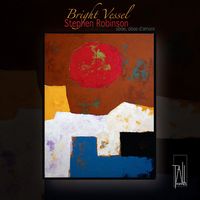
Bright Vessel
Tall Poppies is proud to release Bright Vessel, an important collection of Australian works for solo oboe and oboe d’amore, gathered and performed by Stephen Robinson.
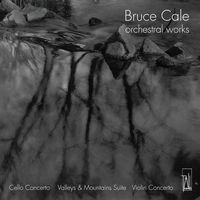
Bruce Cale: Orchestral Works
Tall Poppies is delighted to present Australian orchestral works that might well have slipped from view forever but for the archives of their composer, Bruce Cale.
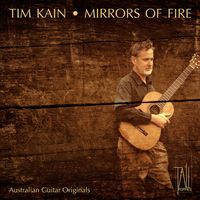
Mirrors of Fire
Every now and then a CD comes along that makes you glad to be alive: the music is so infectious and the performances brilliant. This is one such disc, featuring Timothy Kain, Australia’s virtuoso guitarist.
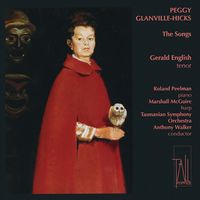
Peggy Glanville-Hicks: The Songs
World premiere recordings of songs by Australian composer Peggy Glanville-Hicks, including the cycle Thirteen Ways of Looking at a Blackbird, sung by tenor Gerald English.
An Australian Collection
Nineteen tracks drawn from the Tall Poppies catalogue, chosen to show the range and depth of Australian composition and performance across the label’s first decade.
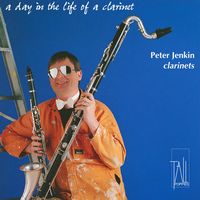
A Day in the Life of a Clarinet
Peter Jenkin presents the clarinet in its many modern guises, equally at home with Alban Berg, multi-tracked Bach, klezmer, tango, jazz and electronics.