The Sonata Project
Bernadette Harvey performs four large-scale solo piano works: Aristea Mellos’s three-movement Sonata, Melody Eötvös’s two-movement Piano Sonata No. 1, Jane Stanley’s Piano Sonata framed by Prelude and Postlude, and Ross Edwards’s Sea Star Fantasy.
The Sonata Project, the inspiration of pianist Bernadette Harvey, is an ongoing commissioning programme for new large-scale solo piano works. Through her performances and recordings she aims to amplify 21st-century composers, enlarge the body of large-scale sonatas by women, and sustain the solo acoustic piano recital.
This first instalment gathers sonatas by strong voices on the contemporary Australian scene, supported by the Australia Council for the Arts and private donations.
New commissions sit beside Edwards’ fantasy in a single recital-length survey of recent Australian piano writing.
Reviews
The Sonata Project is an outstanding initiative of Bernadette Harvey: the commissioning of women composers to write “large-scale” compositions for solo piano.
This CD release includes three new works by Australian women that have been commissioned by Harvey (with assistance from the Australia Council for the Arts), alongside a fourth composition by Ross Edwards that had previously been premiered by Harvey (but commissioned by John Porter). The three new works have the word “sonata” in their titles and two of the composers (Melody Eötvös and Jane Stanley) address the notion of “sonata” in the annotations of their works. By contrast, Aristea Mellos only mentions in passing that her third movement is in a “quasi Rondo form”, and Ross Edwards avoids any mention of the word “sonata” in title or annotation, although he has previously written a piano sonata (No 1), performed and recorded by Harvey on her 2016 release, Mantras and Night Flowers (Tall Poppies TP220).
Certainly “Sonata Project” is a catchy name. It caught my attention when choosing a CD to review for Loudmouth. But maybe it runs the risk of creating too many expectations for what kind of work should be written under the banner. It invites one to critique the works according one’s preconceptions of the form and genre, and against works, both classical and post-classical, that identify themselves as sonatas. Then again, the stimulation of debate about such matters can only be a good thing.
The opening work of the CD, Aristea Mellos’ Sonata (2015-16) perhaps best fits the sonata bill, when considering all the contributions to the CD. It is in three contrasting movements, is more than15 minutes in duration, and it demonstrates a strong engagement with the notion of the development of motivic material. The first movement begins with a melodic pattern that permeates the texture at many points along the way. There is a main theme which begins with a four-note pattern that is developed by variation against a repeated note ostinato and sumptuous Ravel-like accompanying chords. A quieter middle section is interrupted by a high strident triplet figure, before evolving into a dramatic romantic texture. A recapitulation that is itself subjected to interesting developmental strategies brings the movement to a close. The romantic celebratory ambience seems appropriate since the composition was inspired by the composer’s Roman holiday in 2014.
The second movement, a response to the grotesque art-works found in Cardinal Spada’s Gallery, is a much darker affair. Much of the highly chromatic melodic material is either counterpointed with similar lines or accompanied by ostinati of two more adjacent notes. The movement begins sparsely but builds to a resonant climax before a return to the opening ideas.
Mellos begins her “quasi Rondo” movement 3 as a scintillating toccata that builds from a mutation of the opening melodic pattern of her first movement. This is contrasted by a brooding second section with echoes of movement 2. A chord-based fast passage follows before a variation of the opening concludes the work.
Not only is Mellos’s Sonata teeming with compositional invention, it demonstrates a flair for idiomatic piano writing and a strong sense of what might appeal greatly to a piano recital audience.
Melody Eötvös opts for a two-movement work of a slightly longer length for her Piano Sonata no. 1: The Demoiselle D’Y (2015) which is based on the horror story referred to in the title. In her annotation, Eötvös gives an account of her engagement with sonata form. Her first movement has three subject groups, a long development based mostly on different material and a short recapitulation involving only the first of the subject groups. While unconventional in approach, it is an effective structure. In particular the development section, mostly in fast metrical textures, presents the evolving thematic material over a series of chords that mimics the key changes of classical sonata development. Eötvös claims her second movement is formally less rigorous and more “fantasy-like”. Based loosely on the material of her three subject groups, it has some free noodly moments which are contrasted by strong metrical textures reminiscent of the development section of the first movement.
Jane Stanley’s Piano Sonata (2016), unlike the first two works considered here, has no programmatic underpinning. The composer’s annotation focuses on her struggle with the sonata brief and gives some insight into her decision making in reaching the final form of her piece. A feature of the four-movement work is the inclusion of an appealing short “Prelude” and “Postlude” which are identical in pitch and rhythm, but varied in subtle ways in other musical parameters (tempo, dynamics etc.). These frame the two main “movements” of the work. The first is long (11 minutes duration) and consists of a series of textural ideas. Each one is stated and then developed minimally for a period before moving onto the next. As there here is no strong aural connection between the ideas, the movement appears somewhat rambling in structure. By contrast the second movement (7 minutes duration) seems unified by a series of different rapid repeated notes and other repetitive ideas (tremolos, for example).
The last of the four works, Sea Star Fantasy (2015) is a two-movement structure, typical of Ross Edwards, with a slow movement (containing a more animated central section) which is then followed by a quick dance-like movement, itself with slower interludes. It could be thought of as a sonata structure without a sonata-form first movement. It is not “large-scale” (only 8.5 minutes total duration) and not really virtuosic (although the second movement has some tricky decorative elements). I am a great admirer of Ross Edwards’ artistic vision and consummate compositional craftsmanship, but cannot see how this piece fits into Bernadette Harvey’s “sonata project” concept.
As for the performance of all the works, it is hard to find any fault with Bernadette Harvey’s playing, both technically and interpretatively. It was pleasure to hear her highly nuanced readings of these impressive new large-scale piano works.
Artists

Bernadette Harvey
Bernadette Harvey plays contemporary piano music with lean, fearless clarity. Her programmes move between French brilliance, Australian premiere works and large-scale sonatas she has commissioned from living composers.
Melody Eötvös
Melody Eötvös writes contemporary scores that fuse electronics, poetry and percussion into otherworldly soundscapes, and large-scale piano sonatas that draw on literary and hidden worlds. Her music thrives on collaboration and the charged meeting of live player and fixed media.
Jane Stanley
Jane Stanley is an Australian composer of contemporary chamber and solo piano music, writing spare, atmospheric scores that sit readily with voice and with the modern recital piano.

Ross Edwards
One of Australia's best known and most performed composers, Ross Edwards lives and works in Sydney. His commitment to music as a positive and regenerative force has led him to explore beyond the confines of Western art music.
Tracks
- i. Reminiscence 8:37
- ii. Cardinal Spada's Gallery 4:47
- iii. Vanishing Point 4:12
- i. The Demoiselle d'Ys 8:11
- ii. Vérité caché 9:09
- Prelude 1:29
- i.
- ii. 7:10
- Postlude 1:47
- i. Distant and Dreamy 3:52
- ii. Sprightly 4:26
Sonata Aristea Mellos
Piano Sonata No. 1 Melody Eötvös
Piano Sonata Jane Stanley
Sea Star Fantasy Ross Edwards
Performers
- Bernadette Harvey · piano
Where to listen
The Sonata Project is available for streaming through Apple Music. It can also be purchased through the iTunes Music Store.
The Sonata Project is available as a CD. It can be purchased online through Buywell Music or the Australian Music Centre which both offer online ordering.
Product details
- Catalogue number
- TP251
- Total playing time
- 53 minutes 40 seconds
- Producer
- Belinda Webster
- Recording Engineer
- Peter Rejtö
- Venue
- Verbrugghen Hall, Sydney Conservatorium of Music
- Release date
- 1 Nov 2017
- Label
- Tall Poppies
- Musical work
copyright - © 2017 Tall Poppies Records
- Sound recording
copyright - ℗ 2017 Tall Poppies Records
- Category
- Australian Classics
- Genre
- Contemporary Classical
- Barcode
- EAN 9399001002511
Related recordings
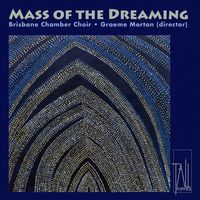
Mass of the Dreaming
It is remarkable that 2016 brought the first recording by an Australian choir devoted entirely to Australian sacred choral music. This disc fills that long gap with newly commissioned and recent works.
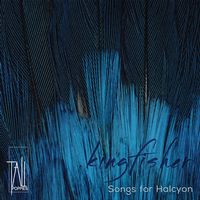
Kingfisher
This CD is the result of a daring project to commission 21 composers to write new works for Halcyon's two singers, Jenny Duck-Chong and Alison Morgan. Presented over two concerts in their 15th anniversary year, and then recorded at Trackdown.
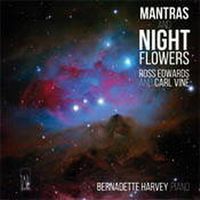
Mantras and Night Flowers
One can be sure that Australian music might be finally coming of age when one record label can contemplate a third recording of a recent piano work – Carl Vine's magnificent Piano Sonata No. 1 is now released for the third time by Tall Poppies.

The Emerald Leopard
Josie and the Emeralds pair acclaimed early-music soprano Josie Ryan with some of Australia’s finest viol players, the Emerald City Viols. Founded in 2011, the group is known for sophisticated performances and inventive programmes of Renaissance and contemporary works, including compositions and arrangements by director Brooke Green.
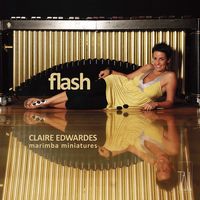
Flash: Marimba Miniatures
Flash is Claire Edwardes’s second Tall Poppies recording: a warm programme of marimba miniatures drawn from her pianist beginnings and life with two young daughters, pairing new Australian works with transcribed children’s piano gems on the five-octave marimba.
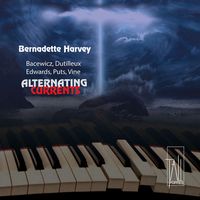
Alternating Currents
Bernadette Harvey’s debut solo CD on Tall Poppies presents one of Australia’s finest pianists: scarily accurate technique, a fearless ear for nuance, and a gift for making a composer’s intentions clear at first hearing.