Virtuoso Transcriptions
These ‘one take’ studio recordings were made for ABC broadcast about a decade before release. That they stand as a finished album is a tribute to David Stanhope’s prodigious musicianship and technique.
Charles Villiers Stanford composer
Richard Strauss composer
Sergei Rachmaninoff composer
Georges Bizet composer
Franz Schubert composer
Alexander Borodin composer
Ludwig van Beethoven composer
Percy Grainger arranger
Leopold Godowsky arranger
Franz Liszt arranger
David Stanhope arranger
Sergei Rachmaninoff arranger
The programme gathers piano transcriptions of Bach, Stanford, Strauss, Bizet, Schubert, Borodin and Beethoven. It includes Grainger’s Ramble on the last love-duet from Der Rosenkavalier, Godowsky’s Schubert song paraphrases, and Liszt’s complete transcription of Beethoven’s Fourth Symphony.
Tracks 1–10 were recorded at ABC Chatswood in May 1983; the symphony movements followed in August 1985.
Artist

David Stanhope
David Stanhope is an Australian conductor, composer and pianist whose career also takes in horn and bass trombone. He has led opera, ballet, film scores and orchestras across Australia, and is widely known for his wind-band and brass writing.
Tracks
- Toccata and Fugue in D minor (after the transcriptions by Karl Tausig and Ferruccio Busoni, edited Leslie Howard) Johann Sebastian Bach Arr: Percy Grainger 8:35
- March-Jig (‘Maguire’s Kick’) Charles Villiers Stanford Arr: Percy Grainger 3:04
- Ramble on the last love-duet in the opera ‘Der Rosenkavalier’ Richard Strauss Arr: Percy Grainger 7:12
- Polka V.R. Sergei Rachmaninoff 3:22
- Minuet from L’Arlésienne Georges Bizet Arr: Sergei Rachmaninoff 2:37
- Wohin? Franz Schubert Arr: Sergei Rachmaninoff 1:57
- Litanei Franz Schubert Arr: Leopold Godowsky 6:06
- Ungeduld Franz Schubert Arr: Leopold Godowsky 2:38
- Morgengruss Franz Schubert Arr: Leopold Godowsky 5:02
- Scherzo Prestissimo Alexander Borodin Arr: David Stanhope 2:35
- i. (Live Studio Recording) 11:02
- ii. (Live Studio Recording) 9:50
- iii. (Live Studio Recording) 5:18
- iv. (Live Studio Recording) 5:55
Symphony No. 4 in B-flat major Ludwig van Beethoven Arr: Franz Liszt
Performers
- David Stanhope · piano
Composers
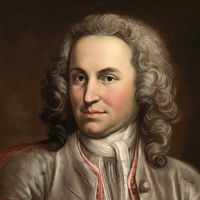
Johann Sebastian Bach
Johann Sebastian Bach (1685–1750) was a German composer and organist of the late Baroque. His sacred and secular music for choir, orchestra, organ and solo instruments remains among the foundations of the Western concert and church repertory.
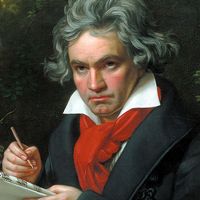
Ludwig van Beethoven
Ludwig van Beethoven (1770–1827) was a German composer and pianist whose music stands at the centre of the Western classical tradition, bridging the Classical and Romantic eras.
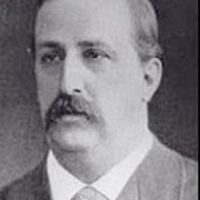
Alexander Borodin
Alexander Borodin's Nocturne from the String Quartet No. 2 in D is pure lyric warmth: long-breathed melody and glowing harmonic colour that sit easily beside Schubert and Tchaikovsky.
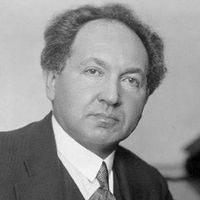
Leopold Godowsky
Godowsky's Studies on Chopin's Études turn already demanding pieces into labyrinths of counterpoint, left-hand bravura and interlocking textures. His Passacaglia and Schubert song paraphrases share the same dense, glittering pianism.
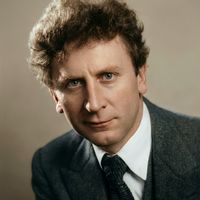
Percy Grainger
Percy Aldridge Grainger (1882–1961) was an Australian-born composer, arranger and pianist. A brilliant folk-song collector and arranger, he was also a restless experimenter whose work ranged from tuneful percussion to Free Music machines that foreshadowed electronic synthesis.
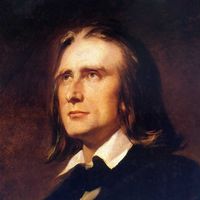
Franz Liszt
Franz Liszt (1811–1886) was a Hungarian composer, virtuoso pianist, conductor and teacher of the Romantic era. His vast output reshaped piano technique, invented the symphonic poem and pushed harmony toward the twentieth century.
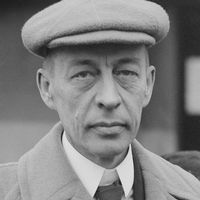
Sergei Rachmaninoff
Sergei Vasilievich Rachmaninoff (1873–1943) was a Russian composer, pianist and conductor, widely considered one of the finest pianists of his day and, as a composer, one of the last great representatives of Romanticism in Russian classical music.
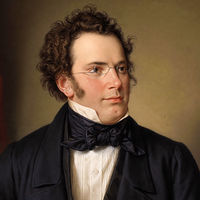
Franz Schubert
Franz Schubert (1797–1828) was an Austrian composer of the late Classical and early Romantic eras. In only thirty-one years he left a vast body of work, including over six hundred Lieder, and remains among the most frequently performed composers.
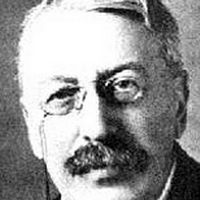
Charles Villiers Stanford
Sir Charles Villiers Stanford (1852–1924) was an Anglo-Irish composer, teacher and conductor of the late Romantic era. His choral music for the Anglican tradition remains the work for which he is best remembered.
Richard Strauss
Richard Strauss wrote Lieder of lyrical sweep and romantic intensity: songs that bloom with wide vocal lines, shifting moods and the glow of late-Romantic harmony. His pages ask for firm shape, fine tonal control and real expressive colour.
Contributors
Liner Notes
David Stanhope
David Stanhope is an Australian conductor, composer and pianist whose career also takes in horn and bass trombone. He has led opera, ballet, film scores and orchestras across Australia, and is widely known for his wind-band and brass writing.
Cover Photo
Ken Mills
Where to listen
Virtuoso Transcriptions is available as a CD. It can be purchased online through Buywell Music or the Australian Music Centre which both offer online ordering.
Product details
- Catalogue number
- TP088
- Total playing time
- 75 minutes 13 seconds
- Producer
- Ralph Lane
- Recording Engineer
- Greg South
- Mastering Engineer
- Belinda Webster
David Stanhope
Don Bartley - Venue
- ABC Studios, Chatswood
- Credit
- David Stanhope
Ken Mills - Release date
- 1996
- Label
- Tall Poppies
- Musical work
copyright - © Tall Poppies Records
- Sound recording
copyright - ℗ Tall Poppies Records
- Category
- Great Classics
- Genres
- Romantic & Impressionist, Classical Era
- Barcode
- EAN 9399000008824
Related recordings
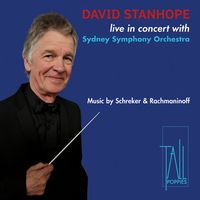
David Stanhope: Live in Concert
In an era of ubiquitous digital streaming, it is good to be reminded of the energy and excitement of live performance. This concert, with its scintillating late-Romantic repertoire, recalls what a diet of studio recordings can leave out.
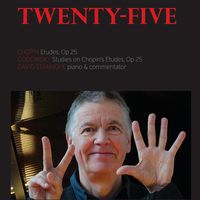
Twenty-Five (DVD)
After a break from the Chopin Op. 10 études and Godowsky studies, David Stanhope returns to some of the most fiendish piano repertoire: the Godowsky Studies on Chopin's Études, Op. 25.
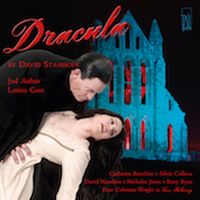
Dracula
Not only a world premiere, but the first opera commercially presented with a digital orchestra: David Stanhope’s Dracula, with two companion works.
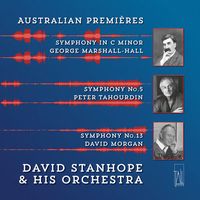
Australian Premières, Vol. 1
None of these three Australian symphonies has ever been heard in public. Once you know them, their neglect is hard to explain. David Stanhope’s digital orchestra gives the scores a first hearing and makes their musical worth plain.
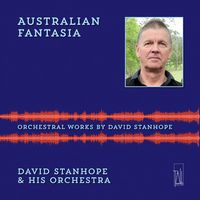
Australian Fantasia: Orchestral Works by David Stanhope
Orchestral works by David Stanhope and four of his transcriptions, realised with a digital orchestra. Apart from Olympic Fireworks, written for the 2000 Sydney Olympic Games opening ceremony, these scores had not been heard in public performance.
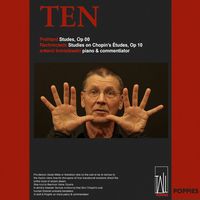
Ten (DVD)
David Stanhope returns to the keyboard for some of the most technically fiendish piano repertoire: Godowsky’s Studies on Chopin’s Études, Op. 10. Written to open up new possibilities of pianism, they still astonish modern listeners.