Fantasies
Dutch-born Esther van Stralen, principal violist of the Sydney Symphony Orchestra, shapes this recital from her own wide-ranging tastes: earlier works on baroque viola sit beside a broad sweep of twentieth-century solo writing.
Heinrich Aloys Praeger composer
Carl Vine composer
Krzysztof Penderecki composer
Myriam Marbé composer
Benjamin Britten composer
Georg Philipp Telemann composer
Astor Piazzolla composer
Gordon Kerry composer
Esther van Stralen arranger
Karen Phillips arranger
The programme moves between Telemann and Praeger and twentieth-century works by Cage, Britten, Penderecki, Marbé and Piazzolla, with Australian pieces by Carl Vine and Gordon Kerry.
Several items are heard in viola arrangements, among them Cage’s Dream for viola and viola ensemble and three of Piazzolla’s tango studies. The recordings were made between 1998 and 2001 in Sydney and Newcastle.
Reviews
Fantasies - in what sense are we to take the title? The Harry-Potterish cover of Esther van Stralen's disc gives the clue, and her autobiographical note spells it out. Life's an inspiration; the kids are adorable; career's going great guns; and, with "almost all my Fantasies fulfilled; those left are presented by the collection of pieces on this CD: I love them dearly." All to the good, for some of the repertoire is decidedly unlovable.
Full of conviction and gritty assertiveness, van Stralen's playing leaves one in no doubt that she put her heart into this compilation of works for unaccompanied viola, eight of them twentieth-century compositions. The programme certainly needs all her powers of projection for, with the exception of the opening and closing items, Cage's Dream and Astor Piazzolla Tango Studies respectively, van Stralen's reportorial 'fantasies' turn out to be weighted rather towards the introspective and dour end of the expressive spectrum.
Alert to the need for some relief from the over earnest quality of most of the twentieth-century offerings, van Stralen intersperses them with a selection of short preludes, all but one under two minutes duration, by the early nineteenth-century Dutch composer Heinrich Alois Praeger. These unassuming essays, of greater historical than musical interest, rarely rise above the workmanlike; they do serve the purpose, though, of providing a sorbet to refresh the aural palate.
A certain variability in the quality of recorded sound is perhaps to be expected given that the disc is a compilation of recordings made in different venues over a period of four years. Overall, there seems to have been a desire on the part of the sound engineers to compensate for the viola's naturally unassertive timbre by boosting its resonance and broadening the ambient sound. Unfortunately, in the case of the Praeger, the over-close miking creates the impression of amplification in a wind tunnel.
One wouldn't normally think of Cage and Britten as congenial musical bedfellows, but on this disc they are felicitously yoked together. Britten's Elegy (1930) and Cage's Dream (1948), though worlds apart aesthetically, stand out from the other offerings by the sheer persuasiveness of their musical statements. Anyone doubting the validity of comparing Britten to Mendelssohn in terms of teenage precocity need only listen to this extraordinarily assured piece. Van Stralen has a sure feel for its overwrought, impassioned eloquence. So, too, in her performance of Karen Phillips's arrangement of Cage's piece for viola and viola ensemble, there is a winning charm and authoritative ease. In this most effective arrangement, Dream conjures up more of an Arvo Pärt than a John Cage of yore.
It is hard to wax enthusiastic about the Australian compositions. Carl Vine's Miniatures I and II lack the Cartesque rhythmic buoyancy that makes the third of his Miniatures such a delight. And in Gordon Kerry's Etude we find this usually lyrical composer in rather desiccated mode, meandering around in search of profundity. Penderecki's Cadenza, a stand-alone piece extracted from his 1983 Viola Concerto, is an uneven work, strong on atmospherics and arresting statements but lacking the compositional finesse to develop those ideas.
Mindful of the fact that the repertoire presented on this disc avowedly derives from the performer's 'fantasies,' this listener found it ironic that the one bona fide 'fantasy' on the programme, the seventh of Telemann's Twelve Fantasias for Unaccompanied Violin (1735), should be the least engaging performance. One wonders why van Stralen chose not to ornament the slow movements leaving skeletal lines and internal repetitions unembellished and unvaried - a licence to exercise imagination and fantasy unaccountably spurned.
Notwithstanding the foregoing reservations about repertoire, Esther van Stralen's disc is to be welcomed for not only does it make available many works here recorded for the first time, it also affords us the opportunity of encountering an assured and persuasive artistic personality.
It is something of a tour de force to record 72 minutes of solo viola music. Van Stralen, principal of the Sydney Symphony, Australia, divides her mostly modern program up by alternating each contemporary piece with a prelude by early romantic composer Heinrich Alois Praeger (1783-1854). This keeps the ears alert. So does the inclusion of multi-viola arrangements of John Cage's mellow Dream and the two pieces by Romanian-born Myriam Marbe (1931-97). This last is in an arrangement by Vladimir Mendelssohn, one of Van Stralen's teachers, and is very pleasant to listen to. From that part of the world we also have Krysztof Penderecki's virtuoso Cadenza. Also from up north comes Benjamin Britten's early Elegy. Australia is well represented by two serial pieces by Carl Vine (b 1954) and a considerable Etude by Gordon Kerry (b 1961). One of Telemann's fantasias for violin has been arranged by Van Stralen, as have three of Astor Piazzolla's six tango studies, originally for flute or violin.
Van Stralen is a musical player with a bit of temperament where called for and a nice nutty tone. Her intonation is sometimes a bit approximate, but her relaxed musicality is a plus. An attractive introduction to an interesting musician.
Artist

Esther van Stralen
Esther van Stralen brings a nutty, assertive viola tone to solo fantasies spanning Telemann, Cage, Penderecki and Piazzolla, and darkens Australian chamber lines with grit, warmth and precision.
Tracks
- Dream for Viola and Viola Ensemble John Cage Arr: Karen Phillips 4:31
- Prelude No. 2 – Allegretto (Risoluto) in C Minor Heinrich Aloys Praeger 1:02
- Miniature I for Solo Viola Carl Vine 3:16
- Prelude No. 1 – Andante (Dolce) in C Major Heinrich Aloys Praeger 1:34
- Etude for Solo Viola Gordon Kerry 6:36
- Prelude No. 3 – Romance: Andante (Dolce) in D Major Heinrich Aloys Praeger 3:27
- Cadenza for Solo Viola Krzysztof Penderecki 6:43
- Prelude No. 10 – Allegro in G Minor Heinrich Aloys Praeger 1:23
- i. Prologo 4:16
- ii. Aria 6:49
- Prelude No. 11 – Andante (Dolce) in E Minor Heinrich Aloys Praeger 1:57
- Elegy Benjamin Britten 7:56
- Prelude No. 12 – Allegro Maestoso in A Minor Heinrich Aloys Praeger 1:33
- Miniature II for Two Violas Carl Vine 1:39
- i. Dolce 2:35
- ii. Allegro 2:57
- iii. Largo 2:53
- iv. Presto 1:03
- 3 – Molto Marcato e Energico 3:38
- 4 – Lento–Meditativo 4:08
- 5 – Crotchet = 120 2:11
Prologo and Aria for Viola and Tape Myriam Marbé
Fantasia No. 7 Georg Philipp Telemann Arr: Esther van Stralen
Tango Studies Astor Piazzolla Arr: Esther van Stralen
Performers
- Esther van Stralen · viola
Composers
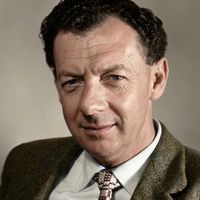
Benjamin Britten
Edward Benjamin Britten (1913–1976) was an English composer, conductor and pianist. His operas are firmly established in the international repertoire, and more of them are played worldwide than those of any other composer born in the twentieth century.
John Cage
John Cage’s prepared-piano Sonatas and Interludes turn the instrument into a gamelan of pings, thuds and quiet resonance. His late chamber piece SEVEN is a slow, almost static meditation; Dream floats in mellow sustained colour.
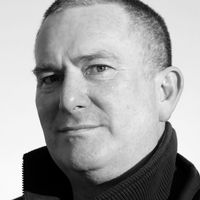
Gordon Kerry
Gordon Kerry's music ranges from the symphonic through chamber music to choral music and opera. Australian orchestras, chamber ensembles, festivals and soloists commission him regularly, as do ensembles in the USA and Europe.
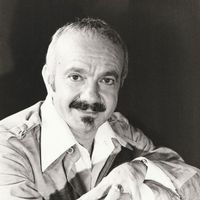
Astor Piazzolla
Astor Piazzolla turned the tango into something sharper, more restless and chamber-like. His nuevo tango draws jazz harmony and classical counterpoint into the dance without blunting its edge.
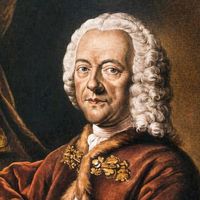
Georg Philipp Telemann
Georg Philipp Telemann (1681–1767) was a German Baroque composer and multi-instrumentalist. Almost completely self-taught, he became a composer against his family's wishes and ranked among the leading German musicians of his age.
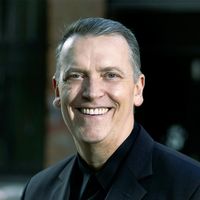
Carl Vine
Carl Vine AO is one of Australia's best-known and most often performed composers, with an orchestral catalogue of eight symphonies and thirteen concertos. His piano music is played widely around the world, and recordings of his work appear on more than seventy albums across the major streaming services.
Contributors
Liner Notes
Gordon Kerry
Gordon Kerry's music ranges from the symphonic through chamber music to choral music and opera. Australian orchestras, chamber ensembles, festivals and soloists commission him regularly, as do ensembles in the USA and Europe.
Graphic Design
Tim Lumsdaine
Where to listen
Fantasies is available for streaming through Apple Music. It can also be purchased through the iTunes Music Store.
Fantasies is available as a CD. It can be purchased online through Buywell Music or the Australian Music Centre which both offer online ordering.
Product details
- Catalogue number
- TP161
- Total playing time
- 72 minutes 7 seconds
- Producer
- Belinda Webster
- Recording Engineer
- Belinda Webster
Neale Sandbach - Venue
- ABC Studios, Sydney
Newcastle Conservatorium of Music Concert Hall - Credit
- Gordon Kerry
Tim Lumsdaine - Release date
- 1 Jun 2002
- Label
- Tall Poppies
- Musical work
copyright - © 2002 Tall Poppies Records
- Sound recording
copyright - ℗ 2002 Tall Poppies Records
- Categories
- Australian Classics, Great Classics, Modern Masterpieces
- Genres
- Contemporary Classical, Modernist Classical
- Barcode
- EAN 9399001001613
Related recordings

Red Earth
A world-premiere recording of important Australian works for instrumental ensemble. Performers and repertoire were hand-selected for the project, which was funded by the Australia Council.
Jamaican Rumba, Vol. 2
Pianist Ian Munro's devotion to Arthur Benjamin drives this second volume of chamber music, recorded with colleagues from the Tall Poppies Ensemble. Major and long-neglected works for violin, viola, cello and clarinet finally receive their due.
Carl Vine: Chamber Music, Vol. 2
World premiere recordings of Carl Vine's Second Piano Sonata, played by Michael Kieran Harvey, and Third String Quartet, by the Tall Poppies Quartet (John Harding, Georges Lentz, Esther van Stralen and David Pereira).
An Australian Collection
Nineteen tracks drawn from the Tall Poppies catalogue, chosen to show the range and depth of Australian composition and performance across the label’s first decade.
Kingfisher
This CD is the result of a daring project to commission 21 composers to write new works for Halcyon's two singers, Jenny Duck-Chong and Alison Morgan. Presented over two concerts in their 15th anniversary year, and then recorded at Trackdown.
Mantras and Night Flowers
One can be sure that Australian music might be finally coming of age when one record label can contemplate a third recording of a recent piano work – Carl Vine's magnificent Piano Sonata No. 1 is now released for the third time by Tall Poppies.