The Green CD
In a climate of rising concern for the planet, this programme of Australian choral works turns on nature and protest. Wesley-Smith's Who Killed Cock Robin? stands as a landmark of Australian choral writing, and one of its most popular.
The Song Company ensemble
Jennifer Kaye soprano vocals
David Barmby countertenor vocals
Jeannie Van de Velde soprano vocals
Scott Cameron tenor vocals
Christopher Josey tenor vocals
David Mackenzie tenor vocals
Michael Keough tenor vocals
James Renwick tenor vocals
David Russell countertenor vocals, soloist
Ian Oi countertenor vocals
Penelope Sharpe soprano vocals, soloist
Tobias Cole countertenor vocals
Jane Edwards soprano vocals
Jennifer Moss soprano vocals
Roland Peelman conductor, artistic director
Judy Glen narrator
Ross Edwards composer
Michael Whiticker composer
Martin Wesley-Smith composer
Stuart Greenbaum composer
Recorded in April 1993 at Studio 200 in the ABC Ultimo Centre, the disc gathers Australian choral works that answer to nature and environmental damage.
Wesley-Smith's Who Killed Cock Robin? remains a landmark, turning the nursery rhyme into a parable that moves from parlour ballad and barbershop to fierce dissonance. Edwards's Flower Songs and Bremner's comic In the Shrubbery sit beside sterner statements from Greenbaum and Whiticker, all sung by an expanded Song Company under Roland Peelman.
Reviews
Martin Wesley-Smith's composer colleagues, myself included, secretly hate him. It's not a personal thing. He's a generous fellow, affable to a fault, and there are few people with whom I'd rather have dinner. But he seems to have misunderstood the whole point about being a contemporary composer. He writes music that audiences like. I don't mean they just respect it, or admire it, or find it powerful or deeply affecting; no, they really like it.… Wesley-Smith's music spans all the usual genres from chamber music to opera, and his work with electronics and computers seems to call for the adjective 'pioneering', But the fact that audiences even like his electronic music (which surely can't be right) attests to the nature of his output. Even when he is being deadly serious, as in the chamber opera Quito (TP111) … Wesley-Smith continually undercuts the pathos with black humour. I should stress that it's usually not applied humour, but rather a rich seam of irony, capable of descending into slapstick, but more generally insinuating itself with some subtlety. It's the musical equivalent of a raised eyebrow, from beneath which Wesley-Smith views the world and all its absurdities.
And so it is with Who Killed Cock Robin? now 17 years old and available post-vinylly for the first time. As the disc's title suggests, its contents reflect the concern that some Australian composers feel at the destruction of the natural environment, and Wesley-Smith's piece, the 'classic' of the compilation, receives a compelling performance from an expanded Song Company under its director Roland Peelman. Indeed, the Song Company is in generally fine form here. As the topic for a musical work, the poisoning of the planet by pesticides is as grim as it's unlikely, but Wesley-Smith's approach works wonderfully well. The original Victorian parlour ballad is treated to a variety of styles, ranging from a chromatically perverse music-hall novelty song with an injection of 1950s doo-wop, to barbershop, to a climactic, slow-motion pile-up of Ligetian dissonances during the final recital of the list of insecticides that ultimately killed 'poor Cock Robin'. It's a small masterpiece.
This disc has … a declaration that it contains environmentally friendly choral music. What it does not claim, but could, is that it is entertaining and tuneful as well as, in places, frankly propagandist on behalf of saving a polluted Earth. The big work is Martin Wesley-Smith's Who Killed Cock Robin? This is a kind of choral inquest on one of the most famous deaths in song and verse.… Barber-shop harmonies, vocalised oom-pah harmonies, memorable tunes and piercingly scored choral paragraphs all have a place in this musical parable. Wesley-Smith's brief Who Stopped the Rain? does not allot blame, but Michael Whiticker's Man, Skin Cancer of the Earth certainly does, with aggressive speech-propelled and percussive urgency in a bluntly propagandistic manner, while Stuart Greenbaum's Upon the Dark Water makes an accusation almost too poetically oblique to be noticed. Ross Edwards' two Flower Songs celebrate some Australian wildflowers in attractive rhythm and catchy melody; and Anthony Bremner's In the Shrubbery, set to a text taken from a gardening book, is a piece of non-political vaudeville introduced by Judy Glen's primly bossy guide. The Song Company is in its best form under Roland Peelman's typically precise direction.
Martin Wesley-Smith's Who Killed Cock Robin? is a clever, often hilarious little cantata that parades the murder suspects in diverse musical styles; a goofy waltz, 50s rock, some barbershop, and a nifty soft-shoe danced by a falsely accused caterpillar. Turns out it was pesticides that got the little birdy, and the fearsome names of the chemical substances are belted out in nasty dissonances as the piece draws to a close. The other notable entry is Anthony Bremner's In the Shrubbery – a series of verbatim quotes from an oh-so-boring botany text, complete with hilarious declamations from an officious female narrator and some frothy music that ends with a stirring ode to fertiliser. Definitely not the same old shit!
Artists

The Song Company
The Song Company sings with bite and polish across Mozart's scatological canons, Josquin's courtly chansons, and Australian choral works that protest, dance and mourn.

Roland Peelman
Belgian-born conductor, pianist and artistic director Roland Peelman has shaped Australian music for more than three decades. A mentor to composers and singers, he is known especially for his long leadership of The Song Company and for championing new work.
Tracks
- i. Announcement 4:51
- ii. Flora the Fly 2:19
- iii. Analysis 1:11
- iv. Freddie the Fish :49
- v. Report 1:21
- vi. I'm a Caterpillar of Society 2:42
- vii. Caterpillar of Adversity 1:11
- viii. Post-mortem Report 1:42
- ix. All the Birds... 1:25
- i. Ecstatic 5:17
- ii. Tranquil 6:02
- i. Introductory Remarks 1:42
- ii. Abuse of Shrubs 1:25
- iii. Choisya 1:57
- iv. Buddleia 2:01
- v. Potentilla 1:41
- vi. Philadelphus 2:01
- vii. Magnolia 1:10
- viii. Finale 3:58
- i. 1:57
- ii. 3:31
- iii. 2:53
- Man, Skin Cancer of the Earth Michael Whiticker 13:45
- Who Stopped the Rain? Martin Wesley-Smith 3:08
Who Killed Cock Robin? Martin Wesley-Smith
Flower Songs Ross Edwards
In the Shrubbery Anthony Bremner
Upon the Dark Water Stuart Greenbaum
Performers
- Brett Weymark · tenor vocals
- Judy Glen · narrator · tracks 12–19
- The Song Company · ensemble
- Jennifer Kaye · soprano vocals
- David Barmby · countertenor vocals
- Jeannie Van de Velde · soprano vocals
- Scott Cameron · tenor vocals
- Christopher Josey · tenor vocals
- David Mackenzie · tenor vocals
- Michael Keough · tenor vocals
- James Renwick · tenor vocals
- David Russell · countertenor vocals, soloist
- Ian Oi · countertenor vocals
- Penelope Sharpe · soprano vocals, soloist
- Tobias Cole · countertenor vocals
- Jane Edwards · soprano vocals
- Jennifer Moss · soprano vocals
- Roland Peelman · conductor, artistic director
Composers

Ross Edwards
One of Australia's best known and most performed composers, Ross Edwards lives and works in Sydney. His commitment to music as a positive and regenerative force has led him to explore beyond the confines of Western art music.

Stuart Greenbaum
Stuart Greenbaum’s sound has overt connections to jazz, pop and minimalism, yet is equally grounded in the Western art music tradition, across a large body of orchestral, chamber, choral and stage works.

Michael Whiticker
Michael Whiticker was born in Gundagai, Australia. He has received major commissions from leading Australian ensembles and organisations, and has won numerous awards in Australia and Germany for his compositions.
Martin Wesley-Smith
Martin Wesley-Smith wrote music audiences actually like: electronic pieces that stay human, choral parables that turn nursery rhymes into environmental inquests, and chamber scores laced with Lewis Carroll fantasy and hard political irony.
Where to listen
The Green CD is available for streaming through Apple Music. It can also be purchased through the iTunes Music Store.
The Green CD is available as a CD. It can be purchased online through Buywell Music or the Australian Music Centre which both offer online ordering.
Product details
- Catalogue number
- TP064
- Total playing time
- 69 minutes 59 seconds
- Producer
- Belinda Webster
- Recording Engineer
- Neale Sandbach
- Release date
- 5 Aug 1995
- Label
- Tall Poppies
- Musical work
copyright - © 1995 Tall Poppies Records
- Sound recording
copyright - ℗ 1995 Tall Poppies Records
- Category
- Australian Classics
- Genres
- Contemporary Classical, Choral & Sacred
- Barcode
- EAN 9399000006428
Related recordings
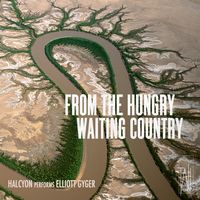
From the Hungry Waiting Country
Three astounding works by Elliott Gyger are presented by Halcyon, featuring the thrilling voices of Jenny Duck-Chong and Alison Morgan with some of Australia’s best performers. Challenging music that rewards every listen, full of mystery and glistening textures, its narrative holds you to the end.
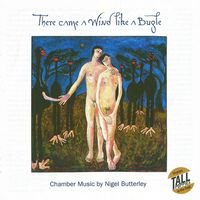
There Came a Wind like a Bugle: Chamber Music by Nigel Butterley
Chamber works spanning some thirty years by Nigel Butterley, one of Australia’s finest composers, for soloists, song and choir.
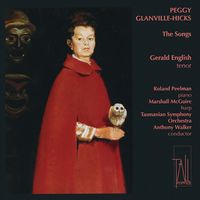
Peggy Glanville-Hicks: The Songs
World premiere recordings of songs by Australian composer Peggy Glanville-Hicks, including the cycle Thirteen Ways of Looking at a Blackbird, sung by tenor Gerald English.
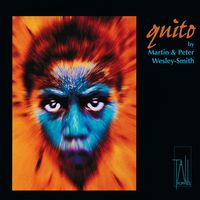
Quito
A powerful radiophonic music drama about Quito, a young East Timorese musician living in Darwin, whose schizophrenia and suicide become a lens on personal and political tragedy.
An Australian Collection
Nineteen tracks drawn from the Tall Poppies catalogue, chosen to show the range and depth of Australian composition and performance across the label’s first decade.
The Secular Josquin
Nicholas Routley brings a lifelong love of Josquin to his work with The Song Company. This programme of short secular songs and motets offers an unusual window on a repertoire less often heard among recordings of the composer.