Across the Top
Paul Cutlan is one of the very few Australian composers who works in the overlap between classical and jazz. Here he finds an ideal partner in the NOISE quartet, which extends its performance techniques with improvisation.
Oliver Miller cello
Paul Cutlan bass clarinet, soprano saxophone
James Eccles viola
Veronique Serret violin
Liisa Pallandi violin
Brett Hirst double bass
The NOISE string quartet
Paul Cutlan composer
Veronique Serret composer
Oliver Miller composer
Brett Hirst composer
The main work, Across the Top, was written for solo bass clarinet (played by the composer) and solo bass (performed impeccably by Brett Hirst). This extended piece is inspired by Paul’s many tours to the north of Australia and his responses to the sights and sounds of the outback and its peoples.
Of the remaining three works, The Dawning Dark is a group improvisation, while Times Past and Perhaps Next Time are older pieces of Paul’s that suited the forces available and have thus earned a new life.
Listeners will be inspired by the haunting sound-world of this instrumental combination and the beauty of the music.
Reviews
The borders between musical genres are increasingly blurred, as the best musicians take inspiration from all over to create new sounds.
Music genres might not quite be, as our former prime minister might have put it, ‘‘dead, buried and cremated’’, but they are certainly starting to smell funny. Much of the most interesting music now being made falls outside of them, despite the number of genres having never been greater. Had you walked into a record store before 1955’s rock’n’roll explosion, for instance, you would have found racks of classical, jazz, musicals, popular song and perhaps opera. Half a century later (before such stores began to be strangled by the online vine), you’d have also found early music, country, folk, blues, R&B, techno, hiphop, various forms of rock, several types of bespoke dance music and 50 types of world music.
But just as the more sides you add to a polygon the closer you come to a circle, the more genres and subgenres you add to music the closer you get to their irrelevance, to their cancelling each other out until you are left with what Duke Ellington famously referred to as the only two types of music: good and bad.
Besides the surge in their number, the relevance of genres has been compromised by the lines between them being smudged beyond recognition. Contributing to this has been the pillaging of indigenous idioms from around the world and the spread of a shared improvising language, largely emanating from jazz, allowing musicians of all stripes to collaborate.
The beginnings of the demise of genre can be traced back to the 1960s, when jazz and rock musicians began looking for broader rhythmic, textural, structural and conceptual palettes, and therefore borrowed from each other, from classical composition and from many types of traditional music. Jazz saxophonist John Coltrane, for instance, embraced Indian concepts of improvisation, and George Harrison’s Within You Without You on Sergeant Pepper’s ... exposed a willing Western audience to the sounds and textures of Hindustani classical music. Fusion obliterated the line between jazz and rock, while progressive rock yearned for the sweep and grandeur of classical music….
The breadth of Paul Cutlan’s horizons are reflected in past associations ranging from the Sydney Symphony Orchestra to Lou Reed, and Diary of a Madman (with Geoffrey Rush) to Ruby Hunter and Ten Part Invention. Here he says he sought to marry influences from Bartok, Stravinsky, Shostakovich and Britten with Balkan folk and improvisation. Hybrids can be mongrels, but Cutlan’s works are refreshingly original and exude vitality. He has scored them for string quartet, his own bass clarinet and soprano saxophone, and Brett Hirst’s bass. Crucial to the project’s success is that the quartet is the Noise, whose members are all improvisers, which Cutlan exploits to marvellous effect.
The centrepiece is the 32 minute Across the Top Suite, which includes the thrilling Lost Souls (with Mara Kiek guesting on tapan). Throughout the album the composing and improvising are of equal merit – some achievement for such an ambitious, genre-defying project.
Since graduating from the Tasmanian Conservatorium in 1987, reed-playing multi-instrumentalist Paul Cutlan has worked in a wide variety of styles from contemporary classical to jazz and world music. The central work on this disc, the Across the Top suite, is inspired by his work with world music ensemble MARA! On their Musica Viva tour for schools and indigenous groups across the north of Australia in 2007. All four works on this Tall Poppies disc are influenced by folk music, filtered through composers like Bartók, Britten, Stravinsky and Sculthorpe and melded with the ideas and practices of jazz improvisation. This never meanders, however, but is all tightly structured and highly approachable, and is, when all’s said and done, best described as chamber music of deep purpose and clarity. Improvisation and world music, when they do occur, are used to enhance Cutlan’s compositional ideas, and his sense of tonal colour and instrumental textures are indeed highly alluring.
Those who are familiar with the NOISE string quartet’s recent set of improvised works on two CDs will have some idea of what to expect from their contributions. With Balkan specialists Llew and Mara Kiek, as well as one of Australia’s finest bassists Brett Hirst, on board, this makes for a tightly structured and rather ingenious approach to musical cross-fertilisation within contemporary composition of a uniquely Australian kind.
Across the Top is a convincing synthesis of European art music influences and jazz-informed improvisation. Paul Cutlan, one of Sydney’s leading improvising saxophonists, provides compositions that he performs with great sensitivity alongside bassist Brett Hirst and string quartet The NOISE – Veronique Serret and Lisa Pallandi on violin, James Eccles on viola, Ollie Miller on cello.
This recording features four distinct pieces, the jewel in the crown being the Across the Top Suite, itself comprised of three movements –‘Gibb River Road’, ‘Lost Souls’ and ‘Reconcile’. The first two of these main sections are introduced by brief improvisations that take full advantage of the talents of the players. Cutlan says the music is ‘the result of my desire to bring together my love of many styles and influences, including Bartok, Stravinsky, Shostakovich, Britten, Balkan folk music, and the freedom and spontaneity of improvisation.’ The inspiration and title for the suite was a tour with world music band MARA! through Western Australia, the Northern Territory and Queensland.
The European modernist influences are very clear, although Cutlan’s performance on the bass clarinet recalls some of the intrigue of Benny Maupin’s work with Miles Davis on the Bitches Brew. That evocation aside, this album is defined by its motivic restlessness and the centrality of the string quartet. The six players unite to create a unique and balanced ensemble sound, although I must admit to wishing for more percussion. Perhaps a dexterously played ride cymbal might have wrested the overall character of this recording back towards the improvisatory and jazz side of the musical equation. For the most part Cutlan and Hirst steer their improvisations away from the blues side of jazz, although it does momentarily shine through towards the end of Cutlan’s solo on ‘Lost Souls’. Hirst does occasionally take up rhythmically driving ostinati, but for the most part forward momentum is produced by harmony, subtle changes in ensemble texture, and angular melodies.
In partnership with the geographical context of this suite, the harmonic language used by Cutlan also has resonances with Peter Sculthorpe’s Top End compositions – Sun Music, Kakadu etc. While programmatic perspectives seem to strongly frame this recording, Cutlan’s compositional vision seems to me to be very personal and unique. In other words, I feel like the discussion of the inspiration for the suite in the CD booklet, the images of the Top End, and titles of the tracks don’t really add much to the music. Cutlan’s compositions are strong and the playing is beautiful.
Special guest Mara Kiek adds the distinct percussive character of the tapan – a drum used in Balkan folk music – energising ‘Lost Souls’, the middle part of the suite. While the Bulgarian ‘Pajdushka’ rhythm used here is distinct from the temperament of the rest of the album, it does make a kind of sense in terms of the folk influences that also sit behind the work of Stravinsky and Bartok.
One of the highlights of the recording is how the strings slowly encroach into Hirst’s bass solo at the start of ‘Reconcile’, the final part of the suite. This movement also features Cutlan’s most engaging string quartet writing. Voices shift and intertwine: the balance of the ensemble resonance is always recalibrating.
Two stand-alone pieces follow the suite. The Dawning Dark is a free improvisation. Its stuttering, scratching and twittering character refresh the palate following the intensity of the suite, and it is maybe the best ensemble playing on the recording. The album is drawn to a conclusion with Perhaps Next Time. Cutlan’s soprano saxophone playing is another highlight here, skipping in and out of the shadows thrown by the strings. Cutlan’s writing throughout Across the Top, like the rest of the album, creates considerable beauty and tension. This music is lustrous: the more one listens to it, the better it will get.
Multi-instrumentalist Paul Cutlan inhabits a soundscape that is forever crossing boundaries, whether it’s between jazz and classical, or the eclectic shifting currents of world music.
So it’s natural that for his latest album he should seek out a quartet of like-minded musicians to join him and bassist Brett Hirst on a genre-bending venture.
Across The Top gets its name from the five-part suite at its heart. This is music inspired by Cutlan’s frequent travels and evokes the vast landscapes and its people.
A neat collision of the jazz and classical worlds, it is a substantial work running over half an hour. It is a real treasure trove of musical impressions gleaned while Cutlan toured the Pilbara and Kimberleys in north-western Australia with world music band MARA!
The Gibb River Road section has bass and strings setting a gently rocking backdrop as Cutlan’s solo calls up the didgeridoo, while in Lost Souls there’s a klezmer feel with clarinet wailing with Hebraic abandon over the rhythmical quartet, augmented by the beat of Mara Kiek’s Balkan drum, the tapan.
Reconcile on the other hand features a moody double bass solo weaving in and out of a discordant chorale of strings before the woody tones of the clarinet lead to a more melodic passage. The final moments belong to the quartet with its sense of serene consolation.
The suite brings to mind at times Peter Sculthorpe’s quartets — also featured in a stunning Tall Poppies series performed by the Goldner String Quartet — while at others we are in the world of Kronos and Osvaldo Golijov’s The Dreams and Prayers of Isaac the Blind.
The other tracks on the album — Times Past, The Dawning Dark and Perhaps Next Time — are earlier works by Cutlan which have been given a fresh makeover with the improvisational skills of The NOISE.
The Dawning Dark starts off with the quartet imitating a chirruping chorus of birds before Cutlan’s bass clarinet adds a layer of unease as it interweaves restlessly with the strings. This gives way to a more menacing feel as the strings dragged bows evoke the insect world.
The Bartokian, ominous feeling dissipates nicely with the final track, Perhaps Next Time, which is sunny and airy with Cutlan switching to soprano saxophone and riffing happily above the string’s jazzy chords and Hirst’s skipping stand-up bass.
Across The Top really is a first-class disc.
Driving out to Broken Hill alone last year I just had to turn the music off. Outside Wilcannia, the country had turned into semi-desert and stretched to the horizon, ochre and awesome, in all directions. The music I was listening to seemed suddenly paltry and chattering, so I killed it, preferring to listen to the big hum of eternal silence that filled the world out here.
The interior Australian landscape – of outback, desert and rainforest – is one that has shocked artists into creativity for years now. From Peter Sculthorpe’s ‘Sun Music’ to Icehouse’s ‘Great Southern Land’, musicians have tried to catch and express that feeling: the feeling I had on the road to Broken Hill. It is a truly spiritual thing and thus one that music, with its lack of hard literal references, is perfectly suited to express.
Multi-instrumentalist Paul Cutlan has always had a spiritual halo around his music. Whether playing 17/8 Balkan skirls with MARA!, Dolphy bop with Ten Part Invention or in simpatico duet with fellow saxophonist Andrew Robson, Cutlan’s approach to playing has always surprised, elevated and talked in tongues.
His new recording, Across the Top, with bassist Brett Hirst and improvising string ensemble The NOISE, does all of those things and more. At the centre of the album is the ‘Across the Top Suite’ – a five-part work inspired by Cutlan’s experiences of The Pilbara and Kimberleys regions of north-west Western Australia while on tour with world music group MARA!
Across the five movements Cutlan, Hirst and The NOISE’s Veronique Serret, Liisa Palandi, James Eccles and Oliver Miller invoke and evoke the space, the life, the wonder and a spiritual sense of place. The instrumental range and technical innovations they work through are breathtaking in themselves.
Cutlan’s solo bass clarinet intro to ‘Gibb River Road’ suddenly startles with didgeridoo squawks and rasps, before Hirst brings a Latin groove to the tune proper. The high-harmonic strings intro to the ‘Lost Souls’ section has a flecked aridity to it, reminiscent of painter Fred Williams’ outback landscapes – large space with burned-out details.
‘Lost Souls’ sings with Bartok-like twining lines before lurching into a Bulgarian 5/8 Pajdushka rhythm driven by percussionist Mara Kiek’s tapan drum.
The European influences abound – Stravinsky (the ‘Reconcile’ movement brings to mind ‘A Soldier’s Tale’), Russian orchestral music, as well as the Balkan folk flavours – yet never seem to jar against the ochre sound-pictures painted by Cutlan’s compositions. The ‘Across the Top Suite’ hangs together impeccably despite Cutlan’s cultural play.
Wrapped around the central suite are three other pieces that show the uniqueness of composition and ensemble. Album opener ‘Times Past’ has bass clarinet and double bass improvising against fluidly meshed string textures. The entirely improvised piece ‘The Dawning Dark’ concludes with an almost electronic machine-howl and grind produced out of purely acoustic instruments. Closer ‘Perhaps Next Time’ finishes the album with a Latin groove that pulls apart and comes together organically and almost magically.
There is much magic to Across the Top, and much depth. Paul Cutlan has produced a work that is entirely of its own world, taking much that is good from a range of genres and influences – and, like any worthwhile artwork, life itself – and filtering it through his own unique vision.
It’s not too unusual to be invited to review some of the more regular composers but across my desk arrived works belonging to Paul Cutlan. His uniquely expressive voice as a multi-instrumentalist and composer is informed by many styles including contemporary classical music, world music and jazz. Cutlan graduated from the Tasmanian Conservatorium in 1987 and his most prominent instrument is the bass clarinet but he also plays the soprano sax. Notable jazz acts include Ten Part Invention, James Morrison Quintet, Judy Bailey and others and Cutlan has backed James Newton, Jerry Lewis and Michael Bublé, and participated in many festivals including WOMAD in the UK. In 1997, he joined world/jazz group MARA with whom he has toured extensively. As a result he’s been privy to a variety of distinguished styles and been involved with many well-known world-wide musicians. The NOISE which features on the disc, described as a string quartet for the new century began life improvising in a little terrace cottage in Sydney, fusing together their multifarious musical personalities and interests from across the musical spectrum, into a unique ensemble sound. Amongst the music is Times Past which leads us into Across the Top Suite whose melodic ideas were written during a tour with world music band MARA. Downing Dark is a completely improvised piece and Perhaps Next Time is a gentle Latin-jazz composition with a fluidly shifting harmonic progression bringing the music to a close. Some fascinating moods and reflections complemented by some quite vigorous varied rhythmic moments contribute to some compelling performances.
Artists
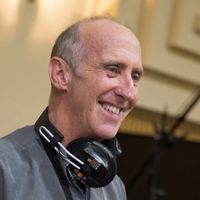
Paul Cutlan
Paul Cutlan (b. 1964) is an Australian multi-instrumentalist, composer and improviser whose work spans contemporary classical music, jazz and world music. Bass clarinet and saxophone sit at the centre of a practice that moves freely between writing and performance.

Brett Hirst
Brett Hirst is an Australian double bassist and composer, widely regarded among the country’s finest jazz and chamber bass players. His line combines rhythmic drive, warm tone and a clear improvising voice.
Tracks
- Times Past Paul Cutlan 3:25
- i. Gibb River Road Introduction 2:02
- ii. Gibb River Road 8:49
- iii. Lost Souls Introduction 1:45
- iv. Lost Souls 8:12
- v. Reconcile 11:09
- The Dawning Dark James Eccles Paul Cutlan Veronique Serret Oliver Miller Brett Hirst 6:25
- Perhaps Next Time Paul Cutlan 6:12
Across the Top Suite Paul Cutlan
Performers
- Mara Kiek · tapan · track 5
- Oliver Miller · cello
- Paul Cutlan · bass clarinet, soprano saxophone
- James Eccles · viola
- Veronique Serret · violin
- Liisa Pallandi · violin
- Brett Hirst · double bass
- The NOISE · string quartet
Composers
James Eccles
James Eccles is a violist and a member of the improvising string quartet The NOISE.
Oliver Miller
Oliver Miller is an Australian cellist whose work sits at the meeting point of contemporary chamber music and improvisation.
Veronique Serret
Véronique Serret is an Australian violinist and composer whose work moves between notated music and free improvisation. She is a member of the Sydney experimental string quartet The Noise.
Where to listen
Across the Top is available for streaming through Apple Music. It can also be purchased through the iTunes Music Store.
Across the Top is available as a CD. It can be purchased online through Buywell Music or the Australian Music Centre which both offer online ordering.
Product details
- Catalogue number
- TP211
- Total playing time
- 47 minutes 59 seconds
- Producer
- Llew Kiek
Paul Cutlan - Recording Engineer
- Jono Baker
Simon Todkill - Editing Engineer
- Llew Kiek
- Mixing Engineer
- Ross A’hern
- Mastering Engineer
- Andrew Edgson
- Release date
- 28 Jun 2015
- Label
- Tall Poppies
- Musical work
copyright - © 2015 Tall Poppies
- Sound recording
copyright - ℗ 2015 Tall Poppies
- Categories
- Australian Classics, Improvisation
- Genres
- Contemporary Classical, Jazz & Improvised
- Barcode
- EAN 9399001002115
Related recordings
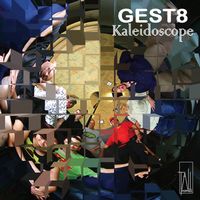
Kaleidoscope
GEST8, the brainchild of Sandy Evans and Tony Gorman, extends their search for new colours in improvisation and jazz. Kaleidoscope is the band’s debut recording.
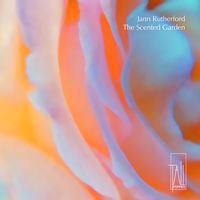
The Scented Garden
Recorded just before her untimely death in early 2003, this CD is a heartfelt testament to Jann Rutherford, one of Australia’s truly individual voices in jazz.
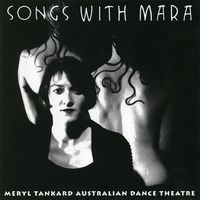
Songs With Mara
The music originated as the score for Meryl Tankard's Australian Dance Theatre show of the same name. Mara and Llew Kiek perform and arrange this mostly traditional Bulgarian repertoire.
The Martenitsa Choir
Formed by Mara Kiek in the early 1990s, this choir has mastered the Bulgarian choral singing style. Here they perform with gusto and precision. The music will knock your socks off!