Antarctica: The Film Music
Australia's first IMAX film, scored by Nigel Westlake with music that captures the awesome spaces of the ice and the delights of the local fauna. Soloists include David Pereira (cello), Dene Olding (violin), Timothy Kain (guitar) and Christine Douglas (soprano).
Christine Douglas soprano vocals [solo]
Elizabeth Gajewska violin
Dene Olding violin, leader
Heather Westlake violin
Anne-Louise Comerford viola
Philippe-Marc Anquetil boy soprano
Yett Breen violin
Elizabeth Lockwood violin
Rebecca Lagos percussion
Martin Silverton violin
Rosemary Quinn cello
Geoff Collinson french horn
Robert Ingram violin
Anita Beuthien violin
Greg Ford viola
Narine Melconian violin
Daniel Rosenbaum violin
Colin Cornish viola
Angela Lindsay violin
Michael Askill percussion
Léone Ziegler violin
Leigh Middenway violin
Kees Boersma double bass
Peter Morrison cello
Kirsty McCahon double bass
Richard Miller percussion
Julian Smiles cello
Julie Batty violin
Louise Johnson harp
Elizabeth Mitchelmore violin
Paul Goodchild trumpet
Belinda Manwaring cello
Maria Durek violin
Jennifer Owen violin
Irena Morozov viola
Timothy Kain guitar
David Pereira cello [solo]
Brian Nixon percussion
Carl Vine conductor
Anthony Morgan cello
Ian Cleworth percussion
The orchestra is conducted by fellow composer Carl Vine. Westlake's score moves between yearning lyricism and the force of the ice, with vivid cues for penguins, wooden ships and Scott's expeditions, and a finale dedicated to the future of Antarctica as a world park.
Reviews
Nigel Westlake is a talented contemporary Australian composer, with many discs on the superlative Tall Poppies label. I was particularly pleased to be sent this disc for review. It contains the very music, albeit in expanded, original form, with which I originally acquainted myself with Westlake, namely the stunning soundtrack to John Weiley's IMAX film about Antarctica. A superb suite (for guitar and orchestra) was extracted/adapted from it which was premiered, alongside several excellent works by Peter Sculthorpe, on John Williams' trailblazing Sony disc From Australia. It has proved no disappointment to hear its source material (and much more besides). Several sequences are instantly recognisable, including those for the penguins and the "wooden ships" of the original Antarctic explorers. The guitarist on this recording (Tim Kain) has previously collaborated with aforementioned Williams. He does more than justice to the music with his contribution here. Harpist Louise Johnson is also impressive (try Penguin Play for an example of both players' artistry). That said, all the musicians involved have produced a remarkable, cohesive whole, which works just as well as an independent listening experience as it no doubt does alongside the film. The film's director calls this "Music with a life of its own". This is quoted in the booklet which also contains a series of superb photographs from Antarctica.
The music itself is never inaccessible and manages to combine a yearning lyricism (e.g. Threnody) with a real sense of nature's power (e.g. The Last Place on Earth). The latter aspect is often enhanced, and here it exceeds the experience of the suite, by the addition of a vocal component. This does not necessarily humanise the music, rather it adds an extra, often powerfully poetic dimension. One section that does not quite seem to fit with the rest of the music, amusing as it is, is Penguin Circus. It sounds exactly as you might imagine and is, to these ears, slightly too stark a contrast to the profound pieces preceding and following it (Threnody and Canyons of Ice, respectively). I do, however, concede that this might not be the impression given when heard in the film.
The centrepiece of the disc is the seven minute travelogue of Meltponds/Dry Valleys/The Ice Core. Highly evocative it is too, with elements both beautiful and awesome, especially from around five minutes in, where wordless soprano and guitar combine to weave a truly magical spell. After the relative calm of Scott's Theme and Wooden Ships, At the Pole is a highly percussive fanfare-like piece. A reprise of Scott's Theme then leads us into a lyrical Finale, which builds to an energetic and optimistic conclusion. This fits well with Westlake's dedication of the music to "the future of Antarctica as a world park". A gentle postlude completes the work.
Antarctica is a place that has always fascinated me and would love to visit. The fact that this record, short though it is, reinvigorated and increased those feelings is a tribute to the vision of the composer and his ability to conjure up these wonderful places so effectively. As far as documentary soundtracks goes, this is as good as you can get. This is probably a masterpiece, although that might equally apply to his later follow-up collaboration with Weiley (The Edge), also to be reviewed here shortly.
Antarctica directed by John Weiley and filmed in IMAX drew its global impact from impressive photography (some stills from the film are printed in the insert notes) and from Nigel Westlake's very fine score. As I mentioned in a recent review (Timothy Kain – Mirrors of Fire on Tall Poppies TP 169), the composer reworked some of the music of his film score into a suite for guitar and orchestra written for John Williams, in much the same way as Vaughan Williams reworking some of the music for Scott of the Antarctic into his Seventh Symphony. Westlake's well-crafted, slightly eclectic but effective music is quite different from that by Vaughan Williams, although he too uses wordless soprano and boy soprano voices. So, it is both interesting and rewarding to be able to listen to Westlake's film score to realise how he approached his task when reworking some of the music for the concert hall. A film score is often made of relatively short cues that do not lend themselves to extended reworking all too easily. Actually, two cues from the film score have been recycled into the suite for guitar and orchestra almost as they stand in the film score (albeit slightly revised and expanded), viz. the atmospheric miniature tone poem Wooden ships and the delightful Scherzo Penguin play. The last place on earth [track 2] also provides much of the music heard in the Antarctica suite, and so do the final tracks [12 – Finale and 13 – Postlude] in the suite's last movement. Westlake's film score nevertheless includes several longer cues such as The last place on earth [track 2] and Meltponds/Dry valleys/The Ice Core [track 7] that are rather more developed and some of which also made its way into the suite. The film score, however, is well worth hearing on its own right because it includes a good deal of really fine music, in turn lyrical and brutal, serious and funny. The funniest track is, no doubt, Penguin circus [track 5], a delightful Scherzo mostly for percussion, complete with slide whistle and honking horns, and ending with that arch-cliché of circus music, i.e. a side drum roll followed by the "circus chord". There are also many more lyrical sections such as the already mentioned Wooden ships [track 9], Threnody [track 4] and Scott's theme. Westlake also sees to it that some coherence is achieved by the use of some recurrent motives.
Westlake's score is for fairly limited orchestral forces, strings, horns and trumpets (apparently recorded in multi-tracking), an important part for cello (I even think that the concert suite might have been for cello and orchestra rather than for guitar and orchestra), guitar, percussion and parts for wordless soprano and boy soprano (a bit à la Vaughan Williams although the music is quite different but equally effective). It also seems that some electronic devices may have been used (multi-tracking, etc.), but always tastefully. As such, Antarctica is as fine a film score as one may wish: superbly crafted, quite attractive and very accessible; and the performance by soloists and an ad hoc orchestra conducted by fellow-composer Carl Vine is excellent.
The music is often romantic and thrilling - driving and explosive - but also mysterious and tender in many places ... Recommended
Artist

Nigel Westlake
Westlake has played in fusion bands and soundtrack sessions, with Australia’s leading instrumental groups, and as a soloist with orchestras and classical ensembles in Australia and in major cities worldwide, from London and Paris to Tokyo, Beijing and New York.
Tracks
- Yearning for the Continent Nigel Westlake 3:20
- The Last Place on Earth Nigel Westlake 5:51
- Penguin Play Nigel Westlake 2:47
- Threnody Nigel Westlake 1:44
- Penguin Circus Nigel Westlake 2:02
- Canyons of Ice Nigel Westlake 1:53
- Meltponds / Dry Valleys / The Ice Core Nigel Westlake 7:17
- Scott's Theme Nigel Westlake 1:08
- Wooden Ships Nigel Westlake 1:41
- At the Pole Nigel Westlake 2:22
- Scott's Theme Nigel Westlake 1:52
- Finale Nigel Westlake 3:23
- Postlude Nigel Westlake 1:39
Performers
- Neil Brawley · double bass
- Christine Douglas · soprano vocals [solo]
- Elizabeth Gajewska · violin
- Dene Olding · violin, leader
- Heather Westlake · violin
- Anne-Louise Comerford · viola
- Philippe-Marc Anquetil · boy soprano
- Yett Breen · violin
- Elizabeth Lockwood · violin
- Rebecca Lagos · percussion
- Martin Silverton · violin
- Rosemary Quinn · cello
- Geoff Collinson · french horn
- Robert Ingram · violin
- Anita Beuthien · violin
- Greg Ford · viola
- Narine Melconian · violin
- Daniel Rosenbaum · violin
- Colin Cornish · viola
- Angela Lindsay · violin
- Michael Askill · percussion
- Léone Ziegler · violin
- Leigh Middenway · violin
- Kees Boersma · double bass
- Peter Morrison · cello
- Kirsty McCahon · double bass
- Richard Miller · percussion
- Julian Smiles · cello
- Julie Batty · violin
- Louise Johnson · harp
- Elizabeth Mitchelmore · violin
- Paul Goodchild · trumpet
- Belinda Manwaring · cello
- Maria Durek · violin
- Jennifer Owen · violin
- Irena Morozov · viola
- Timothy Kain · guitar
- David Pereira · cello [solo]
- Brian Nixon · percussion
- Carl Vine · conductor
- Anthony Morgan · cello
- Ian Cleworth · percussion
Contributors

Fairlight Technician
Andrew Bell
Where to listen
Antarctica: The Film Music is available for streaming through Apple Music. It can also be purchased through the iTunes Music Store.
Antarctica: The Film Music is available as a CD. It can be purchased online through Buywell Music or the Australian Music Centre which both offer online ordering.
Product details
- Catalogue number
- TP012
- Total playing time
- 36 minutes 59 seconds
- Contributor
- Jan Loquet Westlake
- Producer
- Nigel Westlake
- Recording Engineer
- Craig Preston
Julie Gardner
Tom Quarmby - Editing Engineer
- Nicholas Holmes
- Venue
- Rhinoceros Studios
- Credit
- Andrew Bell
- Release date
- 2 May 1992
- Label
- Tall Poppies
- Musical work
copyright - © 1992 Tall Poppies Records
- Sound recording
copyright - ℗ 1992 Tall Poppies Records
- Category
- Australian Classics
- Genres
- Stage & Screen, Contemporary Classical
- Barcode
- EAN 9399000001225
Related recordings
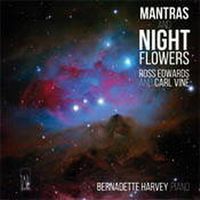
Mantras and Night Flowers
One can be sure that Australian music might be finally coming of age when one record label can contemplate a third recording of a recent piano work – Carl Vine's magnificent Piano Sonata No. 1 is now released for the third time by Tall Poppies.
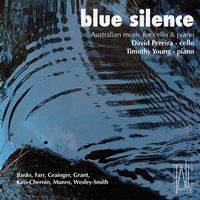
Blue Silence: Australian Music for Cello and Piano
This is the first disc of its kind released in Australia: an overview of important works for cello and piano spanning 108 years. The earliest is Grainger’s Scandinavian Suite, a tour de force that deserves a place in the concert hall.
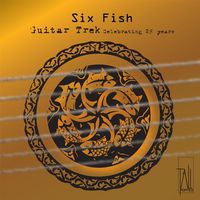
Six Fish
Guitar Trek began in 1987 and broke new ground for the guitar with a special “family” of instruments: standard guitars by Greg Smallman, treble guitars by Eugene Philp and Greg Smallman, and baritone and bass guitars by Graham Caldersmith.
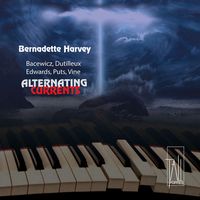
Alternating Currents
Bernadette Harvey’s debut solo CD on Tall Poppies presents one of Australia’s finest pianists: scarily accurate technique, a fearless ear for nuance, and a gift for making a composer’s intentions clear at first hearing.
Bruce Cale: Orchestral Works
Tall Poppies is delighted to present Australian orchestral works that might well have slipped from view forever but for the archives of their composer, Bruce Cale.
Nigel Westlake: The Hinchinbrook Riffs
Tall Poppies presents The Hinchinbrook Riffs: five chamber works by Nigel Westlake, whose amiable, approachable style has won him a wide and loyal audience in Australia and beyond.